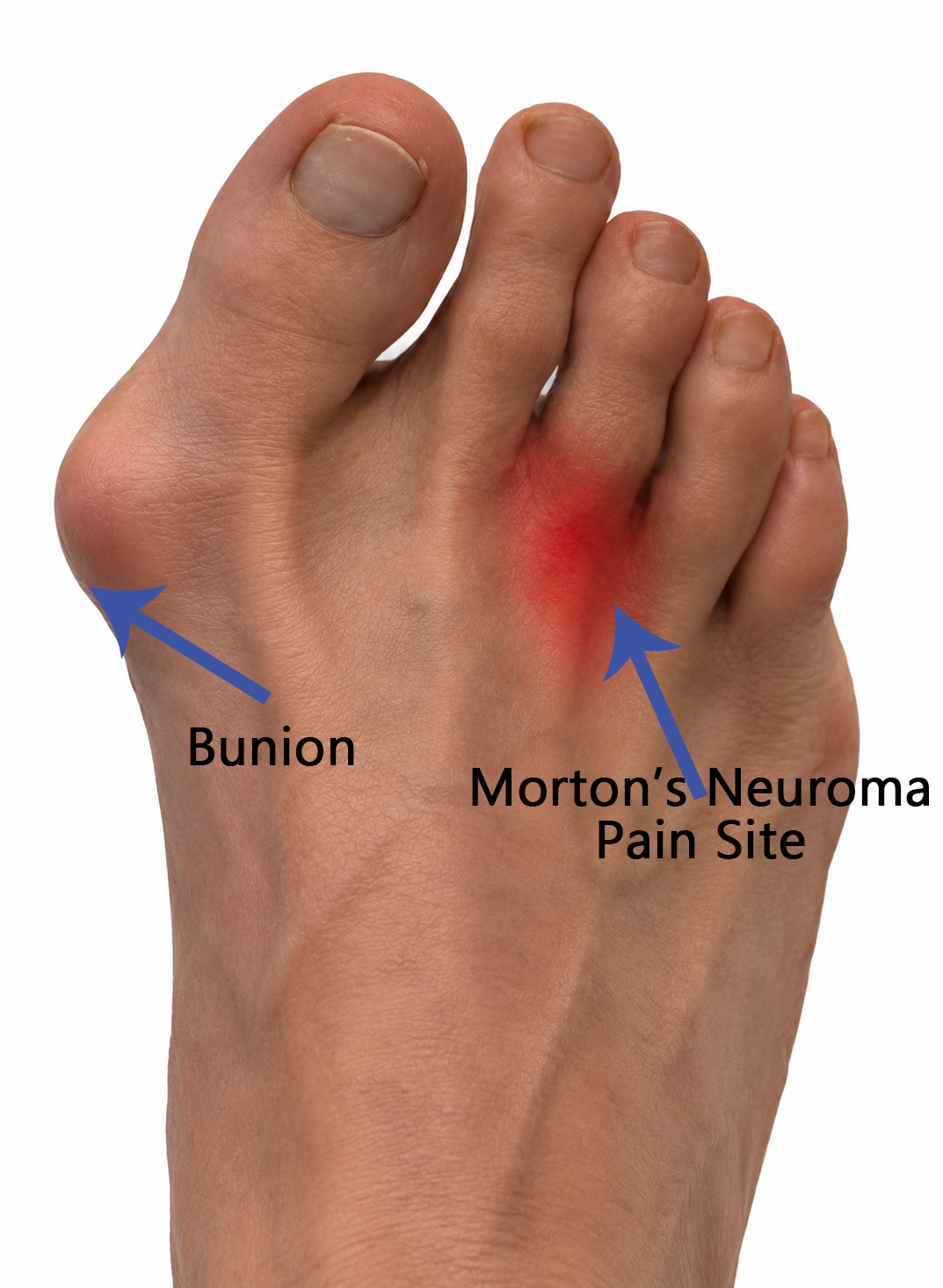
While a bunion and a Morton’s neuroma are two different foot conditions, if they are co-existing, they can sometimes influence the way the forefoot is loaded, causing delays or difficulties in the recovery process. Starting with the bunion, which medically is known as hallux valgus, changes the position and function of the big toe and first metatarsophalangeal joint. On the other hand, Morton’s neuroma is a painful condition involving one of the common plantar digital nerves, most commonly between the third and fourth toes. If you present with both conditions, treating the neuroma without considering how the rest of the foot is functioning may not always address the mechanical factors contributing to your symptoms. This is what this blog is going to analyse: Can a bunion make it harder for a Morton’s neuroma to settle? The answer is not as simple as saying that a bunion causes a neuroma, as there is not enough evidence for it. But what we know is that hallux valgus can alter how load is distributed through the forefoot, and this may be relevant when managing a sensitive or irritated interdigital nerve. What is the relationship between a bunion and a Morton’s neuroma? As mentioned above, a bunion does not automatically cause a Morton’s neuroma. That said, both conditions can be influenced by the way forces are distributed through the forefoot. Indeed, Hallux valgus can change the position of the big toe and first metatarsal, which are sitting more laterally than they should be, and alter normal walking mechanics. We know, in fact, that while walking, the big toes should be the primary driver and taker of the body weight at the toe level, and if pushed to a lateral position, it can’t take such load; therefore, the body weight is then redistributed along the phalangea box and other toes. But to be more specific, and by following what the data show, we better understand this 2025 systematic review and meta-analysis involving more than 6,000 feet found that hallux valgus was associated with reduced hallux loading when measured inside footwear. But evidence that hallux valgus consistently increases loading beneath the central metatarsals was inconclusive. And this is important because it gives a distinction between bunion and Morton’s neuroma formation, as neither is the consequence of the other. Basically, the correlation and causation effect. Indeed, foot mechanics are individual. Your symptoms can be influenced by the shape of your foot, footwear, activity, walking pattern, joint mobility, strength, and how you distribute your body weight while moving. How can a bunion affect Morton’s neuroma recovery? Now that we clarify the distinction between the correlation and causation of Morton’s neuroma from hallux valgus, we can dig more into how the bunion can affect Morton’s neuroma recovery. Morton’s neuroma is a condition that can not be recovered by only exercises or some other external interventions, but, to start with, it needs rest. By rest, we mean reducing stress on the structure involved, not no movement at all. This is why footwear modification and pressure redistribution are commonly used in Morton’s neuroma management. Therefore, the bunion may become relevant because hallux valgus can alter the way the forefoot loads during walking. For example, some people with hallux valgus develop a tendency to move the centre of pressure away from the first metatarsophalangeal joint during late stance. Research has demonstrated this lateral shift in people with bilateral hallux valgus. As a result, if the big toe can not contribute effectively to propulsion, the body may find another way to complete the movement. So again, this can overload the neuroma site, limiting rest and slowing recovery. Think about the whole foot, not just the painful spot When dealing with a painful presentation, I always invite my client to stop focusing only on the painful spot, and start to understand that nothing work in isolation. Therefore, if someone has a neuroma, it can be tempting to focus entirely on the area between the toes. But a better approach would be asking: Why is this area becoming irritated? The answer is often made up of a combination of factors, which may include: Footwear used Training load or walking volume Forefoot structure or movement Possible pre-existing injury So that’s why treating the neuroma alone may not be enough if the mechanical contributors are still present. Can bunion exercises help reduce stress on a Morton’s neuroma? The short answer is yes, but it is not always as simple. Evidence suggests exercise can improve pain and some measures of hallux valgus, particularly in mild-to-moderate cases. However, this is different from saying that bunion exercises have been proven to treat Morton’s neuroma. So what we can therefore assume is that by improving the foot mechanics and load, we may reduce stress on the neuroma site, assisting the body’s natural recovery. Exercises may include: controlled big-toe movement exercises to improve intrinsic foot muscle control toe spreading exercises strengthening exercises for the foot controlled calf and ankle exercises balance exercises progressive weight-bearing exercises exercises that improve the way the foot controls load during walking And there is no one-size-fits-all. What we should focus on too is the ability and capacity of the individual, and then work on what they are missing out on. As an example, forcing the big toe into a position with a toe separator simply because someone has a bunion is not necessarily appropriate, and it may not create the desired change anyway. The aim is not to “push the bunion back into place”. The aim here is to improve the available movement and control of the foot and help the person tolerate load more effectively, yes, starting from the big toe, if a bunion is present, but the focus has to be also on the other toes, as well as the ankle. Can big toe mobility affect pressure on a Morton’s neuroma? For what we know, the big toe plays an important role during walking, particularly during the later part of stance. For simplicity, we expect […]
Tag Archives: bunion
Blog
Bunion and Morton’s Neuroma: Can a Bunion Affect Neuroma Recovery?
While a bunion and a Morton’s neuroma are two different foot conditions, if they are [...]
Continue readingSep
Blog
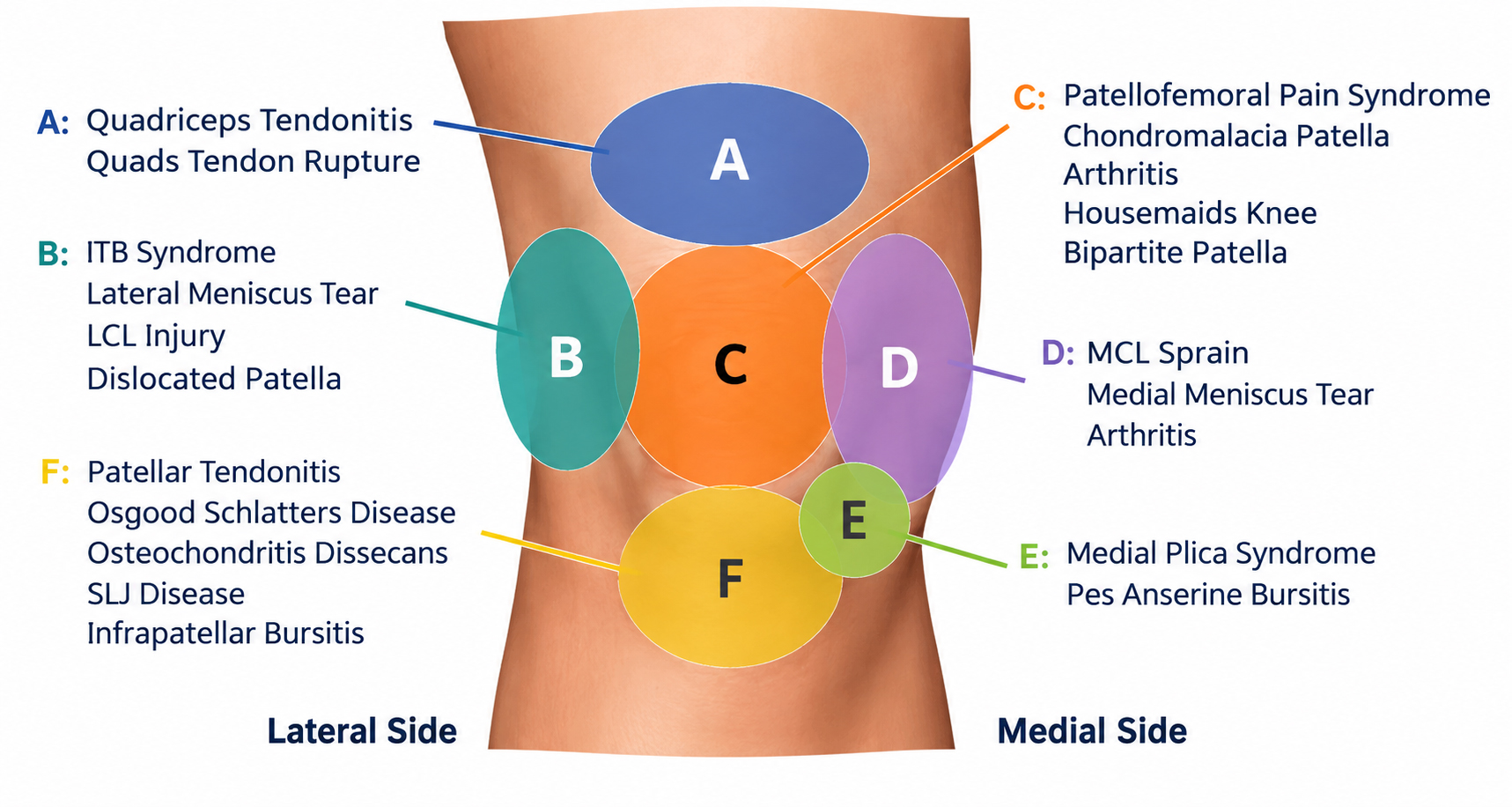
Knee Pain in Coburg
Knee pain is a common form of injury and can affect people of all ages [...]
Continue readingSep

Blog
Post-Surgery MLD Melbourne – Vodder MLD Therapist
Any form of surgery is an invasive procedure for the body to deal with, and [...]
Continue readingSep
Blog
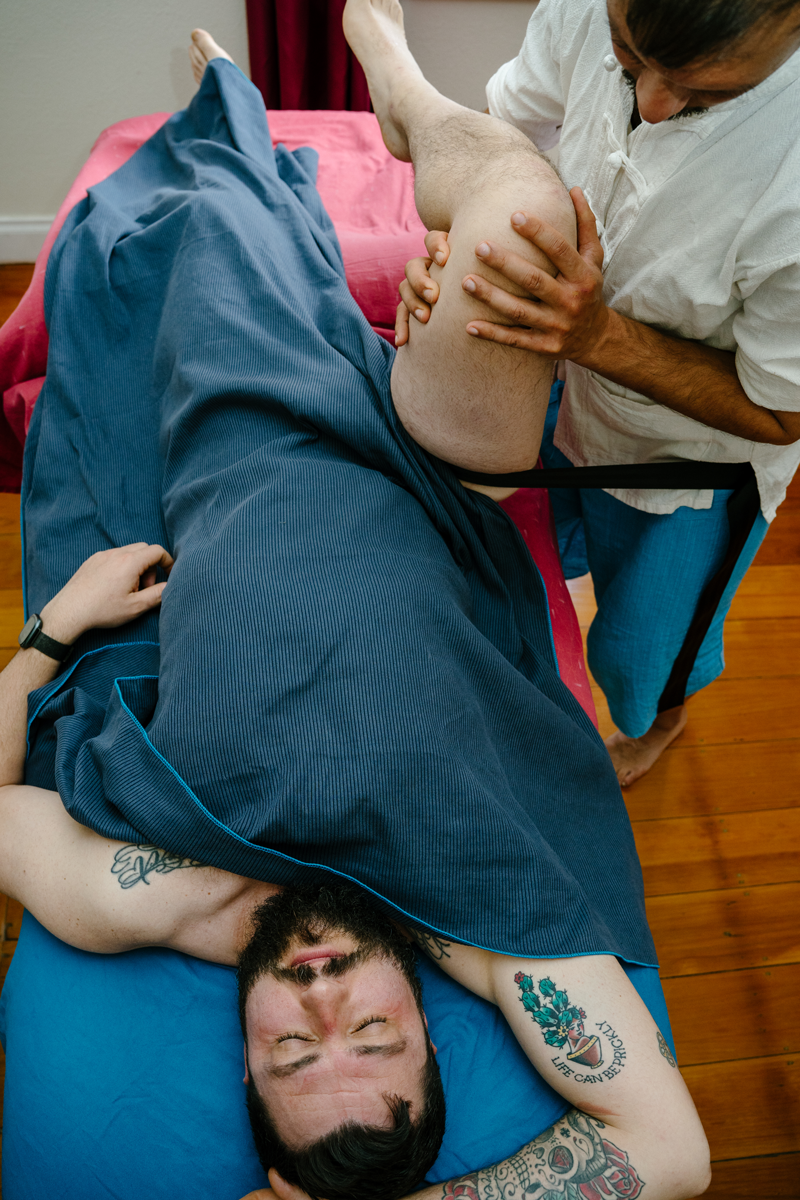
Hip Pain in Coburg: Causes, Symptoms & Treatment
In the many presentations I get to see here at Melbourne Massage and Treatment in [...]
Continue readingSep

Blog
Lymphatic Walking: Let Me Tell You Why It Is Another Trend
Lymphatic Walking is another trend that you really don’t need to overthink. But let me [...]
Continue readingAug
Oct
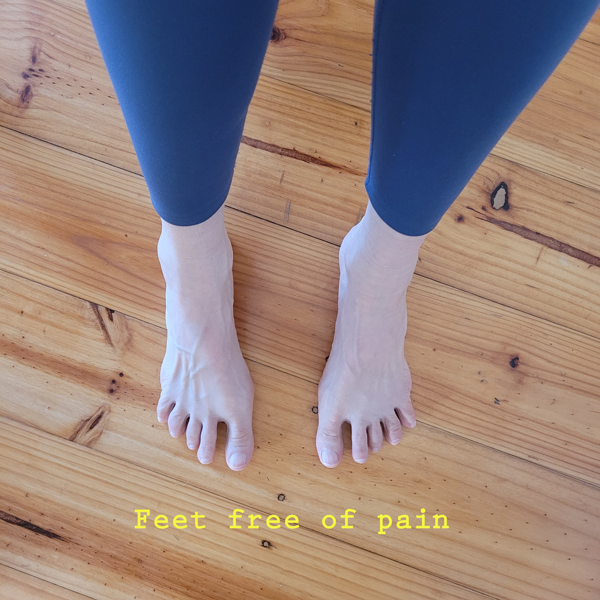
A bunion is a bond malformation at the base of the big toes. The leading causes for bunion are: foot stress high foot arch wearing high heels narrow shoes A bunion is often correlated to Osteoarthritis. Osteoarthritis is due to the cartilage degeneration that separates 2 bonds. In this case, the 2 bonds are at the base of the big toes. This result in pain at big toe extension and during walking. Bunion’s Symptoms Visible malformation, like a bump, on the side of the big toes joint; Sharp pain in the thumb; Difficulties in walking; Stiffness; The big toes point laterally towards the other toes Intervention About what to do for a bunion presentation is to get in touch with a podiatrist as soon as possible. Massage therapy is recommended too, but it is a limited tool for helping in fixing the issue. Along with Remedial Massage, Thai Massage, Myotherapy and MLD treatment, what can be done to alleviate the pain is to treat the surrounding structures, such as the plantar of the foot and the metatarsal area. So, can it alleviate bunion pain and or invert the condition? Yes, it is. Today’s blog post is called “Happy Bunion Story”. So, back in Dec. ’21, Steph start having foot pain, due to osteoarthritis. The reasons behind her conditions are: High foot arch Long hour standing up for work (she is an amazing Wedding and Fashion photographer) Wearing high heels (she used to do modelling) The combination of those resulted in a degeneration of big toes cartilage and a bunion forming. As Steph complained about pain in the big toes, I told her what possibly was happening there. Soon after, she visited her GP and got some X-Ray done, and the result was not much of a surprise. After finding out about her new condition, Steph consulted a podiatrist, who suggested starting a daily routine of exercises for her big toes. Resisted big toes flexion (with a rubber band) Wearing spacer in between the toes Toes abduction from a seated position. But this is not all. The podiatrist even told her to wear an insole in her shoes. Furthermore, she was recommended to buy specific shoes that “protect her foot”. I saw the shoes myself, and I can tell you they didn’t look good. They were thick, big, and didn’t look comfortable to wear. Another podiatrist opinion A few months passed, and I went to see Andy, a podiatrist promoting barefoot wear for my own flat feet condition. As I was talking to Andy about my feet, I couldn’t resist getting an opinion in regard to what Steph was going through. Andy, without much hesitation, suggested that she wear barefoot shoes and continue the exercises. Next, we went down to Sole Mechanic, in Hampton, a shoe shop specialising in barefoot wear. Beforehand we researched different brands and decided to give a goal to the barefoot shoes, “Vivo Barefoot”. Sole Mechanic Experience The experience at Sole Mechanic was a positive one. We booked an appointment for 2 of us, 1 hour all up, so the staff has enough time to guide you through what barefoot is about and the best option. We went through the ankle and toes Range Of Motion and barometric platform test and tried a couple of shoes each. Vivobarefoot, given its ethical approach to shoe wear, was since the start our choice, and so far, the best option we could go for. At this stage, we have a couple of shoes each from Vivo barefoot, one for everyday wear and one for hiking. Back to the “Happy Bunion Story” So, after all this time, Steph now enjoys walking pain-free. The bunion, thanks to the exercises and to Steph’s determination in practising them daily and the new shoes that have a wider shoe box, is reduced, as the Big Toe is now diverging towards the medial side (away from the other toes). Osteoarthritis is a condition that can’t be fixed. Still, when Steph occasionally feels pain we do an MLD session which can help reduce the inflammation symptoms and help in pain management. Said so, the pain is a rare thing and not a daily issue. Furthermore, Steph is not wearing the insole anymore. As suggested by the Sole Mechanic staff, removing the insole is a process that can be done step by step. So, since Feb ’22 when we bought the first pair of Vivobearfoot shoes, took her approximately 2 to 3 months to abandon the insole, and now it is about three months that she is not using it anymore. Hopefully, this post gives you some hope and insights into what’s happening with bunions. If you are in pain and need to reduce the inflammation response to the bunion, MLD may be best for you as a short-term solution. Otherwise, book an appointment with Andy to find out the best way to adjust the shape of your foot as much as possible.