
Pain is an unpleasant sensory and emotional experience associated with actual or potential tissue damage. It serves as a protective mechanism, alerting the body to harmful stimuli. Pain can be acute, arising suddenly in response to injury or illness, or chronic, persisting beyond the usual healing course. It encompasses both physical sensations and the emotional responses to those sensations.
Introduction to pain perception
As defined by the International Association for the Study of Pain (IASP), pain is an “unpleasant sensory and emotional experience associated with actual or potential tissue damage, or described in terms of such damage” (Raja et al., 2020).
How, then, can physical damage induce pain? To respond to this question, we must introduce a complex body system called the central nervous system (CNS). The brain and the spinal cord mainly make the CNS. Along the CNS, information is transmitted, like electrical impulses. Along those impulses, we have nociceptive signals, which are signals carried by nociceptive neurons (from Latin nocere ‘to harm or hurt’; lit. ‘pain receptor’). The role of these neurons is to let the CNS know when potential damage does happen.
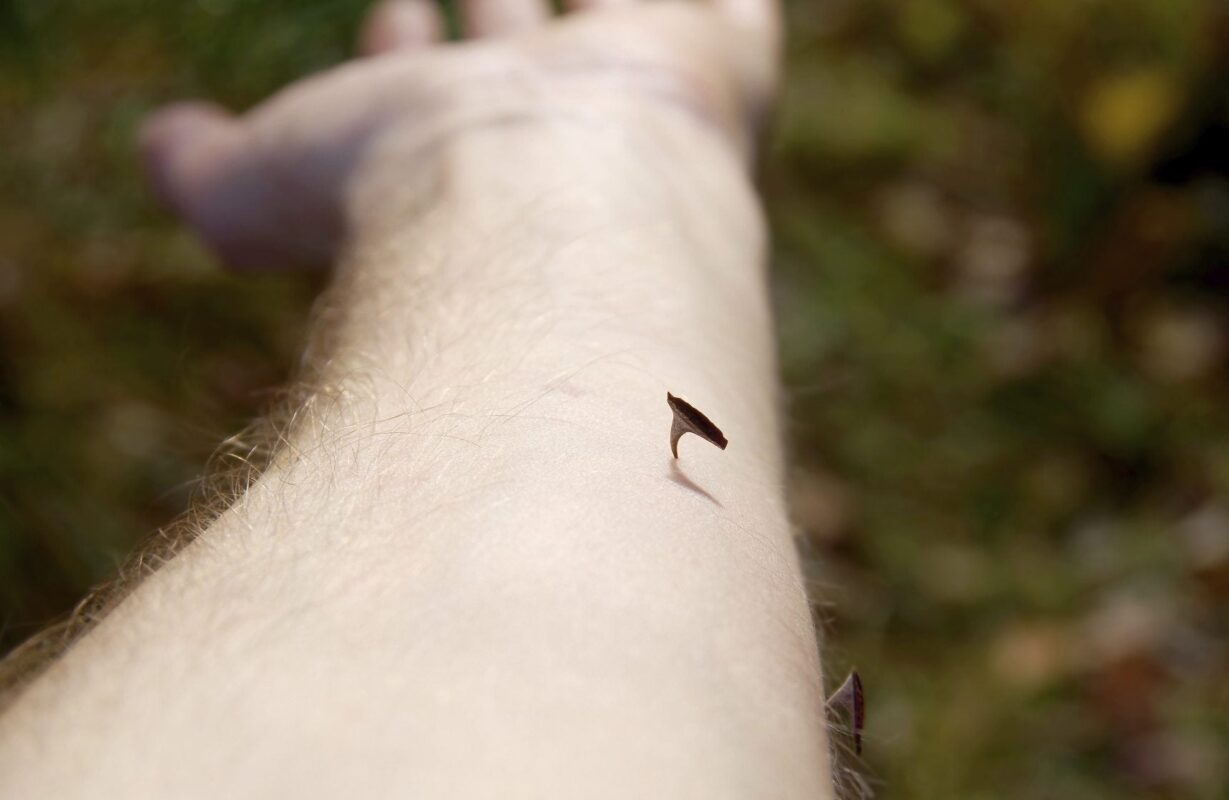
So, when you sting your hand with the thorn of a rose, imagine a little guy, running from your finger to the brain, screaming, “Damage, Damage!” and next, imagine another little guy, running down from the CNS to the finger, screaming, “Pain, Pain!”.This is an easy way to simplify the pain response.
Pain Processing Phases
Inflammatory response.
Once physical damage does occur, a pain response is created, and to start a healing process, the CNS system, in collaboration with another body system, puts in place what we know as the Inflammatory Response (IR). The IR is an automatic body response to damage, where the CNS starts caring for the body.
To do so, the CNS would send extra blood flow to the area, it would constrict the blood vessels in the area, and sensitize the area, which means it would make that area more sensitive to stimulus, and this is because it wants to tell the body to be careful on not doing further damage. That said, the inflammatory response would last 24 to 72 hours post-injury. After this time frame, the inflammatory response should wind down. Indeed, during this time frame, taking any anti-inflammatories or using an ice pack is not recommended because the first would stop the inflammatory response, and the second would slow down the blood flow to the area.
Tissue Healing Time
Any tissue in the body can and would heal on its own, regardless of the care you put in place. When we say any tissue, we refer to musculoskeletal tissues, which include bone, muscle, tendon, ligaments, nerves and skin. Actually, there can be an exception for nerve and skin regeneration, which is based on the extent of the damage.
The primary difference between the various tissue healing processes is the time required. Indeed, a muscle, based on the type of tear, of course, would have a different healing time than a bone fracture, and no external stimulus can boost the healing time process. However, external stimuli can help improve the quality of the healing process. We already discussed this in the exercises blog post.
Chronic Pain and a possible cure for it
So chronic pain, as we already defined, is a pain that lasts longer than three months, and it can linger even when there is no tissue damage left.
This is possible when the nociceptors are more sensitive to stimuli. Different is the type of sensitization that the nociception can reach, and therefore, it is fair now to introduce concepts like:
- Allodynia, which is defined as “pain due to a stimulus that does not normally provoke pain”;
- Hyperalgesia is defined as increased pain from a stimulus that usually provokes pain.
When this hypersensitisation is achieved, it’s hard to believe that things can change, especially when, after months of pain, several practitioners did try to help you, and the only thing that is relieving the pain is heavy meds.
Recent studies
In a more recent study by Ashar et al. (2021), they obtained some significant results with Pain Reprocessing Therapy (PRT), which did show substantial promise for chronic back pain (CBP) relief through a randomized clinical trial involving 151 participants. This study compared PRT with open-label placebo and usual care, using a combination of telehealth and in-person sessions to shift patients’ beliefs about their pain from being injury-based to brain-generated. Remarkably, 66% of those undergoing PRT were pain-free or nearly pain-free post-treatment, a significant improvement over 20% in the placebo group and 10% in the usual care group. This relief was largely sustained over a year. fMRI scans indicated that PRT altered brain activity, increasing connectivity between the prefrontal cortex and sensory areas while reducing pain-related responses. Additionally, PRT led to improvements in disability, anger, sleep, and depression. The changes in pain beliefs were identified as key in mediating the therapy’s effects, highlighting PRT’s potential as an effective psychological treatment for chronic pain.
How can Melbourne Massage and Treatment help?
At Melbourne Massage and Treatment, I do dedicate myself to helping anyone who is in pain, and with my extended Myotherapy training, I have tools that can help those who are suffering from Acute and Chronic Pain.
First, already understanding that the patient is suffering from pain and that they are not making it up is a giant step forward in creating trust between myself and the patient. Sharing the knowledge above can help the patient feel secure that they are believed and trusted about their presentation. Lastly, but not least importantly, techniques like myotherapy, manual lymphatic drainage (MLD), dry needling, and exercise prescription are valid tools to manage and potentially invert a chronic pain presentation.
On the other hand, Melbourne Massage and Treatment has moved to a new locations in July 2024 and is now part of a team of health professionals that includes psychologists like Dr Mohsen Dehghani, who specialises in working with chronic pain patients.
In conclusion, if you need treatment because of chronic pain, do not hesitate to book now your next Myotherapy or MLD appointment.
FAQ
FAQ – Chronic Pain & Healing
Giovanni La Rocca
Giovanni moved to Melbourne, Australia, from Italy in 2008 and became a citizen in 2017. He started studying massage therapy in 2016, then completed a Bachelor of Health Science in Clinical Myotherapy in August 2024. During those years, he also specialised in Thai Massage and Manual Lymphatic Drainage for presentations like Lipoedema and Lymphoedema. Nowadays, he runs his clinic in Fitzroy North, Melbourne, where he integrates movement therapy into his practice to enhance overall well-being. He also values meditation, having completed several Vipassana courses. Committed to continuous learning, he aims to share his expertise in integrated therapies to help others achieve balance and resilience.