
Calf injuries, such as a muscle tear, can be annoying to deal with because they can affect how we move and walk. This type of injury is common in runners, but can affect any person who may take part in a hit-class or go off for an occasional run, without proper athletic preparation. As a Myotherapist in Fitzroy North, my approach to calf injury rehab combines:
- Hands-on myotherapy
- Load management strategies
- Progressive exercise rehab
- Fitness-based rehabilitation classes
What is a calf muscle tear?
To start with, we need to understand which muscles make up the calf and which are most likely to tear. Calf muscles include:
- Gastrocnemius (medial head)
- Gastrocnemius (lateral head)
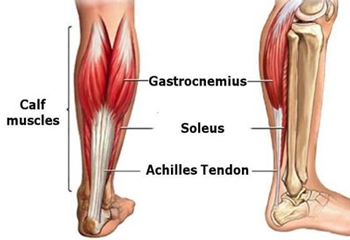

- Soleus
- Plantaris
- Tibialis posterior
- Flexor hallucis longus
- Flexor digitorum longus
- Fibularis (peroneus) longus
- Fibularis (peroneus) brevis
- Fibularis (peroneus) tertius
The gastrocnemius (medial and lateral head) and soleus muscles are indeed the muscles that are most likely to tear, given the high load of work they do for ankle plantarflexion. These injuries commonly happen during:
- Sprinting or sudden acceleration
- Jumping or rapid change of direction
- Fatigue, poor load management, or inadequate warm-up
Common symptoms include:
- Sudden sharp pain in the calf
- Tightness or cramping sensation
- Swelling or bruising
- Reduced push-off strength when walking or running
When we look into the recovery approach, regardless of the injury severity, calf tears respond best to active rehabilitation rather than prolonged rest.
How Myotherapy Can Help With Calf Muscle Tear?
Myotherapy is a hands-on approach to musculoskeletal injury, and we not only look at massage as a form of treatment but also actively show you how to load your injured calf to rebuild the resiliency and strength needed to recover and prevent further injury. In summary, myotherapy can help by:
- Reducing excessive muscle tone via massage and or dry needling
- Improving circulation
- Supporting movement efficiency
- Addressing compensations in the ankle, knee, and hip
- Create a step-by-step exercise guide for your rehab protocol
In fact, rehab isn’t just about pain relief; it’s about building capacity for better performance in everyday life.
Calf Injury Rehab: A Step-by-Step Approach
Calf injury, as mentioned earlier, is really common in active and not active patients, and therefore it is important to look at the clinical history of the patient, including the load those muscles go through in everyday life, the mechanism of injury, the mobility capacity and what the patient expects from the recovery process too.
Indeed, at Melbourne Massage and treatment, I focus on:
- Individual assessment
- Pain-guided progression
- Gradual return to sport, work, or training
If you’re searching for calf injury treatment in Melbourne, structured rehab with a myotherapist makes a real difference.
Acute Calf Injury Management: PEACE & LOVE
Acute or early-stage calf injury rehab follows the PEACE & LOVE framework rather than outdated RICE protocols.
PEACE – First 1–3 Days After Injury
- Protect – Avoid excessive loading that may worsen the tear.
- Elevate – Elevation assists in swelling reduction.
- Avoid Anti-Inflammatories – Inflammation plays a key role in tissue healing.
- Compress – Light compression may help manage swelling.
- Educate – Understanding recovery timelines improves outcomes.
LOVE – Subacute Phase and Beyond
- Load – Gradual loading improves tissue strength and tolerance.
- Optimism – Positive expectations support recovery.
- Vascularisation – Gentle pain-free movement improves circulation.
- Exercise – Progressive rehab restores function and confidence.
In the acute phase, which lasts about 72 hours, we call it the inflammatory phase, and pain, redness, and swelling are expected Rest is recommended to let the body kick in its own healing capacity.
Phase 1 Rehab: Isometric Calf Exercises
As in most musculoskeletal injuries, once pain settles, even in the case of a calf injury, the first step to take in the rehab process is isometric exercises.
Isometrics involve muscle contraction without repetitive movement, making them ideal for early healing.
Benefits of isometric calf loading:
- Maintains strength
- Reduces pain
- Minimises stress on healing fibres
Common examples:
- Standing calf press into the floor – works well for both the gastrocnemius and soleus muscles
- Seated calf holds – focus onthe soleus muscles
- Wall-supported calf contractions – if equilibrium is an issue
Pain should remain low and settle quickly after exercise. A formula that I use with my patient is: pain post exercises = worst pain from injury / 2
So if your worst pain given by the calf injury was 8/10, post-isometric exercises, we are happy if you get a 4/10, but no more. And as long as it takes few minutes to 24 to settle, it’s fine. We will touch base on “why?” at the end of this blog.
Phase 2 Rehab: Concentric and Eccentric Strengthening
Week 1 to week 2 have passed since the injury, and it’s time to start loading the calf muscles with dynamic strengthening. The second phase is the longest one, and it may last somewhere between 4 and 5 weeks.
Concentric loading
- The muscle shortens while producing force – Rising up during a calf raise
Eccentric loading
- The muscle lengthens under load – Slow controlled lowering from a calf raise
This phase restores:
- Calf strength
- Tendon resilience
- Capacity for walking, running, and work demands
Isometric training allows the muscle fibres start the healing process, start closing the gap post calf tear, and therefore, now, with the strength training, we aim at improving the calf muscle function and injury resilience.
This phase focuses as a priority on calf muscles, via calf raises, with a series of progressions:
- From double leg to single leg
- From feet flat on the ground to standing on a platform with a heel, with free fall
- From body weight only to increase the load
- From low reps to higher reps
On top of those progressions for specific calf exercises, we will include other types of exercises, which focus on:
- Ankle mobility
- Quads and hamstring exercises to improve knee stability
- Glute exercises per equilibrium and power
That said, at my Fitzroy North clinic, I ensure to pass on this information to my clients, teaching them the importance of tailored load, tempo, and volume to their specific calf injury and goals.
Below are the reviews that can tell you more about my work and injury approach.
Phase 3 Rehab: Plyometrics and Return to Sport
3rd and last phase of a calf injury protocol starts at about week 8 post-injury. This is an estimation, as each individual may have slightly different protocol of recovery, and risk of re-injury during a rehab protocol.
That said, plyometric training prepares the calf for high-speed and explosive loads, indeed, it is the phase where we train you to get back to your daily activity (DA) or return to sport phase, and it is essential for:
- Running
- Jumping
- Sport-specific movements
Examples include:
- Pogo hops
- Double and Single-leg hopping drills
- Progressive jump and landing tasks
As per phase 2, even in a plyometric training, there are progressions, and they follow a similar protocol to the previous phase, so an increase in:
- Load
- Tempo
- Variation
Lastly, Plyometric training improves muscle-tendon stiffness and power, and it is in this final phase that we significantly reduce the risk of re-injury when returning to sport or high-demand activity.
Calf Injury Rehab That Fits Real Life
I want to note that every calf injury is different. That’s why at Melbourne Massage and Treatment, I focus on:
- Individual assessment
- Pain-guided progression
- Gradual return to sport, work, or training
If you’re searching for calf injury treatment in Melbourne, remember that a structured rehab with a myotherapist makes a real difference.
Exercises and Pain Response Explained
Now we re-uptake the “why?”, a pain that is half of your worst pain, is an acceptable mark, post-exercises.
Pain is a central nervous system (CNS) response to a stimulus, like exercise.
The CNS remembers what you went through, and if it has to choose between a pain that is 8/10 and one that is 4/10, it will obviously feel safer with the second one. Therefore, not only does the CNS know that you are moving and loading the injury part, which accommodates the fact that you are doing something safe, but it also gets a low-pain response, reinforcing the fact that what you are doing is not dangerous to the body’s integrity and functionality.
Lastly, this low-level pain, as per all pain stimuli, would create an inflammatory response that will kick start and or maintain the ongoing healing process.
This approach, in conclusion, make the re-hab more personalised and makes you more aware of what to look for while doing your rehab-exercises for the calf injury or any sort of injury really.
Book Calf Injury Treatment in Melbourne
If you’re dealing with a calf injury in Melbourne and want evidence-based rehab, I’d love to help.
FAQs — Calf Muscle Tear & Rehab in Melbourne
Calf muscle tear: What it is and how it happens?
A: A calf muscle tear would happen when muscle fibres in the calf are overstretched or overloaded. In my clinic in Fitzroy North, this injury is commonly seen in runners, hit-class participants, and active individuals who increase training load too quickly or return to exercise without proper preparation. The gastrocnemius and soleus muscles are the most frequently affected.
What are the most common symptoms of a calf injury?
A: Common symptoms include sudden sharp pain, calf tightness or cramping, swelling, bruising, and reduced push-off strength when walking or running. When the tear happens, you may even hear a sound, like a “pop”. Many patients attending my Fitzroy North myotherapy clinic report difficulty with stairs, walking speed, or returning to training.
Do I need complete rest after a calf muscle tear?
A: Complete rest is recommended for the first 24 to 72 hours, based on the severity of the calf injury. After this short protection phase, the injuries respond best to active rehabilitation. Pain-guided loading helps restore strength and movement without delaying healing or increasing the risk of re-injury.
How Myotherapy can help with calf injury rehab?
A: As a myotherapist, I will combine hands-on treatment with progressive exercise rehabilitation. This may include massage or dry needling to reduce excessive muscle tone, improve circulation, and address movement compensations, alongside a structured rehab plan to rebuild calf strength and resilience.
What is the PEACE & LOVE approach for calf injuries?
A: PEACE & LOVE is an evidence-based framework used as the start of a rehab protocol to manage muscle injuries. It focuses on protection and education in the early phase, followed by gradual loading, movement, circulation, and exercise to support tissue healing and functional recovery.
When can I start exercising after a calf muscle tear?
A: Post calf tear, you can start exercises once the inflammatory response is settled (24 to 72 hours). Initially, it is recommended to go for Isometric exercises, for 1 to 2 weeks, then step into gentle calf raises concentric and eccentric, and within week 8 post injury, you can start looking at plyometric exercises, ideal for return to daily activity and sport performance. At my Fitzroy North clinic, progression is guided by pain response and individual goals.
How long does it take to recover from a calf muscle tear?
A: Recovery time depends on injury severity and activity demands. Mild calf strains may recover within 3–6 weeks, while more significant tears can take 8–12 weeks or longer. Structured calf injury rehab at Melbourne Massage and Treatment lowers the risk of calf injury recurrence.
A: A calf muscle tear would happen when muscle fibres in the calf are overstretched or overloaded. In my clinic in Fitzroy North, this injury is commonly seen in runners, hit-class participants, and active individuals who increase training load too quickly or return to exercise without proper preparation. The gastrocnemius and soleus muscles are the most frequently affected.
A: Common symptoms include sudden sharp pain, calf tightness or cramping, swelling, bruising, and reduced push-off strength when walking or running. When the tear happens, you may even hear a sound, like a “pop”. Many patients attending my Fitzroy North myotherapy clinic report difficulty with stairs, walking speed, or returning to training.
A: Complete rest is recommended for the first 24 to 72 hours, based on the severity of the calf injury. After this short protection phase, the injuries respond best to active rehabilitation. Pain-guided loading helps restore strength and movement without delaying healing or increasing the risk of re-injury.
A: As a myotherapist, I will combine hands-on treatment with progressive exercise rehabilitation. This may include massage or dry needling to reduce excessive muscle tone, improve circulation, and address movement compensations, alongside a structured rehab plan to rebuild calf strength and resilience.
A: PEACE & LOVE is an evidence-based framework used as the start of a rehab protocol to manage muscle injuries. It focuses on protection and education in the early phase, followed by gradual loading, movement, circulation, and exercise to support tissue healing and functional recovery.
A: Post calf tear, you can start exercises once the inflammatory response is settled (24 to 72 hours). Initially, it is recommended to go for Isometric exercises, for 1 to 2 weeks, then step into gentle calf raises concentric and eccentric, and within week 8 post injury, you can start looking at plyometric exercises, ideal for return to daily activity and sport performance. At my Fitzroy North clinic, progression is guided by pain response and individual goals.
A: Recovery time depends on injury severity and activity demands. Mild calf strains may recover within 3–6 weeks, while more significant tears can take 8–12 weeks or longer. Structured calf injury rehab at Melbourne Massage and Treatment lowers the risk of calf injury recurrence.
Giovanni La Rocca
Giovanni moved to Melbourne, Australia, from Italy in 2008 and became a citizen in 2017. He started studying massage therapy in 2016, then completed a Bachelor of Health Science in Clinical Myotherapy in August 2024. During those years, he also specialised in Thai Massage and Manual Lymphatic Drainage for presentations like Lipoedema and Lymphoedema. Nowadays, he runs his clinic in Fitzroy North, Melbourne, where he integrates movement therapy into his practice to enhance overall well-being. He also values meditation, having completed several Vipassana courses. Committed to continuous learning, he aims to share his expertise in integrated therapies to help others achieve balance and resilience.