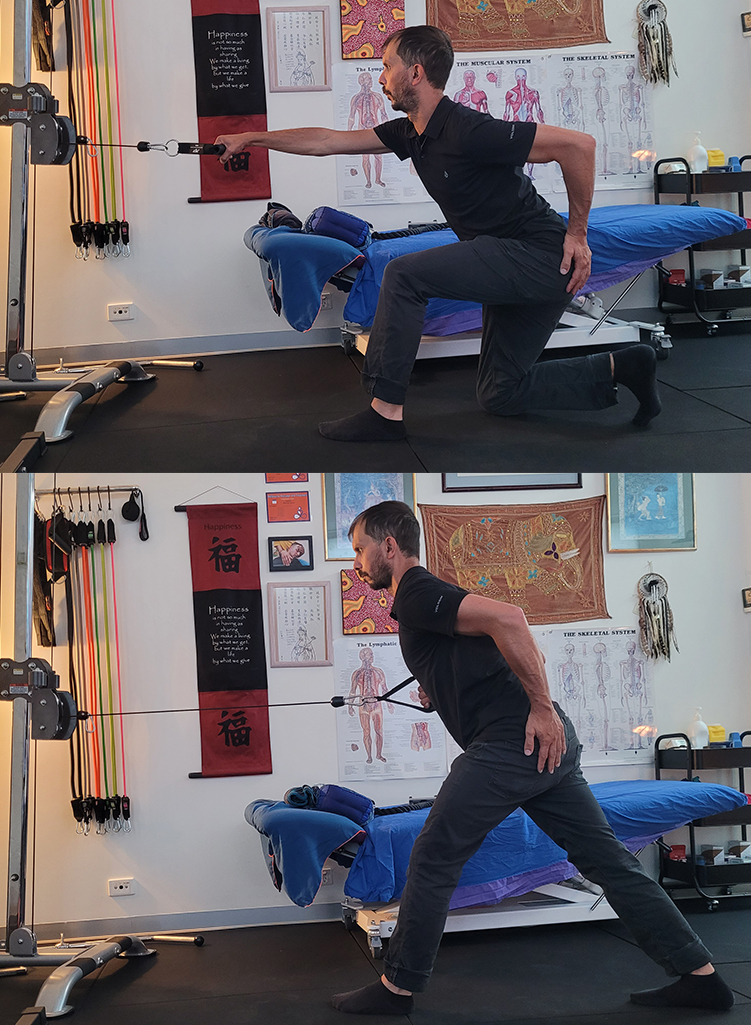
While I guide my client during a 1:1 fitness class at Melbourne Massage and Treatment, a Myotherapy clinic in Coburg, on how to learn using bands or a single-column pulley machine to practice KLT (Kinetic Link Training), I often get asked how someone should or shouldn’t do a lunge. “Should my knee go ahead of my toes?” “Should my knee stay on top of my ankle?” “What about my back? Should I hinge or stay straight?” The answer to those questions lies in a simple fact: what part of the body are you trying to train? Are you aiming to build more glut (posterior chain) or quads (anterior chain)? No, because there is no perfect lunge, as either right or wrong. As per the squat, there is the lunge that works for you, for your presentation and for your goal. The Two Main Lunge Strategies (And Why They Matter) So, when we talk about lunges, most people are really debating between two variations: Knee Travels Forward (Past the Ankle Line) When going for this variation, we have to conceptualise that the knee is going into a deep flexion, right? Now, if the knee has to come out of flexion, the quads are the muscle that needs to be engaged. (Quads are the knee extensors). The deeper the knee flexion, the more quads fibres are engaged to do the reverse to get the extension done. In fact, what this type of lunge does is: Increases knee flexion Increases quadriceps demand Places more load through the patellar tendon Furthermore, research shows that when the knee moves forward, quadriceps force and knee joint stress increase significantly. In a super summary: This is a quad-dominant lunge. Vertical Shin (Knee Stays Over the Ankle) On the other hand, when delivering a lunge movement and the knee stays on top of the ankle, within a vertical shin line, there is a max of 90° knee flexion; therefore, the amount of fibre engaged for the quads is less, and what is than the primary mover for the ascending action, is the gluteus maximum, the biggest glut, which is going to help with the hip extension. So, in this variation, what we are going to achieve is: Shifting the load away from the knee Increases contribution from the hip extensors Encourages more posterior chain involvement Therefore, this will be a glute-focused lunge. What Biomechanics Actually Tell Us About The Lunge Exercise While we look at this movement, we may get triggered into thinking that the lunge exercise is knee-dominant because the knee does a lot of movement, right? Well, if we break it down a bit more, as Riemann et al. (2012) did, we find that yes, the knee moves a lot, but what really takes the load during the lunge movement is the hip. So this is how we can break it down: The knee moves more (kinematics). But the hip produces more force (kinetics). Why this is a thing, then(?) you may ask. Well is tru that the knee move a lot, it can flex up to 90° and still this can be a hip dominant exercises, but, we have to think that the knee, while it is moving that far, is not placing much load on the lower fibers of the quads, and the joint that has to push against gravity, in the ascending phase, are indeed the hip. That’s where all the load actually is. The weight of the upper body. The Lunge Game-Changer: Add a Hip Hinge And here is where we can add a twist to the lunge, by going into hip hinging. What happens if we do so? The glutes are placed under greater stretch at their origin. This increases mechanical tension. You get better glute recruitment and carryover in strength. In fact, this is not just theory, but it’s basic muscle physiology: Muscles produce more force when stretched under load. Therefore, by hinging at the hip, you are not only going to feel more burning sensation in the glutes, but you are going to train them even more effectively. Why Toe Mobility Is the Missing Piece Now let’s talk about something almost no one considers: Your toes. As often happens, the toes and feet are not taken into consideration when looking at functional movement. Even though every leg movement starts from there. In a proper lunge, especially for the rear leg, your toes need enough mobility (extension) to: Accept vertical load Stabilise the movement Prevent your body from shifting forward Indeed, if you lack toe mobility: The movement gets projected forward Load shifts into the front knee and quads You lose posterior chain contribution To support those statements, a study by Harato et al. (2019) examined how foot and toe positioning directly affects knee mechanics and load distribution. So to clarify, the mobility-stability joint chain must always be taken into consideration when we look at functional movement. In this case, your toes aren’t just along for the ride; they’re controlling where the force goes. So… Which Lunge Is Best? I hope that by now, you have an idea of what answer is coming up: Neither. There is no best lunge, as there is no best squat. The forward knee lunge is not “bad”; it’s a tool for quads. The vertical shin lunge is not “safer”; it’s a tool for glutes. The mistakes are thinking that: One can replace the other one. Having an injury in the knee, and thinking that lunges are not your thing anymore. That’s why, at my clinic, Melbourne Massage and Treatment, here in Coburg, I always emphasise to my clients to understand that: “Don’t chase perfect technique — chase the right stimulus.” And to get to a better technique, better than what your body can deliver for now, is a step-by-step journey. And when there is an injury, we have to be confident in the tissue’s healing timeline, and exercises with load are the best tools to help with that. How I Use This With My Clients Inside […]
Tag Archives: KLT

Blog
Facet Joint Irritation and Muscle Weakness: What You Need To Know
In my experience as a Clinical Myotherapist at Melbourne Massage and Treatment Myotherapy and Lymphoedema [...]
Continue reading
16
Oct
Oct

Blog
Chronic Pain: What it is, and what can you do about it?
Pain is something that we all experience, and it can start after an injury, during [...]
Continue reading
09
Oct
Oct
Blog
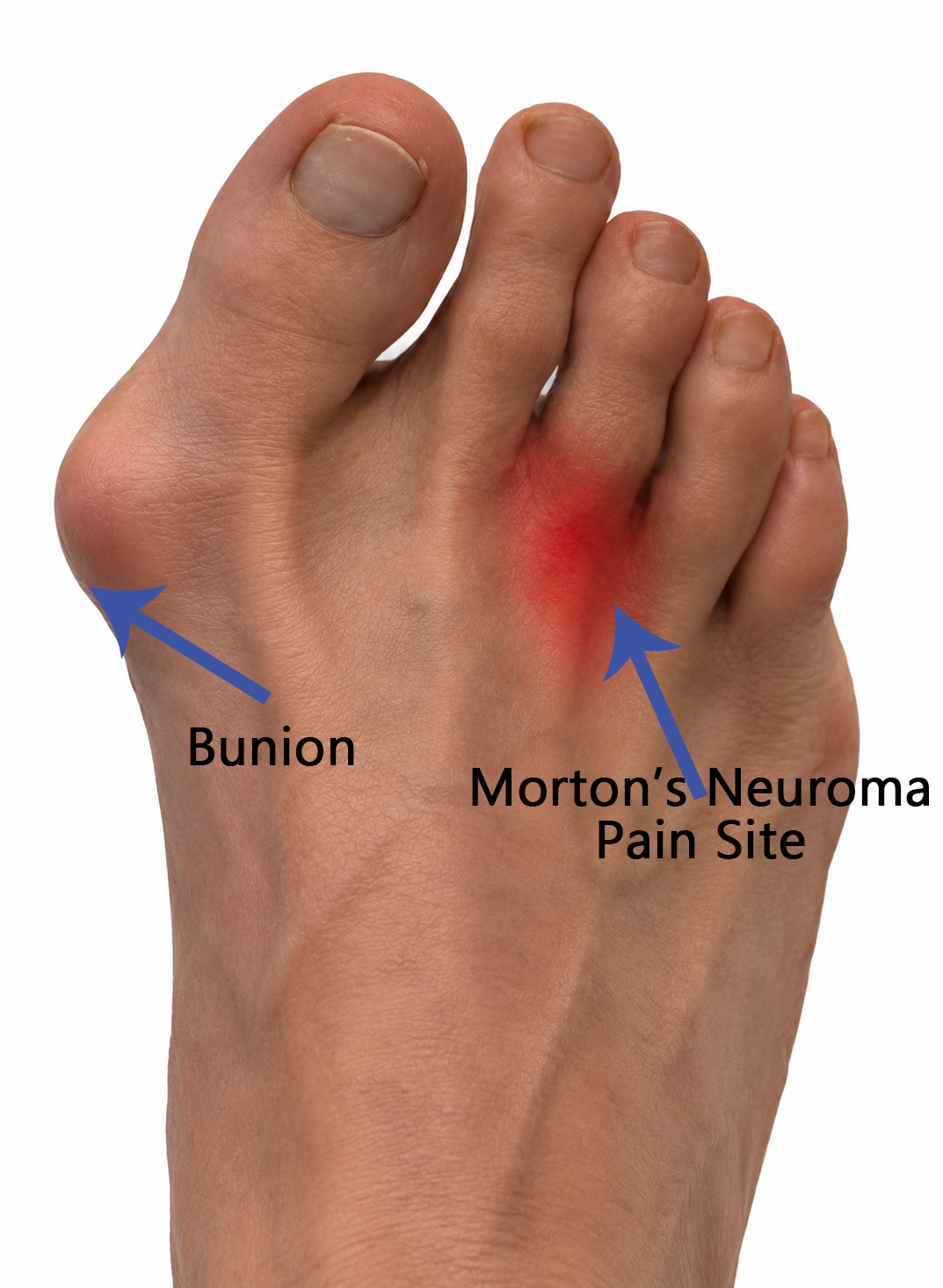
Bunion and Morton’s Neuroma: Can a Bunion Affect Neuroma Recovery?
While a bunion and a Morton’s neuroma are two different foot conditions, if they are [...]
Continue reading
26
Sep
Sep
Blog
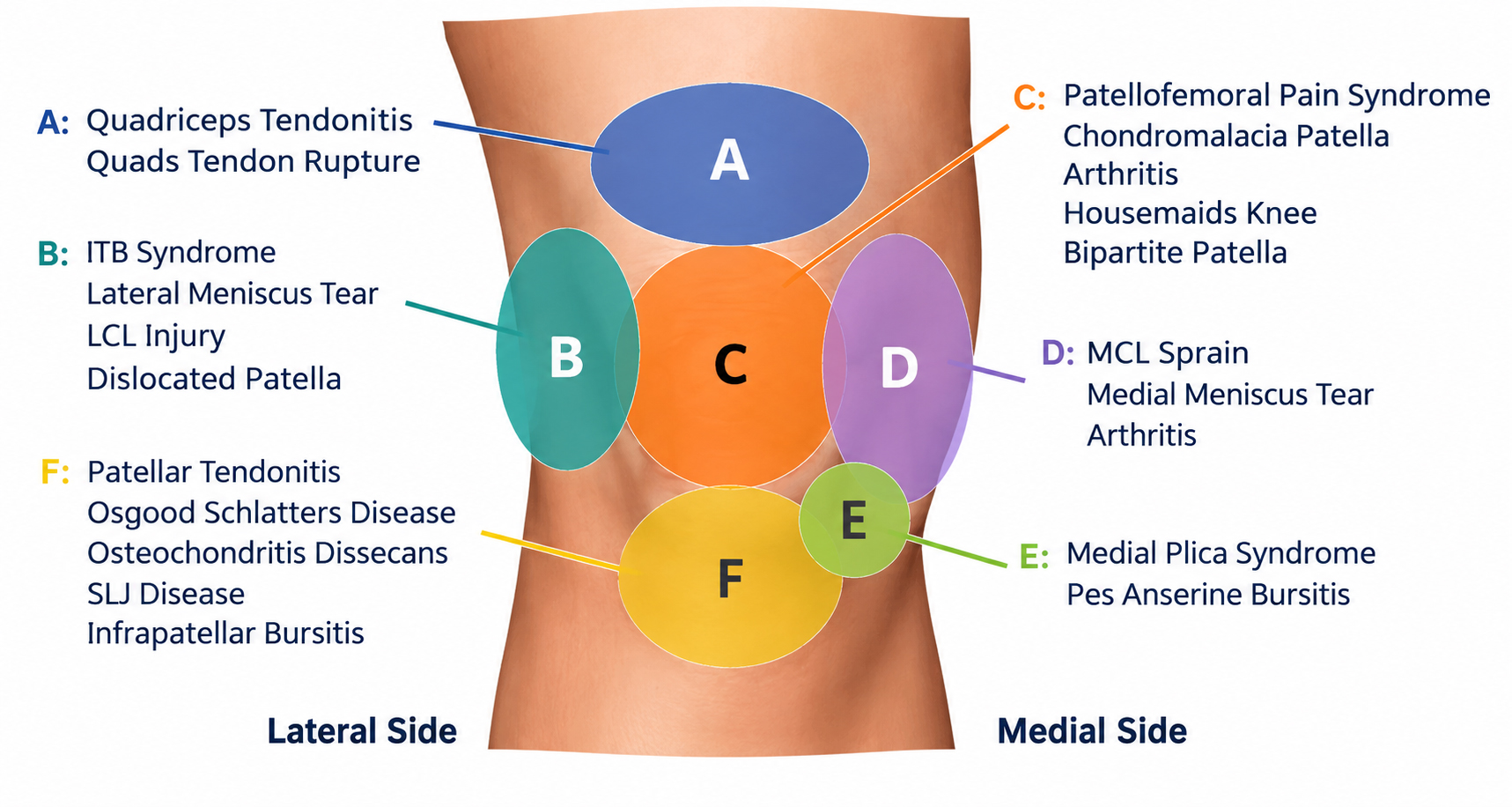
Knee Pain in Coburg
Knee pain is a common form of injury and can affect people of all ages [...]
Continue reading
21
Sep
Sep

Blog
Post-Surgery MLD Melbourne – Vodder MLD Therapist
Any form of surgery is an invasive procedure for the body to deal with, and [...]
Continue reading
14
Sep
Sep