In this blog, we are going to look into why grip strength is one of those things that you should be on top of, and if you notice that you are in deficit of it, it’s time to act. Indeed, grip strength is an indicator of lifespan, and below, I am going to explain why.
Grip Strength: The “Hidden” Vital Sign
In a recent study by Chi et al. (2024), with a cohort of 9500 participants, it was found that weak grip strength was consistently associated with higher all-cause mortality across all ages and both sexes.
What was even more striking about this study, that got published in Nature, was that:
- Individuals in the lowest grip strength group had more than double the risk of death compared to stronger individuals.
- This wasn’t a niche finding, but it held true regardless of body size, age, or gender.
In simple terms: the weaker your grip, the higher your risk.
And it is important to understand that it is not a weak grip that causes mortality, but it is just an indicator. The weaker your grip strength, the higher the chance of death from any cause.
It’s Not About Your Hand Grip Strength, It’s About Your Whole Body
Now, let’s make it even clearer, because here is where many people get lost.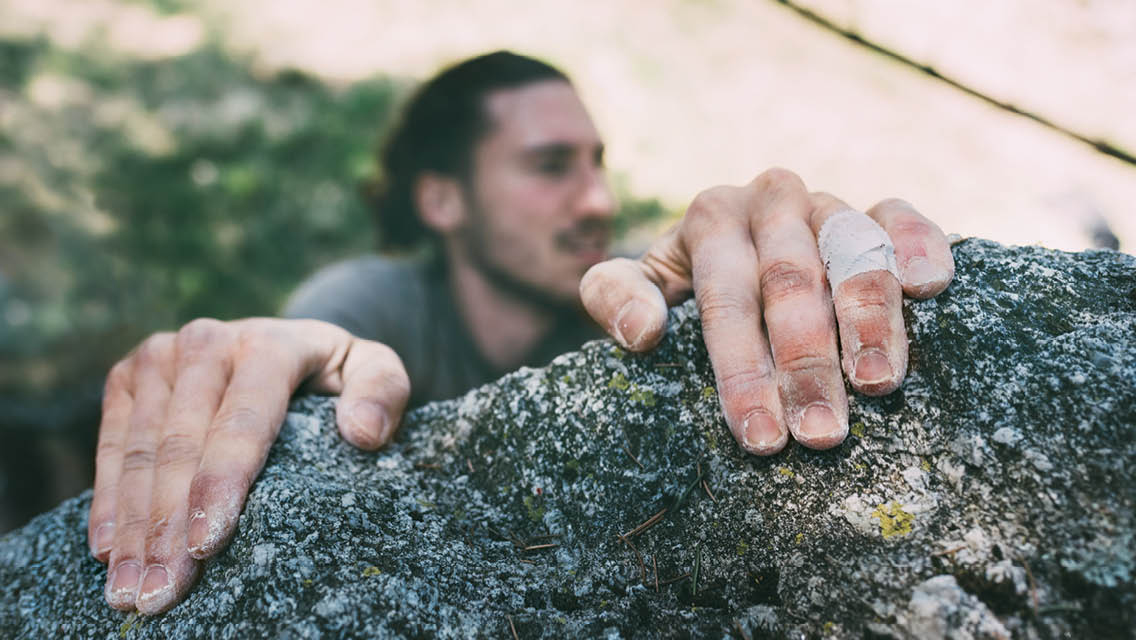
A weak grip isn’t just about your forearm muscles or joints, but it’s a proxy for total body strength and function.
In fact, research shows that grip strength reflects:
- Muscle mass
- Nervous system function
- Cardiovascular health
- Overall physical resilience
And this is possible because if you are training your body, either for endurance or hypertrophy, you will find yourself lifting heavy, and heavy enough that your grip capacity must improve and stay strong.
As a consequence of lifting heavy and moving the body under load, you will also improve your muscle mass and bone mass, but reduce cardiovascular disease risk, loss of functionality and mobility.
The Aging Connection: Strength = Survival
I assume that we are familiar with the concept that as we age, we naturally lose muscle (a process called sarcopenia). But what is really important to know is at what rate we lose strength.
In another recent clinical study (2025) it was found that grip strength predicts mortality even in specific populations, such as older adults recovering from hip fractures. In fact, a hip fracture is one of the worst incidents that can happen to an older person, because they can lose their autonomy and ability to move around.
So, more in-depth, what does that tell us?
Strength isn’t just about performance; it’s about survival.
And this is how it unfolds: A weak grip would reduce your ability to:
- Catch yourself when you fall
- Carry groceries
- Maintain independence
- Recover from illness or injury
And all of these factors influence lifespan.
Why Grip Strength (this) Matters for You (Right Now)
If you have already been to my clinic in Coburg, you would know that I don’t like to coat my communication in sugar. About your health, I will be honest and upfront:
You don’t suddenly become frail at 70.
You build toward it, or away from it, starting now.
Indeed, your grip strength is like a “check engine light” for your body.
And when it’s low, it often means:
- You’re not training enough strength
- Your muscle quality is declining
- Your long-term health is at risk
On the other hand, before we assume you have only a weak grip strength, we will definitely look into any form of tendinopathy at the elbow or any form of nerve entrapment from your cervical area to your fingertips.
The Good News: You Can Change This
So, weak grip strength isn’t a life sentence, but indeed a wake-up call.
And it is a wake-up call, because it is never too late to join a 1to1 fitness class.
To support this, we indeed have research that shows that muscle strength is highly trainable at any age.
And when you improve it:
- You reduce mortality risk
- You improve mobility and independence
- You enhance overall well-being
What We Do at Melbourne Massage and Treatment
At Melbourne Massage and Treatment, Myotherapy clinic in Coburg, we don’t just treat pain, but we build resilient bodies.
Our fitness classes for longevity and wellbeing are designed specifically to:
- Improve full-body strength (including grip)
- Support joint health and mobility
- Reduce injury risk
- Help you stay strong for life, not just for now
Because here’s my philosophy:
Step by step, but move more, live well.
In conclusion
Don’t ignore the small signals. A pain response is, yes, a body signal that something is not right, and a pain that lasts longer than 72 hours needs to be addressed.
On the other hand, grip strength might seem simple, but it’s one of the clearest windows into how your body is ageing.
Train it. Respect it. Improve it.
And if you don’t know where to start, book an Initial Consultation now.
We’ll build that strength together.
Book now an Initial Consultation for your Fitness Goals
Giovanni La Rocca
Giovanni moved to Melbourne, Australia, from Italy in 2008 and became a citizen in 2017. He started studying massage therapy in 2016, then completed a Bachelor of Health Science in Clinical Myotherapy in August 2024. During those years, he also specialised in Thai Massage and Manual Lymphatic Drainage for presentations like Lipoedema and Lymphoedema and recovery from Cosmetic Surgery. Nowadays, he runs his clinic in Coburg, Melbourne, where he integrates movement therapy into his practice to enhance overall well-being. He also values meditation, having completed several Vipassana courses. Committed to continuous learning, he aims to share his expertise in integrated therapies to help others achieve balance and resilience.