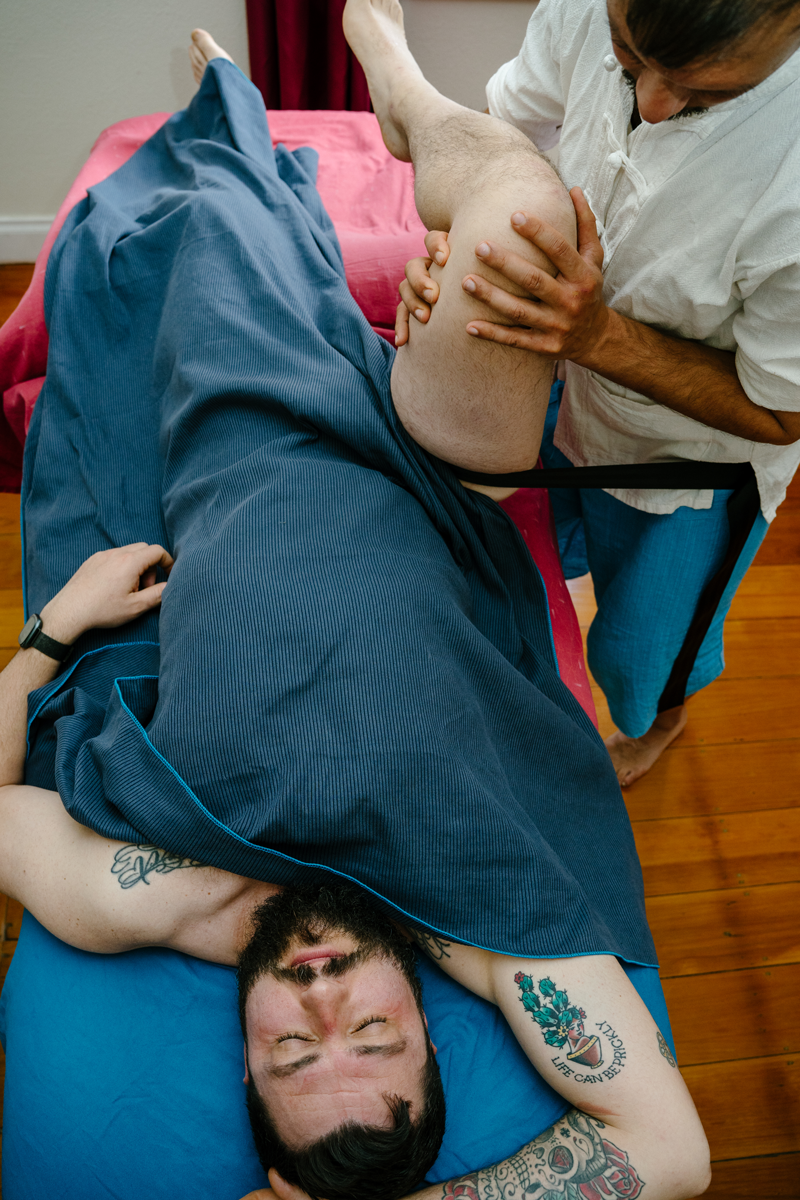
In the many presentations I get to see here at Melbourne Massage and Treatment in Coburg, hip pain is quite a common one.
When we talk about hip pain, though, we refer to a variety of presentations which can be defined primarily by the site of pain in the hip area.
So it can be the frontal side, including the groin, or the side of the hip, near the femoral head, or even the gluteal area, upper or lower. Hip pain, like any form of pain, can be debilitating, and as with other conditions, like back pain, it can make everyday activity more difficult and challenging, as the hip is a joint we use for basically any movement, and even while sitting or lying down can still be uncomfortable.
That said, “hip pain” does not always mean that the problem is coming directly from the hip joint.
Pain around the hip can involve muscles, tendons, ligaments, nerves, the sacroiliac joint (SIJ), or structures around the outside of the hip. Conditions such as femoroacetabular impingement (FAI), gluteal tendinopathy and greater trochanteric pain syndrome can also produce different patterns of hip pain.
At Melbourne Massage and Treatment in Coburg, assessing where your pain is located, what movements aggravate it and how your hip and surrounding areas move can help determine what may be contributing to your symptoms.
What Can Cause Hip Pain?
As briefly mentioned above, there are many possible causes of hip pain and injuries. Below, we are going to go through some of the most common hip pain presentations I get to see at my Myotherapy clinic in Coburg.
Ligament Tear
Ligaments are soft tissues that connect bones to bones and help provide stability around joints. Even though the hip joint is most often well supported via those 3 ligaments Iliofemoral, Pubofemoral, and ischiofemoral a significant force, sudden movement, or sporting injury can damage a ligament around the hip or pelvis. When we said that most often, the hip is well supported by those 3 types of ligaments, we refer to the fact that genetically we all have different presentations, and someone who was born with hip dysplasia may present naturally with less stability at the hip joint.
Moving forward, a ligament injury may cause pain, tenderness and a feeling of reduced stability. The gold standard diagnostic method for a ligament tear, lastly, would not be a basic hands-on assessment, but a magnetic resonance arthrogram (MRA).
Muscle Tear
The muscles surrounding the hip are among the bigger and stronger muscle groups in the body; let’s think of the quadriceps muscle group or the hamstrings. Those muscle groups, on top of being really important for overall hip functionality, are also really important for hip stability.
But, as with any muscle group, a sudden increase in load, sprinting, jumping, changing direction, or an unexpected movement can result in a muscle strain or tear. Depending on the muscle involved, you may feel pain around the front, side, or back of the hip.
Muscle tears can range from relatively minor strains to more significant tears, which result in severe pain, swelling, and bruising and may require a longer rehabilitation period.
Hypermobility
Hypermobility is a condition that involves many of my clients and is about having more laxity in the ligament tissue.
However, being hypermobile does not automatically mean having an injury, but it means that more strength in the hip muscle group is needed to avoid injuries. This is because the hip ligaments, in a hypermobile presentation, are less capable of holding the femur head into the hip socket.
Therefore, the goal is not necessarily to restrict movement at your hip joint, but to improve strength, control and tolerance to load.
Femoroacetabular Impingement (FAI)
Femoroacetabular impingement, commonly called FAI, is a condition that can affect even fairly active people, including athletes. It is characterised by extra tissue that can grow on the femoral head or on the hip socket, which may get irritated when the hip goes into flexion.
Symptoms may include pain around the groin or front of the hip, particularly with certain positions involving hip flexion and rotation.
In contrast to a hip ligament tear, imaging findings do not always explain someone’s symptoms on their own. A clinical assessment is needed to understand how the hip structure, movement and symptoms relate to each other. But, commonly, in ligament tears, the strengthening of muscle groups that cross the hip joint is quite important, including quads and adductors.
Femoral Nerve Pain
Even though femoral nerve pain is less common than sciatic nerve pain, it is still quite relevant to the topic of hip pain.
A common cause of femoral nerve pain is Meralgia Paresthetica, a nerve entrapment at the inguinal ligament that can cause numbness and pain at the anterior portion of the thigh.
Furthermore, femoral nerve pain can also result from back injury or nerve entrapment at the spine level, specifically L2, L3, and L4. To differentiate which pain comes from where, a tailored assessment is needed, including a clear understanding of the mechanism of injury and changes in body mass (especially if it happens in a short period of time) and, where needed, a scan can also be helpful to rule out either one or the other condition.
Sacroiliac Joint (SIJ) Discomfort
The sacroiliac joints are a complex structure that connect the pelvis with the sacrum and are located near the back of the pelvis.
SIJ pain can present with different levels of discomfort and in different locations, including the sacral area, upper gluteal area, or, if nerve entrapment is present, pain can refer all the way down the shin via the sciatic nerve.
Because symptoms from the lower back, pelvis and hip can overlap, identifying the exact source of pain can be difficult without an appropriate assessment.
Gluteus Medius Bursitis / Greater Trochanteric Pain Syndrome
When pain is present on the outside of the hip, it can be described as “hip bursitis” or “Greater Trochanteric Pain Syndrome”.
A bursa is a sack of liquid that protects a tendon from the bone underneath. Due to repetitive movement, a sudden increase in load or a fall on the area, the bursa can get inflamed and swollen, resulting in pain and discomfort, especially if weight is applied to it. It can also happen that when the bursa is inflamed, the associated tendon can present with inflammation; in this case, it would be the tendon of the gluteus medius and/or minimus.
Here at Melbourne Massage and Treatment, for a pathology such as this, we may look into Low Level Laser Therapy (LLLT), Myotherapy treatment and specific gluteal exercises as a recovery method.
Where Do You Feel The Pain?
This would be the first question I ask my client if they present with hip pain. The answer to this question can already give us an idea of what pathology we may be looking at. On top of that, we are then going to look at the mechanism of injury, hip morphology, mobility level and full clinical history, including present and past post activities.
All that information is quite important to understand why someone may suffer from Hip Pain.
Why Is Assessment Important?
As we discussed above, hip pain can have several possible contributors, and two people with very similar symptoms may have different underlying problems.
An assessment can look at:
- Where your pain is located
- Which movements reproduce your symptoms
- Hip mobility
- Hip and pelvic control
- Muscle strength
- How you tolerate load
- The relationship between the hip, pelvis and lower back
- Whether symptoms may involve nerve sensitivity
This information can help guide an appropriate management and exercise strategy.
Treatment for Hip Pain in Coburg
Treatment depends on what is contributing to your hip pain.
Overall, hands-on treatment, such as Remedial Massage, can be a good starting point to relax the nervous system, reduce the localised discomfort and improve overall hip movement.
Then, based on each individual presentation, techniques like joint mobilisation, Dry needling, MLD, and laser therapy can be more or less recommended.
What is common ground as a form of recovery is strength training. That said, based on the type of pain, pain location, and level of fitness, the exercise program can vary significantly.
The aim is not simply to treat the painful area. Your hip works as part of a larger system involving the pelvis, lower back and lower limb.
A rehabilitation program may therefore include exercises targeting hip strength, pelvic control, mobility, stability and tolerance to progressively greater loads.
When Should You Seek Help for Hip Pain?
As per any pain presentation, consider the first 72 hours from the start of pain as a generic inflammatory response that the central nervous system puts in place to map out what the possible injury is about. If past the 72 hours, the pain is not dissipating, it is worth further investigating the presentation.
Other things to consider when suffering from hip pain and seeking professional help are:
- Hip pain is affecting your walking or daily activities
- You have pain that repeatedly returns during exercise
- Your hip feels unstable or difficult to control
- You have significant pain following an injury
- You experience numbness, tingling or weakness
- Hip pain is affecting your sleep
- You are unable to return to your usual activities
Sudden severe pain, inability to bear weight after an injury, significant weakness or concerning neurological symptoms may require prompt medical assessment.
Hip Pain Treatment in Coburg
In summary, hip pain can have many presentations and/or injury mechanisms, and identifying the likely contributors is an important part of effective management.
At Melbourne Massage and Treatment in Coburg, assessment and treatment can include manual therapy, myotherapy, remedial massage and corrective exercise depending on your presentation.
Our focus is not simply on where you feel the pain. It is about understanding how your hip, pelvis and surrounding tissues are moving, loading and working together.
So don’t wait in pain, and hoping that your hip is going to get better with only rest, but contact Giovanni now to start a hip pain management plan.
Book now a Myotherapy Treatment for your Hip Pain
Giovanni La Rocca
Giovanni moved to Melbourne, Australia, from Italy in 2008 and became a citizen in 2017. He started studying massage therapy in 2016, then completed a Bachelor of Health Science in Clinical Myotherapy in August 2024. During those years, he also specialised in Thai Massage and Manual Lymphatic Drainage for presentations like Lipoedema and Lymphoedema and recovery from Cosmetic Surgery. Nowadays, he runs his clinic in Coburg, Melbourne, where he integrates movement therapy into his practice to enhance overall well-being. He also values meditation, having completed several Vipassana courses. Committed to continuous learning, he aims to share his expertise in integrated therapies to help others achieve balance and resilience.