While training muscles is the most common thing you would see and do in a gym, it is less common to see someone and probably yourself, doing tendon training. Indeed, a lot of people go for heavy lifting, pushing volume, chasing strength which are all great deal of work for longevity and wellbeing. But there’s a piece of the puzzle that often gets ignored: tendons.
Tendon Training vs Muscle Training
Tendons and muscles are two different body soft structures that need load to stay strong.
Tendon, as you may know, is the soft tissue that connects muscle fibres to the bone. Other differences between tendons and muscles are that tendons have little blood and innervation supply, but also a completely different type of fibre organisation and structure.
When you start a strength program, your muscles adapt relatively quickly. Within weeks to months, you’ll notice increases in strength and size, based on the type of training you do.
Tendons, on the other hand, are slower to respond, given the key difference we listed above.
In support of this statement we have a systematic review by Bohm et al. (2015), on tendon mechanical properties, which shows that tendon training requires longer and more specific loading to build stiffness and resilience.
So, what does that mean in real life?
Well, simply means that lifting heavy on its own would not be enough to strengthen your tendons, and improve their spring and sprint loading capacity. That’s where, if you want to improve your run, jumps, or lift heavier, you also need to consider specific tendon training.
That mismatch is one of the most common reasons why people injure themself after a while they do lifting as training.
Why Tendon Training Matters for Injury Prevention
Given the fact that tendons connect muscles to the bone, their role is to transfer force between those two structures. Therefore, every time you:
- Run
- Jump
- Change direction
- Lift explosively
Your tendons are doing the heavy lifting behind the scenes. And all those movements, as you may notice, are explosive motions.
Indeed, without proper tendon training, they become the weak link.
This is especially relevant for injuries like:
- Achilles tendinopathy
- Patellar tendon pain (jumper’s knee)
- Hamstring tendon issues
- Tendon tears
These aren’t just “overuse injuries”, but those are often underprepared tissue injuries.
Strength Training Alone Isn’t Enough
If you have red some of my blogs, or you have been to my clinic, you know that I’m a big believer in strength training. It builds muscle capacity and is essential for long-term health. There is no better medicine than exercise; it is a fact, not my opinion only.
But, when we look at the specificity of traditional strength training, we can se that is usually:
- Slow
- Controlled
- Focused on muscle contraction
Tendon training needs more than that.
Tendons also need exposure to fast, elastic loads, the kind you experience in real, everyday movement.
Plyometrics: The Missing Piece for Your Training
This is where plyometrics come in.
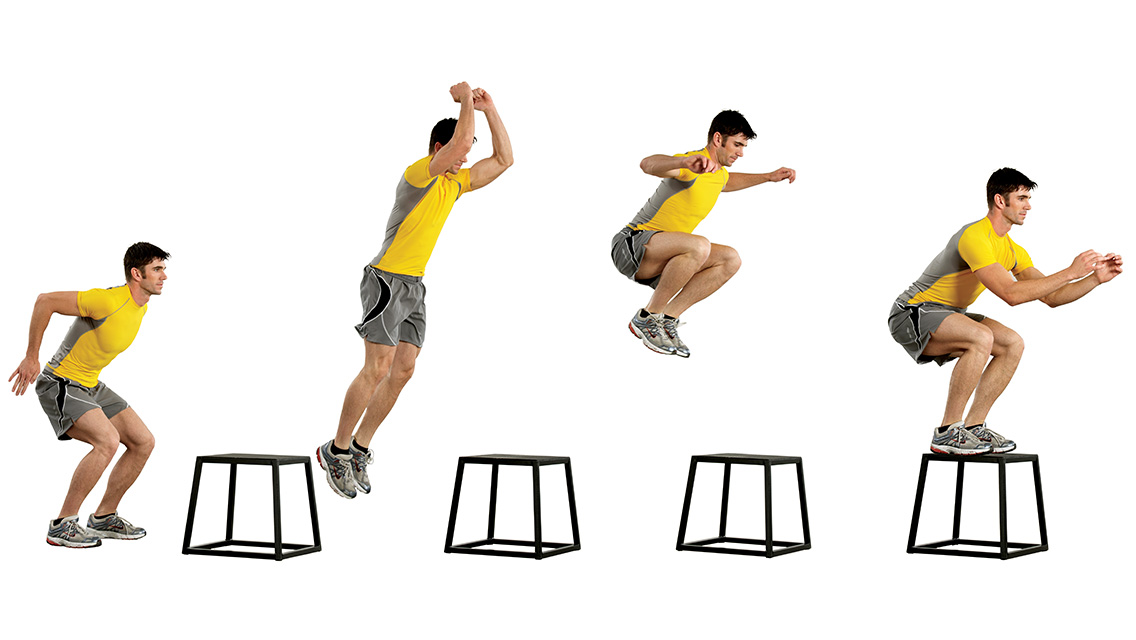
Plyometric exercises, like hopping, jumping, and bounding, are a key part of effective tendon training because they:
- Improve tendon stiffness
- Increase energy storage and release
- Prepare your body for dynamic movement
When looking into research, we have a paper by Kubo et al. (2017), which demonstrates that plyometric training improves tendon mechanical properties, making them more resilient under load.
Therefore, we have to change the way we think of tendons, visualise them as a spring, not as a static tissue.
In fact, a well-trained tendon can:
- Absorbs force
- Stores energy
- Releases it efficiently
On the other hand, an untrained tendon:
- Struggles under load
- Fatigues quickly
- Becomes prone to injury
So, What Good Tendon Training Looks Like?
By now, you may have a clue about what the answer to the above question can be, and if your training only includes slow strength work, you’re missing a crucial component.
A well-rounded tendon training approach includes:
- Strength training – to build muscle capacity
- Isometric exercises – to start loading the tendon safely
- Plyometrics – to develop elastic strength and resilience
It’s not about doing everything at once, but it’s about progressing properly.
How I Use Tendon Training With My Clients
My approach to training someone, either starting from an injury recovery with a myotherapy or remedial massage session, or via 1:1 fitness class, is to focus on building your body step by step.
My approach to tendon training is simple:
- Mobility drill
- Start with controlled strength
- Introduce tendon-specific loading
- Progress into plyometrics when your body is ready
This approach follows no guesswork. No rushing. Just smart progression.
Book A 1:1 Fitness Class Now For Tendon Training
Final Thoughts on Tendon Training
When you find yourself in a recurring pain or injury situation, it might not be your muscles that are the issue, especially if your sport activity is running, or anything based on sprint motion and quick change of direction.
That’s where it is worth it to start thinking about what your tendon training has been like.
When you train tendons properly, you get:
- Better performance
- More efficient movement
- Reduced injury risk
Here at Melbourne Massage and Treatment in Coburg, I can help you revise your training choices through my 1:1 Fitness Classes.
We’ll build a body that’s not just strong but resilient where it matters most.
Giovanni La Rocca
Giovanni moved to Melbourne, Australia, from Italy in 2008 and became a citizen in 2017. He started studying massage therapy in 2016, then completed a Bachelor of Health Science in Clinical Myotherapy in August 2024. During those years, he also specialised in Thai Massage and Manual Lymphatic Drainage for presentations like Lipoedema and Lymphoedema and recovery from Cosmetic Surgery. Nowadays, he runs his clinic in Coburg, Melbourne, where he integrates movement therapy into his practice to enhance overall well-being. He also values meditation, having completed several Vipassana courses. Committed to continuous learning, he aims to share his expertise in integrated therapies to help others achieve balance and resilience.