Applying a heat pack or ice pack to the body after an injury or when we are in pain is a widespread practice, and often there is a bit of confusion about which method to use for different types of injury. But as science has moved forward, we now know that not all the popular habits have a real benefit, and in some cases, can even do some harm. In this blog post, we are going to look into when to use a heat pack, what not to do with the heat pack, and when it can be more harmful than beneficial.
What is a Heat Pack?
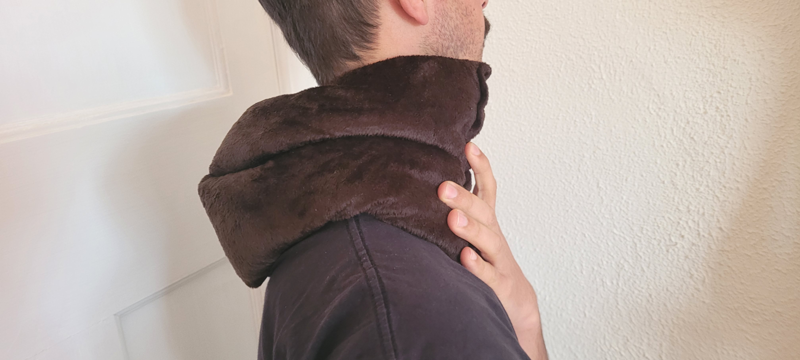
A Heat Pack is a heat source, most often a fabric bag filled with grains (like wheat or barley), that you microwave for 1 or 2 minutes (or until it is warm enough). On the other hand, you can buy heat packs at the pharmacy, which are chemical-based. Those are the snap-and-heat type of bag.
What are the benefits of a Heat Pack?
Behind the concept of adding heat to the body, there is the idea that more heat can:
- Stimulate the blood flow around the painful or restricted area
- Improve mobility
- Pain Relief
and all of those benefits are real, but what people often don’t know is that you want to limit the time you hold the heat on your body. We will talk about that in a minute; let’s first look into how heat applied to the body works.

How does a Heat Pack work?
When applying an H.P., the blood vessels beneath the tissue dilate, consequently increasing blood flow.
As a result, more healing elements such as oxygen, vitamins, minerals and so on can reach the area needing attention.
On the other hand, heat is a short-term solution for releasing tension.
In the longer term, massage therapy such as Remedial Massage, Thai Massage, Myotherapy, or MLD would be recommended to improve your ability to move and reduce the pain, but exercises and movement would be the ultimate approach to strengthen the area and get you back to do what you love to do.
For how long should I use a heat pack?
As mentioned above, most people use the heat pack without a time limit, or often they leave it on till the time it gets cold. While you can use the heat on the injured area more than once a day, leaving it there for longer than that 15-minute time frame may risk overheating the area and either burning the skin or, anyway, attracting too much blood to the area and over-inflaming the injury site.
So yes, in brief, do not fall asleep with your heat pack on; 10 to 15 minutes at a time is enough.
What type of HP are there?
- Fabric one stuffed with grains.
- Heat patch
- Hot Bottle
- Wet bag
The wheat bag is most often found in clinic settings.
The bags contain a gel, and it sits in hot water all the time.
For home use, a fabric one works just as well; you can heat it in the microwave or the oven.
In any case, handle it with care, as it can get really hot.
When to use and heat pack?
Heat packs are suggested to be used when:
- You have low-level pain, like 1-5 out of 10;
- You have joint stiffness and poor range of motion;
- You have muscle tightness that limits your mobility.
How I use a heat source at Melbourne Massage and Treatment Myotherapy and Lymphoedema Clinic
At my Coburg clinic, I rarely use a heat pack while I am treating a client. The reasons are different, but simply, I don’t want to risk overinflaming a painful area by adding heat and then doing massage on it.
Other reasons include that, with some injuries, like and ACL rupture or tendinopathy, the heat transferred from a heat pack source would not be enough to penetrate the skin and other tissue to actually reach the site of pain.
So, as a form of pain relief, I see heat working well on muscle pain areas, like your neck, back or shoulder muscles.
That said, I would strongly avoid using heat when someone presents with Lymphoedema. This is because lymphoedema patients, on the affected limb, have an increased load of protein-rich fluid, and applying heat to it could easily:
- overinflame the area;
- if any cut is present, increase the risk of infection;
- if the area is numb, the person may not realise the burning of the skin
In conclusion, a heat pack can be useful with the right setting, but is not a long-term fix for pain and aches.
Giovanni La Rocca
Giovanni moved to Melbourne, Australia, from Italy in 2008 and became a citizen in 2017. He started studying massage therapy in 2016, then completed a Bachelor of Health Science in Clinical Myotherapy in August 2024. During those years, he also specialised in Thai Massage and Manual Lymphatic Drainage for presentations like Lipoedema and Lymphoedema and recovery from Cosmetic Surgery. Nowadays, he runs his clinic in Coburg, Melbourne, where he integrates movement therapy into his practice to enhance overall well-being. He also values meditation, having completed several Vipassana courses. Committed to continuous learning, he aims to share his expertise in integrated therapies to help others achieve balance and resilience.