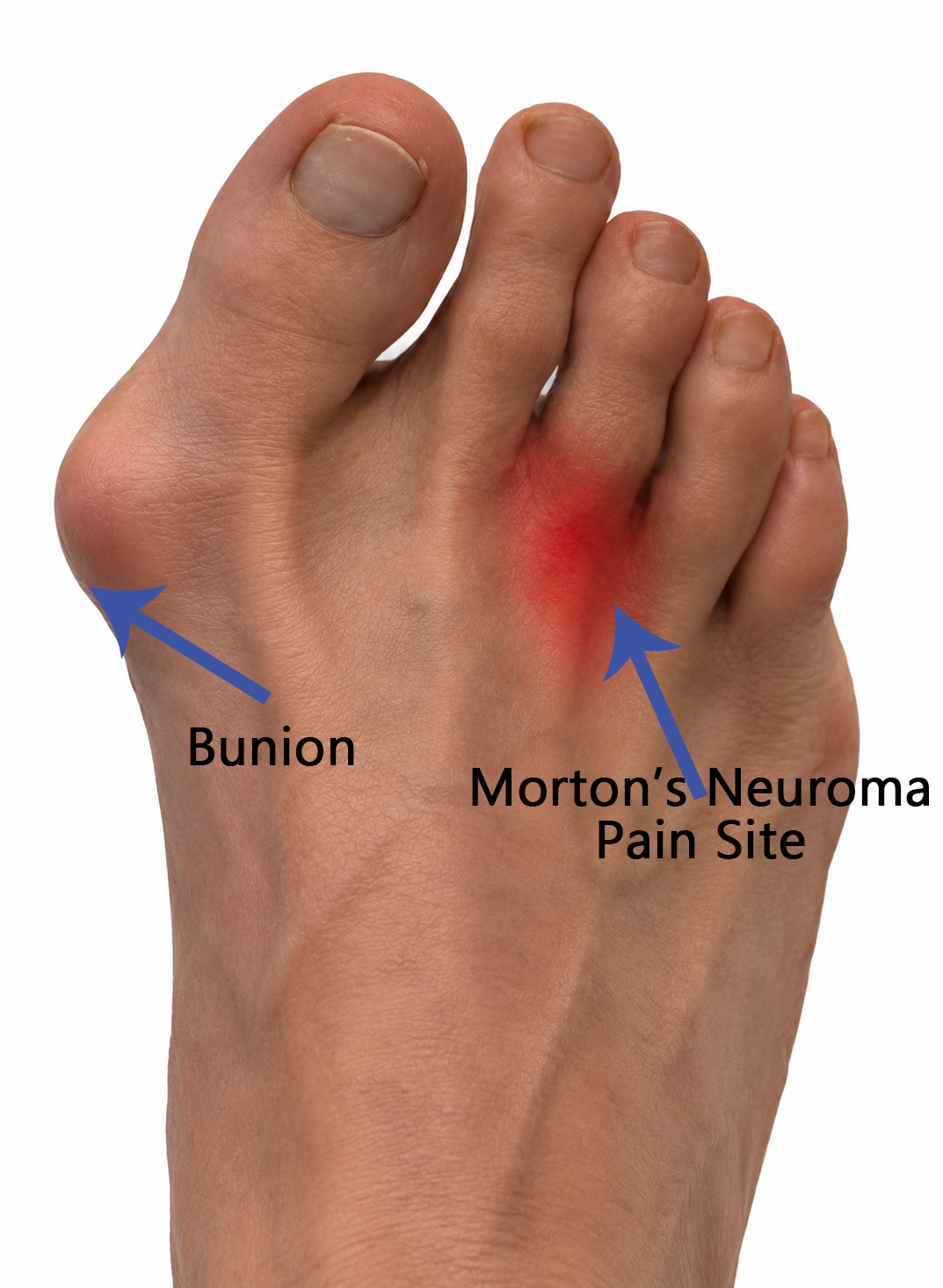
While a bunion and a Morton’s neuroma are two different foot conditions, if they are co-existing, they can sometimes influence the way the forefoot is loaded, causing delays or difficulties in the recovery process. Starting with the bunion, which medically is known as hallux valgus, changes the position and function of the big toe and first metatarsophalangeal joint. On the other hand, Morton’s neuroma is a painful condition involving one of the common plantar digital nerves, most commonly between the third and fourth toes. If you present with both conditions, treating the neuroma without considering how the rest of the foot is functioning may not always address the mechanical factors contributing to your symptoms. This is what this blog is going to analyse: Can a bunion make it harder for a Morton’s neuroma to settle? The answer is not as simple as saying that a bunion causes a neuroma, as there is not enough evidence for it. But what we know is that hallux valgus can alter how load is distributed through the forefoot, and this may be relevant when managing a sensitive or irritated interdigital nerve. What is the relationship between a bunion and a Morton’s neuroma? As mentioned above, a bunion does not automatically cause a Morton’s neuroma. That said, both conditions can be influenced by the way forces are distributed through the forefoot. Indeed, Hallux valgus can change the position of the big toe and first metatarsal, which are sitting more laterally than they should be, and alter normal walking mechanics. We know, in fact, that while walking, the big toes should be the primary driver and taker of the body weight at the toe level, and if pushed to a lateral position, it can’t take such load; therefore, the body weight is then redistributed along the phalangea box and other toes. But to be more specific, and by following what the data show, we better understand this 2025 systematic review and meta-analysis involving more than 6,000 feet found that hallux valgus was associated with reduced hallux loading when measured inside footwear. But evidence that hallux valgus consistently increases loading beneath the central metatarsals was inconclusive. And this is important because it gives a distinction between bunion and Morton’s neuroma formation, as neither is the consequence of the other. Basically, the correlation and causation effect. Indeed, foot mechanics are individual. Your symptoms can be influenced by the shape of your foot, footwear, activity, walking pattern, joint mobility, strength, and how you distribute your body weight while moving. How can a bunion affect Morton’s neuroma recovery? Now that we clarify the distinction between the correlation and causation of Morton’s neuroma from hallux valgus, we can dig more into how the bunion can affect Morton’s neuroma recovery. Morton’s neuroma is a condition that can not be recovered by only exercises or some other external interventions, but, to start with, it needs rest. By rest, we mean reducing stress on the structure involved, not no movement at all. This is why footwear modification and pressure redistribution are commonly used in Morton’s neuroma management. Therefore, the bunion may become relevant because hallux valgus can alter the way the forefoot loads during walking. For example, some people with hallux valgus develop a tendency to move the centre of pressure away from the first metatarsophalangeal joint during late stance. Research has demonstrated this lateral shift in people with bilateral hallux valgus. As a result, if the big toe can not contribute effectively to propulsion, the body may find another way to complete the movement. So again, this can overload the neuroma site, limiting rest and slowing recovery. Think about the whole foot, not just the painful spot When dealing with a painful presentation, I always invite my client to stop focusing only on the painful spot, and start to understand that nothing work in isolation. Therefore, if someone has a neuroma, it can be tempting to focus entirely on the area between the toes. But a better approach would be asking: Why is this area becoming irritated? The answer is often made up of a combination of factors, which may include: Footwear used Training load or walking volume Forefoot structure or movement Possible pre-existing injury So that’s why treating the neuroma alone may not be enough if the mechanical contributors are still present. Can bunion exercises help reduce stress on a Morton’s neuroma? The short answer is yes, but it is not always as simple. Evidence suggests exercise can improve pain and some measures of hallux valgus, particularly in mild-to-moderate cases. However, this is different from saying that bunion exercises have been proven to treat Morton’s neuroma. So what we can therefore assume is that by improving the foot mechanics and load, we may reduce stress on the neuroma site, assisting the body’s natural recovery. Exercises may include: controlled big-toe movement exercises to improve intrinsic foot muscle control toe spreading exercises strengthening exercises for the foot controlled calf and ankle exercises balance exercises progressive weight-bearing exercises exercises that improve the way the foot controls load during walking And there is no one-size-fits-all. What we should focus on too is the ability and capacity of the individual, and then work on what they are missing out on. As an example, forcing the big toe into a position with a toe separator simply because someone has a bunion is not necessarily appropriate, and it may not create the desired change anyway. The aim is not to “push the bunion back into place”. The aim here is to improve the available movement and control of the foot and help the person tolerate load more effectively, yes, starting from the big toe, if a bunion is present, but the focus has to be also on the other toes, as well as the ankle. Can big toe mobility affect pressure on a Morton’s neuroma? For what we know, the big toe plays an important role during walking, particularly during the later part of stance. For simplicity, we expect […]
Tag Archives: Morton’s Neuroma

Blog
Facet Joint Irritation and Muscle Weakness: What You Need To Know
In my experience as a Clinical Myotherapist at Melbourne Massage and Treatment Myotherapy and Lymphoedema [...]
Continue reading
16
Oct
Oct

Blog
Chronic Pain: What it is, and what can you do about it?
Pain is something that we all experience, and it can start after an injury, during [...]
Continue reading
09
Oct
Oct
Blog
Bunion and Morton’s Neuroma: Can a Bunion Affect Neuroma Recovery?
While a bunion and a Morton’s neuroma are two different foot conditions, if they are [...]
Continue reading
26
Sep
Sep
Blog
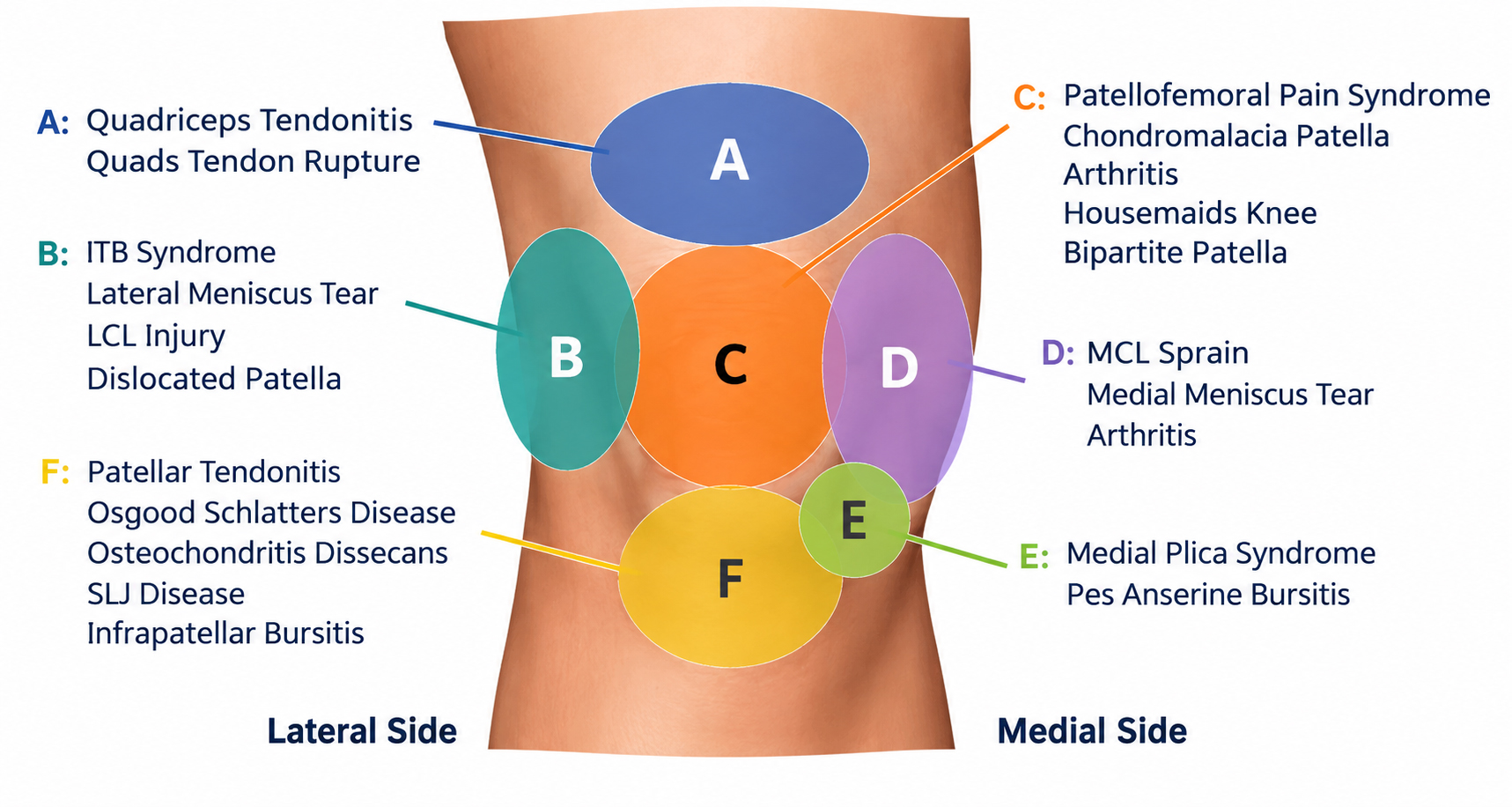
Knee Pain in Coburg
Knee pain is a common form of injury and can affect people of all ages [...]
Continue reading
21
Sep
Sep

Blog
Post-Surgery MLD Melbourne – Vodder MLD Therapist
Any form of surgery is an invasive procedure for the body to deal with, and [...]
Continue reading
14
Sep
Sep