Tag Archives: therapeutic

Tmj and MLD

TMJ or Temporomandibular joint is bilaterally located on the side of the human head. TMJ and Movement Upper Compartment Protrusion Retrusion Lower Compartment Lower the Jaw Raise the Jaw Lateral Deviation Said so: the opening is the combination of Protrusion plus Lowering the Jaw closing the mouth is Retrusion plus Raising the Jaw. TMJ and Pain When TMJ is in pain, we can find it hard to talk, eat and sometimes even rest, as the pain can be pretty strong. Moving forward, not everyone knows that deep under TMJ we have what we call Parotid Gland. The Parotid Gland is a salivary gland, and if gets infected, it can swallow up and be quite painful. What can happen at the Parotid Gland is an accumulation of calcium in its duct, and saliva can’t be expelled. Even though viruses or bacteria can also be responsible for TMJ infection. What also most people are not aware of is that in the Parotid Gland, there are lymph nodes. TMJ and MLD. The fact that the gland can be swollen is an indication that fluid is stuck in it. MLD, thanks to the boosting of the lymphatic system, which is responsible for reducing swelling in the body, can be the perfect technique to reduce the swelling and so restore the functionality of TMJ. If this post talks to you, book your next massage session by clicking here. The Parotid Gland lymph nodes unload their Lymph Obligatory Load into the cervical nodes. So as per usual, at the start of the MLD treatment, we will work along the upper neck, medial neck and then the terminal (just between the clavicle and the upper trap). In addition, what makes a difference with MLD is that is a pain-free technique. That would allow the client suffering from TMJ pain to receive a treatment that would not aggravate the pain feeling and would end up giving a deep relaxation too. fi Other work techniques can be used, such as Myotherapy and Remedial Massage trigger point, or dry needling for Myotherapy treatment. The Remedial Massage TMJ treatment is a valuable technique but would not resolve the problem at the root cause. In conclusion, MLD is probably the best manual, not invasive treatment that can be done for TMJ. Talk to your dentist about this option, and if they are not aware of what MLD is, don’t be surprised, it is, yes an excellent technique, but it is still not well known by many practitioners, dentist included.      

Range of Motion

Range of Motion Cervical Lateral Felxion

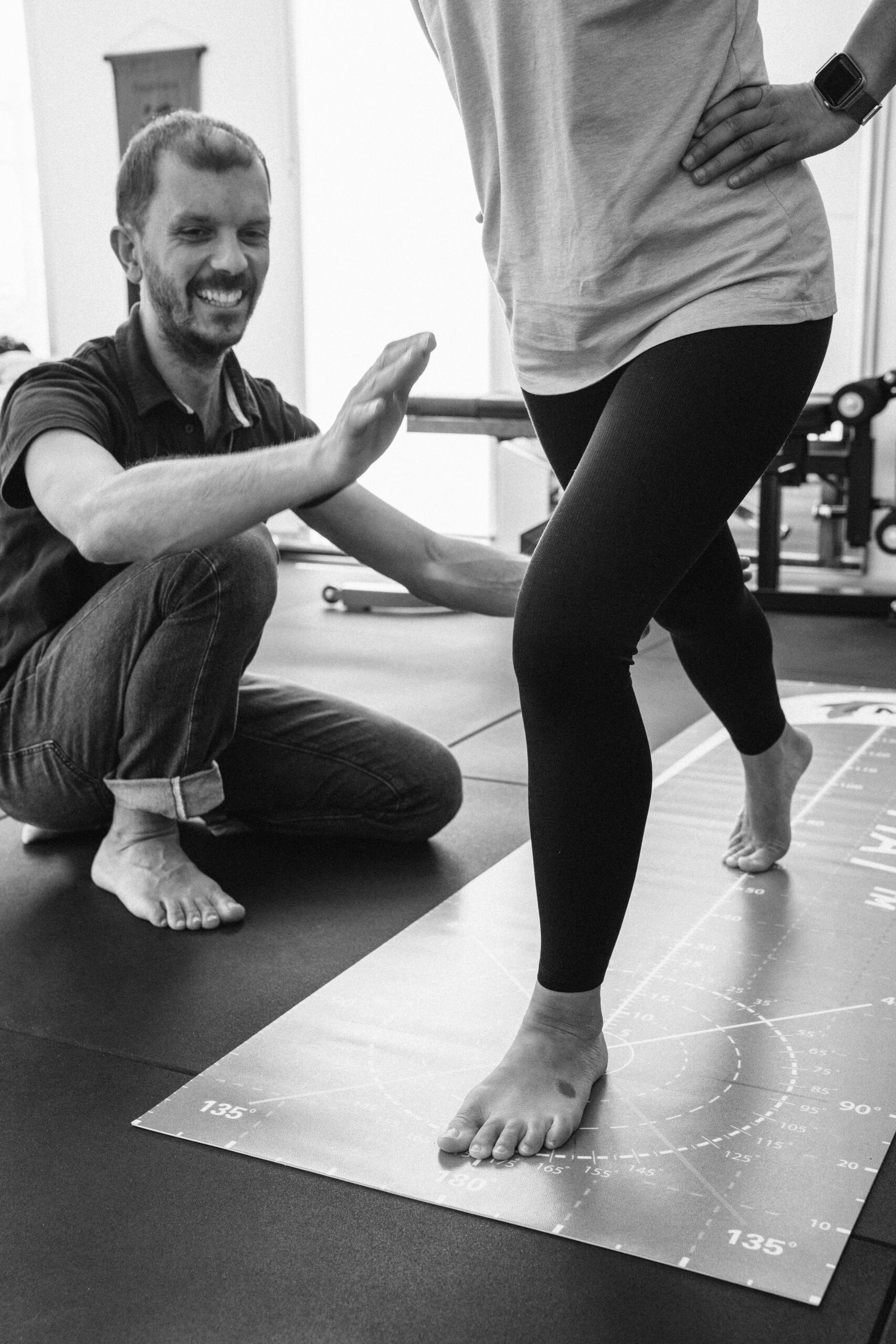
Range of Motion is the movement of a joint within a 3-dimensional space. For each joint, we expect a minimum and a maximum degree of movement. When to use a range of motion evaluation. Before performing a Myotherapy, Remedial Massage, or a Thai massage session, we check for a Range of Motion, also know as ROM. Checking for ROM is to establish the functionality of the joint and the muscles that surround it. For example, when a client walks in complaining of cervical pain, the first thing we look in too after the postural assessment is the ROM. A postural assessment is an evaluation of the skeletal structure. After that, we ask the client to do specific movements with their head. Like, Rotation side to side, flexion, extension, and lateral flexion. Indeed, these are the basic range of motion for the cervical area. What can this range of motion tell us? Well, depending on the essential mobility of the person, we expect a minimum and maximum range. Let’s say that the client has average mobility; we expect the range of motion of their cervical to be: Flexion (able to flex the head forward and leave a gap of 3cm between the chin and the sternum) Extension, we look in too 70° of movement Lateral Rotation we look in too 80° of rotation (the chin is nearly in line with the shoulder) Lateral Flexion we look in too 45°. If this post talks to you, book your next massage session by clicking here. Is the range of motion the same for everyone? A person with a hypermobile joint range may have a 10° about less ROM than this. Indeed, a person that has a hypermobile joint range can reach 10° furthermore. That’s why every person needs his evaluation. Moving forward, if the range of motion is limited, it could be a muscle tightness or a joint mobilization issue. The best approach for improving joint mobilisation is the Myotherapy treatment or Thai Massage.  Both techniques relieve muscle tension and improve muscle tone and joint mobility. The release of tension from the muscle would improve the ROM. On the other hand, when we ask a client to do a ROM, we don’t look only for the length of movement. Quality of movement. For the quality of movement, we refer to how smooth the movement is. Is the client trying to compensate for the cervical rotation by flexing the head? Is the client compensating for the flexion by shrugging the shoulder? Indeed, the movement of a joint is the key to understanding what muscle is responsible for the pain, discomfort or limited ROM. Once we individualise the key muscle/s, we can address the issue. Different types of ROM. In conclusion, the ROM can be active, passive and resisted. The client itself does active ROM. Passive are ROM done by the therapist with no assistance in controlling the movement by the client. Reisted is ROM active done by the client, with a resistance force applied by the therapist again the client’s movement. Each of this ROM can tell us something different about the joint. Active is about muscle lengthening. Passive is about joint mobility (ligament and tendon) Resisted is about the strength of the muscle. We can’t use the Resisted if Active or Passive reproduces pain. That would not be safe. Regarding the Resisted ROM, the resistance is applied in 3 different levels. When the pain gets reproduced, we stop the test. Occasionally, an orthopaedic test can be performed too. Orthopaedic tests are specific tests to evaluate in specific the muscle involved in the limited ROM.  

Corrective Exercises VS Massage

corrective exercises fore arm

As Massage Therapist, I often see people who come in for treatment due to pain and discomfort. Indeed, I am more than happy to be that person who, by manual therapy, can alleviate others’ agony. Exercises post-treatment. At the end of the treatment, I tend to show the client a series of corrective exercises and, most of the time, a straightforward one. Those corrective exercises must be done to help maintain the change we created in the body along the massage session. Massage treatments like Myotherapy, Remedial Massage, Thai Massage or MLD can be a good starting point to change the musculoskeletal unbalance of the body. Even though the changes we created will not last long unless there is constant work done on it. So, when the client returns to routine life, those change tends to disappear quickly. That’s why we give clients exercises. How can exercises help? Exercise can help address everyday muscle weakness, joint stiffness and or painful presentation on your own time. And yes, I understand it’s hard to find the time to do exercises, but would you rather live a life in pain or find a way to feel better about yourself? It’s part of our behaviour to want the fast, quick and immediate change we want. Isn’t it?! But nothing comes easy in life. We must learn that changes take time, and along this time, we must work hard for it. Said so, I am more than happy, and I feel honoured to treat people. I feel like Massage skill is one of the skills that can change people’s life. And when I do run a Thai Yoga class and teach people the exercises, I feel even more accomplished as a massage therapist. Book your next massage session by clicking here if this post talks to you. In conclusion, postural exercises are the key if you are willing to get rid of the body ache and pain. Then, working at the gym or doing sports activities is still as important. But those activities, if not monitored by a coach or done professionally and with full awareness, can lead to injury and pain. Indeed, when doing strengthening exercises, you want to ensure you correctly use the body biomechanics. But not only that. Indeed, you want to make sure that your joint has enough range of motion to deliver that action correctly. Following this link will give you access to the Thai Yoga Class videos.    

Neck Pain

Neck Pain from a wry neck

Neck pain is something that we all experience at some point in life, and it is not fun. Neck pain can manifest for very different reasons; it can be chronic, it can come and go, and it can debilitate our day. In this blog, we are going to look at the different aspects of neck pain. Cervical Anatomy – What’s In Your Neck? Firstly, we should understand neck anatomy. The neck is formed by the cervical vertebrae, which run from C0 to C7. Upper Cervical The first 3, so C0, C1, and C2, are a bit unique, given their position and to the muscle that they connect, they can be considered the upper portion of the cervical. Along those 3 vertebrae, we find the Occipital Muscle Group, which we discussed in this blog post. Lower Cervical From C3 to C7, indeed, we have the lower portion of the neck. Along those vertebrae, we find different muscle groups. Some of those connect cervical vertebrae to the thoracic ones, like Splenius Cervicis. Others connect the vertebrae to the scapula or to the skull, like Levator Scapulae and Splenius Capitis. Lastly, we have the upper portion of the Erector Spinae group, which connects the rib cage to the Cervical and Skull area. Like, Longissimus Capitis, Longissimus Cervis, Illiocostalis Cervis and Semispinalis Capitis. Not only muscles On top of all the muscles we mentioned above, the neck is also a busy junction of veins, arteries, nerves and ligaments. So now you may start to understand that neck pain is not only an issue that is muscle-related, but it could be from a combination of reasons. What Can You Do About It? Being in pain is not a fun thing. I can be debilitating and change your mood for the day. If you are experiencing neck pain or any type of pain, always consider this: Pain can be a result of inflammation. An inflammation that lasts 24 to 72 hours is just a body response that is under control. If pain lasts more than 72 hours, it is time to seek help. How Can I Help With Neck Pain? If your neck pain is not settling and you need help, choosing the right type of therapist can really change how your neck feels. At Melbourne Massage and Treatment, in Coburg, when I get someone who presents with neck pain, the first thing I will do is go through their medical history, and I will look at a possible mechanism of action that leads to the neck pain being there in the first place. Once we have an idea, or more awareness of why neck pain manifests, we can consider what the best treatment plan is to go for. Is Massage Enough to Fix Your Neck Pain? Massage, or any form of hands-on treatment, including cupping, dry-needling, and even MLD, is a wonderful technique that can help in settling your symptoms and relieve the initial discomfort. But to really change the presentation and ensure that the neck pain is not a recurring presentation, we need to look into it a bit further, and most luckily, intervene with some form of mobility and strength exercises. Below is a brief breakdown of things that we may want to investigate and how we will address them. Mobility-Stability Joint Chain As mentioned above, the cervical area is composed of two groups of cervical C0-C2 and C3-C7, which are correspondingly mobile and stable joints Below your cervical, we then have the Thoracic portion of your spine, which is a mobile joint (T1-T12). Lack of mobility in this section would then put a lot of stress on your cervical stable portion (C3-C7), which would try to act as mobile, leading to facet joint irritation. History of Whiplash Whiplash is a form of trauma that can affect your cervical joint for years, unless proper rehabilitation is done. To restore your neck pain from a whiplash presentation, we will have to assess the chronicity of the presentation, which may start with some hands-on treatment, like mobilisation and deep tissue massage, and move on to strengthening exercises for the neck and mobility for the thoracic. Neck Pain And Headache Muscular tension headaches are a real thing, and they can affect your daily life, impairing your functionality and ability to deliver a task. Muscular tension headaches are not migraine, and hands-on treatment and exercises have the potential to get you out of pain and restore your well-being. Muscular tension headaches are a result of tension accumulating in your cervical and upper shoulder muscles, which refer pain to a specific spot on your head. FAQs      

How Often Should I Get a Massage Appointment?

Upper Trap Remedial Massage

Massage appointments, how often? How often should I come for a massage appointment? Often I got asked this question, and the answer is not as simple as. A massage, that is Remedial Massage, Thai Massage or MLD treatment, has the aim to heal a condition or alleviate the pain. Well, at least that’s the main aim of those techniques. Said so, the second, but not less important task for a massage is to induce relaxation. Therefore, if you are aiming to get some relaxation, I would suggest considering getting a massage appointment regularly. Like, every 2 weeks, every month or every 2 months. Of course, depends mostly on finance. So, a regular massage appointment, allows the body and mind to aim for something positive. It is like a reward. On the other hand, if the message is not limited to relaxation time, then, you may need it more often. That’s the case when the client comes to the appointment that is in pain (99% of the time). If this post is talking to you, book your next massage session by clicking here. The fact that you are in pain can be a sign that the body issue has been there for a while. Indeed with a massage, we can alleviate the pain, but to actually fix the issue (if it’s fixable by the way) or to make the best out of what the condition is, we need to do more than one session. In fact, one session may release the pain for a couple of days, but then, as you go back to your daily routine, the pain would come back. Therefore, a series of close massage appointments, in a short time can actually help for the best. Another important aspect of pain management is exercise. Corrective exercises are a key role in expanding the time between one session and the next one. If you actually do the exercises, you can by yourself improve your body conditions, reducing the risk of injury and pain. In conclusion, the frequency for which you should attend a massage appointment is based on your needing. For a Remedial massage or a Thai Massage, you may wanna initially see the therapist once a week for the first 3 to 4 weeks. With MLD is different. With MLD the need for seeing a therapist can be more frequent. Obviously depending on the condition that has to be treated.    

Cupping, what about

cupping on back

Different ways of using a Cup. The cup usage is a gentle way to dissolve body tensions, and as already mentioned in the previous post cupping is a fabulous way of working on the body. Indeed, let’s not forget, that when I talk about cupping on this blog, I don’t refer to any practice that involves blood extraction or skin cuts. The usage of cupping for me, starts and stop to do work on the skin and fascia. Cups can be made of plastic, glass or bamboo. Depending on the type of cup in use differents are the methodology used to create the suctions. When glass cups are in use, in order to create a vacuum, heat is applied to the cup. In fact, the heat will burn out the oxygen in the cup, creating the vacuum effect. On the other hand, when the cup is made of plastic, fire is not in use. To create the vacuum with the plastic one is used a pump. So, when plastic ones are in use, the cup gets placed on the body of the receiver and with the pump, the air is pulled out. As per result, the therapist is to be aware of the type of skin she/he is dealing with. Paler skin is keener to bruise. Furthermore, the skin of an older client may be keener to break. So again, when a manual massage is given, not all the clients can receive the same type of treatment. If this post is talking to you, and you are in need of a massage, book your next session by clicking here. Moving forward, once the cup is applied to the skin, and the vacuum is created, the cup can be moved. This type of cupping is called dynamic cupping. Moving the cups around allows the skin to be pulled, and can create a change in a full fascia area. Furthermore, is by observing the client’s skin elasticity that the therapist can decide in which direction to apply the cupping. In fact, the aim would be to drug the cup in a direction in which the skin doesn’t move so easily. Said so, not let’s forget that, before applying the cup, on the client’s body will be applied cream or oil. This will allow reducing the frictions between the cups and the skin. In conclusion, to make the cupping even more effective, when the cup gets drugged around, the client can also move the joints which are in control of that skin section. For example, if we are doing cupping on the quods, we can ask the client to flex the knee. That would create extra skin pulling.  

Fascia

Fascia Photo

What is Fascia? Why is it so important? How does it work? How can Thai Massage help improve fascia mobility? A fascia (from Latin: “band”) is a band or sheet of connective tissue, mainly made of collagen, that sits below the skin and attaches to, stabilises, encloses, and separates muscles and other internal organs. Firstly, fascia can be classified by layers: superficial, deep, visceral, or parietal or by its function and anatomical location. Like other body parts, such as ligaments, aponeurosis, and tendons, fascia is made from fibrous connective tissue. In addition, these connective tissues contain bundles of collagen fibres oriented in webby patterns, parallel to the direction of pull. About collagen fibres, they are produced by fibroblasts, contained within the fascia. In conclusion, fascia differs from other body components such as ligaments and tendons.This is because ligaments hold bones together, and the tendons attach the muscles to the bones. Going ahead we can define F. based on its location and Superficial F. This is found just below the last skin layer, the subcutis, in most regions of the body, blending with the reticular layer of the dermis. Muscular F. Defined as the fibrous layer surrounding the muscle, or other body parts such as nerves, bones. Visceral or parietal F. This type of structure suspends the organs with their cavities and wraps them in layers of connective tissue membranes. In regard to the functionality of the F., we look into the ability of this tissue to allow the muscle to move freely. If this post is talking to you and you are in need of a massage, book your next session by clicking here. So let’s imagine this really thick web, sitting between the skin and the muscle and around the muscle too. If the web is overconnected, that means it is tight, and the muscle would find it difficult to move and slide. The same would happen for tendons and organs that need to function by being able to move freely. For example, it does often happen to see customers that when asked to flex the shoulder, as they bring the arm over the head, past the 90° point, there is noticeable dragging in the fascia along the anterior and/or posterior and/or lateral thoracic area. The person, unless told to feel what happens in the thoracic area, would hardly be aware of any restrictions in the thoracic area. Having said that, we can now open a Pandora’s box and talk about the fascia lines. Fascia lines connect the body side to side in the long, for the horizontal and diagonal directions. As per the example, we have an F line that travels from the foot to the head. Indeed, this F line starts from the Fibularis M, going up for the IT Band, into the TFL, Obliquos Abdominal muscles, opposite Serratus Anterior, Rhomboids, and finally to Splenius Capitis.As a result, someone who suffers from flat feet, and so has Fibularis M, under constant pulling force, may experience shoulder pain on the same side of the body because of Fascia restrictions. But there are more F. lines than the diagonal ones. In fact, we got a Superficial F. line, Functional F. line and Lateral Lines. So, lastly, how can Thai Massage help? Thai Massage can help with stretching the fascia by applying a force on the skin in the direction of the restriction. It is enough to check in which direction the skin feels tight, and that’s the direction in which we want to apply a stroke with a pulling force, strong enough that the client does actually feel a stretch. At Melbourne Massage and Treatment, I use techniques of work like MFTT and/or Cupping and static/dynamic stretching. In regard to cupping, add MFTT, which is a technique of work that I did learn at RMIT along with my studies for the Diploma in Remedial Massage. The static/dynamic stretch, indeed, is part of the techniques used along with the Thai Massage. In conclusion to this blog post, I would like to invite you to see this video from Dr Gil Hedley, which dives into the magnificence of Fascia.

Thai Massage Pichest Style

Pichest Teacher

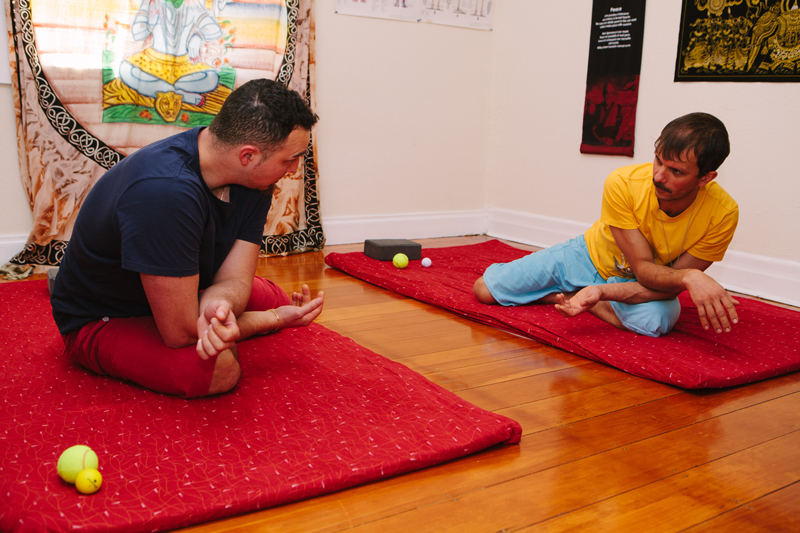
Remedial Massage and Pichest Thai Massage Technique. Melbourne Massage and Treatment is a Massage clinic that offer services that combines the understanding and approach of Myotherapy with the eastern practice of Thai Massage. I, got into too massage therapy back in 2016, when I did study a Certificate IV in Massage Therapy at the SSNT, in Fitzroy, Melbourne. After that course, I got inspired and directed by a friend to go and study in Chiang Mai, Thailand with Pichest Boonthumme. I could never make a better choice. Was March 2018 when I first started studying with Pichest. But who is Pichest Bonthumme? Why training with Pichest can make a difference? Pichest is probably the most famous and talented Thai Massage teacher/practitioner alive. Pichest was born in Hong-Dong (district south of Chiang Mai) in 1958. He started practising massage in his 20’s at the Chiang Mai Medicinal Hospital, where his father was working as a massage practitioner. It was Pichest’s father who told Pichest himself the basics of Thai Massage. As Pichest was practising and working at the old medicine hospital, he realised that the technique of work that he was using was demanding on his body, till the point he injured his back. From this problem, he creates his strength. He starts working on himself, through meditation practice and devotion to the Buddhist religion, he creates and shaped a new way of massaging and using his body to heal the next one. As you may be aware, Thai people are not so told, and that’s the case of Pichest too. So Pichest massage technique is based on using the body shape and weight to apply pressure on the body of the receiver. Indeed, with this way of working, there is not really a sequence to follow, but there is a pure intuitional approach to go for. Observing the client in their movement and body shape/tension is all you need to start with. Next, come’s the sharpening of the touch. Learn how to feel the tension in the different body parts. In conclusion, once those practices are combined, the Pichest Thai Massage technique is not something that we can achieve in a day or a week of training. We need constant work, in everyday life as it’s more a habit than just a way of massaging, and it’s different from practitioner to practitioner, as we are all different in body size and weight. So where I am with this way of working. I have been studying with Pichest for several months, along with 2018 and 2019. Thanks to previous experience, in the massage industry and elsewhere, I found it easier to start working with the Pichest technique. Said so, there was and still, there are several improvements that I have to achieve. But back to the comparison to a general Thai Massage, Melbourne Thai Treatment offers a more unique way of massaging, as I focus more on the individual needs and not on a general sequence that I can apply to anyone. To reinforce my understanding and knowledge of the body and its way of working I took an Advance Diploma in Myotherapy, at RMIT University. This course allowed me to improve my anatomy knowledge and understanding. If this post is talking to you, and you are in need of a massage, book your next session by clicking here. In addition, I could appreciate even more what I did learn with Pichest, as working on the floor as we do as Thai Massage therapists and working on the table, as Remedial Massage therapists do, are 2 different realities. Working on the floor allows you to move freely and you can use all your body weight as needed to apply pressure. Where, working with a table, you are standing all day long, you must apply force just with your upper body, and the use of hands is demanding, to a point that a massage therapist after few years of practice can injure its hands or wrist badly. Furthermore, working with a Remedial Massage technique style you can use only your hands and elbow to manipulate and massage the receiver. With the Thai Massage, thanks to its intuitional approach you are allowed to use feet, knees, elbows or other body parts. So, the use of knees, feet or other body parts is strictly subjective to the therapist ability and the client needs. It is easier to apply stronger pressure with a knee than a hand probably, but this doesn’t mean that the work done with a knee must be strong all the time. You may wanna use the knee just because you and the client can be in a more ergonomic and comfortable position. But how you can apply the right pressure with the knee? Well, that’s part of our training. Walking with the knee of the wood floor is a start, but also moving from seated to standing on the floor is part of the training. In fact, the Thai Yoga exercises are part of the training that we take as therapists to heal our body from tensions. To finalize, Melbourne Thai Treatment is yes a Thai Massage service, but is based on eastern and western practice and understanding of the body. In order to, improve and enrich my knowledge than, for the upcoming year (2022) I will look into starting a Myotherapist course, always at the RMIT. This is because I would like to add to my practice service as dry-needling and have still a better and more complete understanding of the body and its functionality.

Dive in, to let it go…

Time to let go

Often, we get told that we should ” let it go “. How easy it is to say such a thing, but how hard it is to do so. When I was studying in Thailand to be a Thai Massage therapist, our teacher, Pichest, was making so much fun of us students when we were trying to approach his massage technique. And he was right to laugh. What students there are trying to do, is copy his movement without having his fluidity in approaching the Thai Massage technique itself. So, how does he teach others to let it go? This is how I did find a way to interpret Pichest teachings. Let’s start exploring the meaning of “let it go”. Let it go stands for no holding back on something/someone. No holding on to a loved one, an object, a situation or a feeling. So how we can recognise the fact that we are holding on to something then? This, I think, is the starting point. Recognize where and when we do hold on to something. From here, we can understand how to let it go. We tend to hold on to situations and feelings that make us feel safe, happy or protected. As these situations get exposed/under threat, we tend to tense up with our bodies. The first step, in order to recognise those tensions, we have to live in a clear state of mind, by reducing the body/mind intoxication to a safe/personal level. As the connection with the body gets clearer and deeper, we can start facing how that attachment affects our being. As you feel the body’s sensation arises, you should learn how to breathe through it. Let your breath be. Often, when I do give Thai Massage or teach a Thai Yoga class, I have to remind the client of the importance of the breath. Breathe in and out from the nose and focus on the body area that requires your attention. Don’t feed the hunger or the fears that would arise, but do not feed the excitement and joy of understanding the tensions; just feed your breath. As this cycle of understanding of the body takes place, we will automatically learn how to release the emotional tension/s related to the body’s sensations. Furthermore, working from the outside, just on the body level, such as exercises and work-out, is just a shallow approach to the let-go action. The strong work on the body will actually disconnect the body/mind connection. This is because hormones produced during physical exercise will fake up the body’s feelings. In conclusion, that’s how we can dive into letting it go, by slowing down the intake of sensorial input and by focusing on the body sensation that arises from discomfort situations.


This will close in 0 seconds


This will close in 0 seconds


This will close in 0 seconds