Category Archives: Blog

Scap-Off Load

Scap Off Load Remedial Massage SetUp

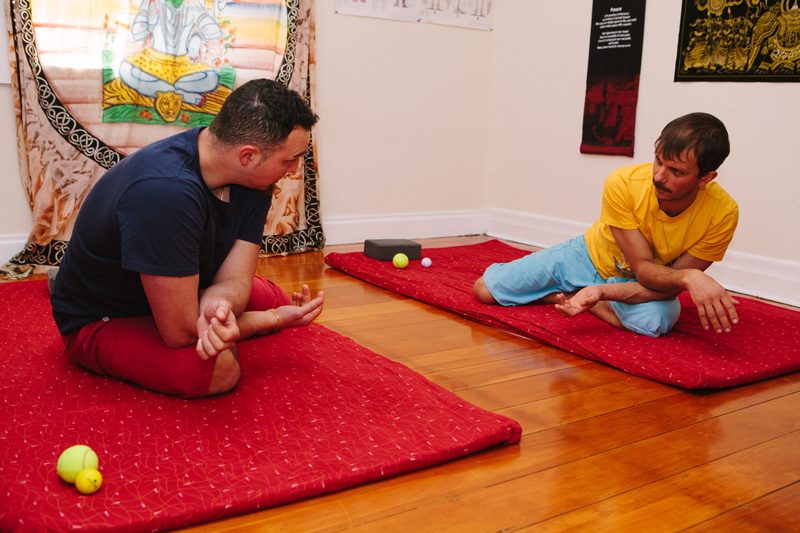
A Scap-Off Load is a special test or functional test that we use to evaluate the implication of Lev Scapular and Up. Trap in Cercival Rotation. As previously mentioned, in cervical rotation, we got a fair bit of muscle working towards this action. As many clients come in with cervical pain, it’s time to explain in more detail what’s going on there. Cervical Rotation. How does it happen? So, when we rotate our head, either right or left, the muscle on the same side of the rotation movement is contracting. If a muscle along those is weak, we may reproduce pain in rotation along the same side. To thin down which muscle is responsible for the limited ROM, we have to safely deactivate some of them to see if the left behind one can deliver the expected movement. Here is an example of how scap offload works. If a client comes in with 30° Cervical rotation on the R and pain on top of the scapula, that could be an indication that its levator scapulae is the muscle to target. To confirm this hypothesis, I would ask the client to shrug their shoulders and flex their elbow (the client is sitting on a stool). After that, I will make my way behind the client, and I will support their shoulder weight with my forearm and hands. As the client relieves the shoulder tension, that lev scapulae and up. Traps. are now deactivated. The next thing would be to ask the client to perform the cervical rotation. Ideally, I would like to see the client have a full range of motion (80° to 90°). If this post talks to you, book your next massage session by clicking here. That would tell me that the only muscles that are limiting the cervical rotation are the lev scap. and up trap. On the other hand, what could happen, is that the cervical rotation is, yes improved, but still limited, compared to the ROM expected. In this case, the muscles involved in the stiff range of motions are not only lev scap. and or upper trap. In fact, what is causing the limitation is the cervical occipital muscles. And yes, spending long hours at the computer or looking at the phone doesn’t help. After this test, to narrow down even more which other muscles are involved in the stiffness of the cervical area, I do run another series of tests. Those tests would look into joint areas like C0-C1, which would refer to Obliquus Capitis Superior muscle, and the C1-C2 test, which would look at tension for Obliquus Capitis Inferior. Furthermore, for the other facet joints that make up the lower cervical region (C3 to C8), I would analyze each facet joint individually. These series of tests are indeed part of my Myotherapy training. Last would be then the usage of the joint mobilisation technique. In this case, we would look into what joint has lost mobility or which one has an excess of it. Strengthening the cervical. In order to improve the presentation, massage on its own is not enough. As per any condition so far, the strengthening of the muscle, in this case, the cervical and upper thoracic one, would allow to prevent further pain and discomfort. The work that the cervical muscle has to do daily is considerably high, giving the natural weight of the skull. So exercising a chin tag in a supine position can help. Ideally, we would do these exercises in the supine position (lying down face up) so that we have gravity to fight back as we train our deep flexors. To further improve the strengthening, once the chin tag is not enough, we can start using a soft rubber band to create resistance. Said so, be mindful that the cervical area is a delicate area to work on too, and those exercises are best practice under the supervision of an expert trainer or massage therapist.

First Massage Appointment

Giovanni giving a Thai Massage as part of treatment plan to a client

First Massage Appointment. At Melbourne Thai Treatment, a first massage appointment session does last a bit longer than a regular appointment. Indeed, if you go on the booking page, you may notice that the first appointment lasted 75mins. Why so?! Well, within the first appointment, as a therapist my aim is to track down your Clinical History. For doing so there is initially a form to fill in and in a second stage few subjective questions that I am going to ask. Questions are like: “What do you do for work?” “What sports activity do you do or did?” “On what side do you sleep?” “Are you Right or Left Handed?” Ext… These and other questions, relevant always to the presentation that you come in with, are for me therapist essential to understand how you end up having the pain or discomfort that I have to remove or reduce. Obviously, those questions asked during the first massage appointment can take a bit of time to be answered Occasionally an answer gives space to a new question. Said so, the more specific are the answer more I can narrow down the clinical situation. If this post is talking to you, book your next massage session by clicking here. As per result, will be easier to find a path to alleviate pain and discomfort. On the other hand, as the session last longer than a regular visit, as a therapist I charge a bit more. For a Remedial Massage and a Thai Massage a first appointment session would last 75mins. About MLD a first Massage session would last 60 minutes. Indeed, with this post, I would like to share and explain to any clients that the first appointment is not more expensive because I am greedy. Is through, the time we spend doing the massage itself is per usual the same time that we would spend during a general consultation. But, that initial time that we spend working out your Clinical History, will save time after actually treating the condition. In conclusion, I would not see the first appointment as an extra expense, but as an investment in your health. Before we find out what’s the cause of your pain, and discomfort before I can create a proper treatment for it.

Bone Fracture and MLD

bone fracture

As already mentioned earlier MLD is a fantastic manual technique that can be used to improve the healing of many conditions. Along with the conditions that MLD is useful for there is bone fracture. Said so, in order to understand how MLD can help to speed up the recovery from a bone fracture we have to analyse what’s happening within the body when such trauma happens. A bone fracture is an injury that can happen at any age, due to an accident or trauma. The main type of bone fractures are: Displaced Angulated Shortened Rotate Symptoms of bone fracture Pain Swelling Bruising Deformity Inability to use the limb. The fracture so can be a crack side to side or in the middle of the bone. Eventually, the bone can crumble too, or break in multiple areas. At the worst, the bone can also cut the skin, and come out of the body. If this post is talking to you, book your next massage session by clicking here. Depending on where the fracture is, and what type of fracture it is, surgery could be required. Independently if surgery is required or not, still MLD can help to boost the recovery. Indeed, when a fracture happens the body recognises a trauma to its system. As long as the body won’t know exactly what the trauma is, and if the trauma does involve a skin crack or not, to prevent infections and external bacteria or pathogens to enter the body, the vein, capillaries and the lymphatic system around the trauma area get restricted. As per result, the body does swell. In fact, this explains why, when oedema happens the body does swell. It is an automatic body response to prevent further damage to happen. As the body then, realise what the issue is, slowly does reactivate the lymphatic system, and does fully reopen veins and capillaries, so that the blood can start circulating again freely. But the time that the body can reduce the swelling by itself, with a lymphatic system that works at regular speed (about 7 to 8 bits per minute) it would take a while to reduce the swelling. Furthermore, when I bone is broken that body part would have to stay still for a while, weeks or months. As per result, the blood and lymph flow would be slower than usual. And here is where MLD comes to be useful. If by reading this post, you feel like MLD is what you need now to recover from your injuries, click here to book now your next session. As MLD therapists indeed, we would check that there is no acute infection in the area where we want to apply MLD. If that’s the case, then, we can start our work. By boosting the lymphatic system, up to 3 to 4 times its normal ratio, we can quickly reduce the swelling. And what about if the area affected is covered with a plaster cast? Well, let’s not forget that the lymphatic system works as a vacuum and the area of loads is below the clavicle. So, stimulating the Lymphatic system at the top can actually already improve its suction ability till down the feet. For example, if the fracture is at the foot, initially MLD can be applied at the neck, to open the Lymphatic System duct that reverses in the veins, and secondly can be applied to the abdominal level and down the legs, just before the foot. Now, that swelling reduction, come’s with many benefits. For example, in the area treated, there is a transaction of extra oxygen, protein, vitamins, blood and other essential elements useful for the bone to heal. And occasionally, depending on the type of fracture is not only the bone the one that has to heal. In fact, along with a bone fracture, the body part fractured stays steel for weeks and months. That would create a weakness in the muscle that would then require rehabilitation. As a Remedial Massage therapist, I would have to refer the client to a Physiotherapist for rehabilitation. Even so, as a Remedial Massage therapist, I can still deliver massage services that can help in restoring muscle functionality. In conclusion, MLD can help with: reducing the swelling along a bone fracture; help in speeding up the recovery of the skin damaged by the fracture and or by the operation; Speeding up the healing of muscles and soft tissue around the fracture; Ultimately, by increasing relaxation, MLD is also useful to keep the humour of the person at ease, as often happens that after a trauma such as a bone fracture, the person can feel anxious and demoralised due to poor mobility and difficulties in moving.  

Tmj and MLD

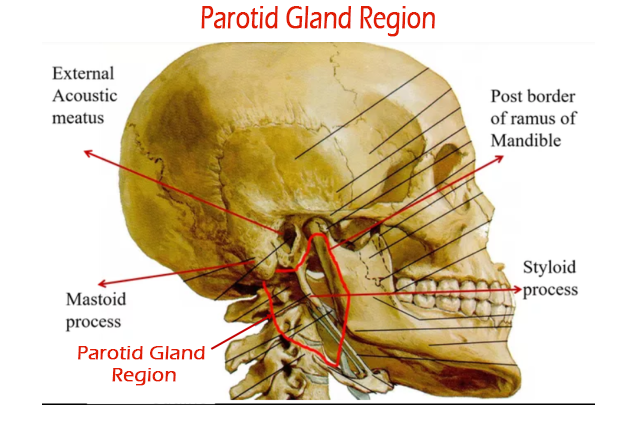
TMJ or Temporomandibular joint is bilaterally located on the side of the human head. TMJ and Movement Upper Compartment Protrusion Retrusion Lower Compartment Lower the Jaw Raise the Jaw Lateral Deviation Said so: the opening is the combination of Protrusion plus Lowering the Jaw closing the mouth is Retrusion plus Raising the Jaw. TMJ and Pain When TMJ is in pain, we can find it hard to talk, eat and sometimes even rest, as the pain can be pretty strong. Moving forward, not everyone knows that deep under TMJ we have what we call Parotid Gland. The Parotid Gland is a salivary gland, and if gets infected, it can swallow up and be quite painful. What can happen at the Parotid Gland is an accumulation of calcium in its duct, and saliva can’t be expelled. Even though viruses or bacteria can also be responsible for TMJ infection. What also most people are not aware of is that in the Parotid Gland, there are lymph nodes. TMJ and MLD. The fact that the gland can be swollen is an indication that fluid is stuck in it. MLD, thanks to the boosting of the lymphatic system, which is responsible for reducing swelling in the body, can be the perfect technique to reduce the swelling and so restore the functionality of TMJ. If this post talks to you, book your next massage session by clicking here. The Parotid Gland lymph nodes unload their Lymph Obligatory Load into the cervical nodes. So as per usual, at the start of the MLD treatment, we will work along the upper neck, medial neck and then the terminal (just between the clavicle and the upper trap). In addition, what makes a difference with MLD is that is a pain-free technique. That would allow the client suffering from TMJ pain to receive a treatment that would not aggravate the pain feeling and would end up giving a deep relaxation too. fi Other work techniques can be used, such as Myotherapy and Remedial Massage trigger point, or dry needling for Myotherapy treatment. The Remedial Massage TMJ treatment is a valuable technique but would not resolve the problem at the root cause. In conclusion, MLD is probably the best manual, not invasive treatment that can be done for TMJ. Talk to your dentist about this option, and if they are not aware of what MLD is, don’t be surprised, it is, yes an excellent technique, but it is still not well known by many practitioners, dentist included.      

Range of Motion

Range of Motion Cervical Lateral Felxion

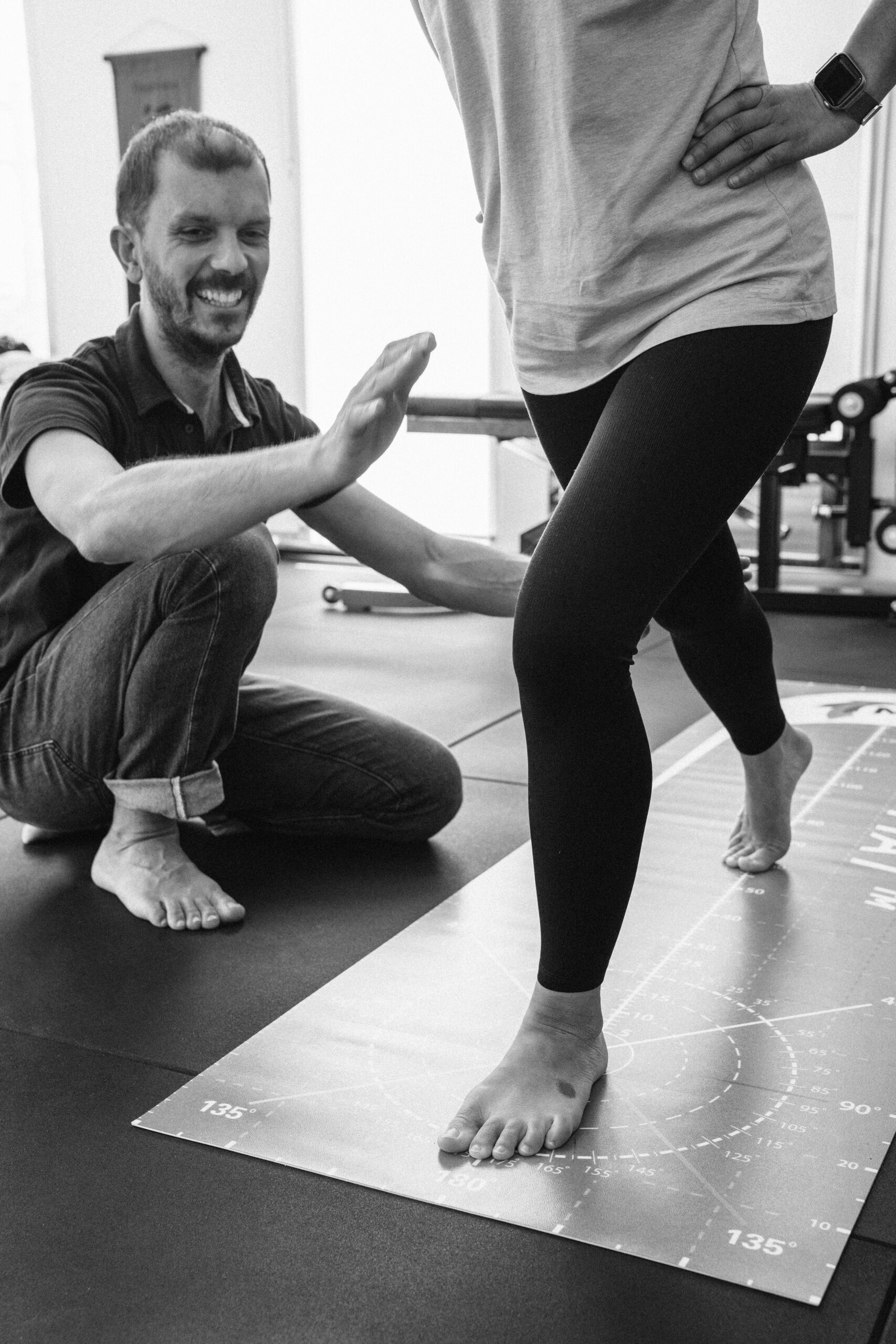
When someone presents at the clinic in pain or with difficulties in moving, the first thing we assess is their Range of Motion. Range of motion is the movement of a joint within a 3-dimensional space, and for each joint we expect to see a certain degree of movement, with comfort and no pain. If pain or limitations are present, then we can start investigating more about why those restrictions are present, and if there is anything that can be done to improve them. Different types of Range of Motion When talking about ROM, we have to be specific about the different types. Active Range of Motion If we get the client to do their own movement, with no assistance, we are looking at Active Range of Motion (AROM). In this type of movement, we are assessing the client’s capacity of delivering a movement, and here is a list of things that we look for: Pain – 0 to 10 Quality of movement – Good or Poor Distance reached – More or less than expected That information, put together, starts giving us an idea of why the client may be in pain, or why the client may not be able to reach a complete movement. Passive Range of Motion (PROM) PROM are ROM that we, as therapists, deliver ourselves by moving the client’s joints, without their assistance. This type of movement can be delivered only when the patient is not opposing any resistance to our force. It is not always easy to deliver, as someone in pain may find it difficult to relax enough to be guided in a ROM that may be painful. What we are looking at with PROM is to differentiate between muscle pain and joint pain. Indeed, if the pain occurs only when the client is delivering AROM and not PROM, we are most likely looking at tendon or muscle pain, as when the joint is isolated in its movement, no pain occurs. Resisted Range of Motion (RROM) RROM are ROM delivered under a practitioner’s resistance. The resistance is placed in 2 or 3 different phases, such as a light, medium and strong resistance. This type of testing is delivered with the intention of reproducing the client’s symptoms of pain, but not only. Indeed, a form of RROM is the Myotome. Myotomes are specific RROMs for the upper and lower body that we apply to assess nerve impingement or motor deficits caused by nerve damage. Specific movements are going to give us an idea of which nerve root may be involved at the spine level. Clinical reasoning has to be a summary of the results we obtained not only from the ROM in all its forms, but also by including the mechanism of injury, clinical history, previous injury and much more information. So ROM in all their forms are just a starting point for our understanding of the client’s reason for being in pain. When to use a range of motion evaluation. Before performing a Myotherapy, Remedial Massage, or a Thai massage session, we check for a Range of Motion, also known as ROM. Checking for ROM is to establish the functionality of the joint and the muscles that surround it. For example, when a client walks in complaining of cervical pain, the first thing we look at too after the postural assessment is the ROM. A postural assessment is an evaluation of the skeletal structure. After that, we ask the client to do specific movements with their head. Like Rotation side to side, flexion, extension, and lateral flexion. Indeed, these are the basic range of motion for the cervical area. What can this range of motion tell us? Well, depending on the essential mobility of the person, we expect a minimum and maximum range. Let’s say that the client has average mobility; we expect the range of motion of their cervical to be: Flexion (able to flex the head forward and leave a gap of 3cm between the chin and the sternum) Extension: we look in too 70° of movement Lateral rotation: we look in too 80° of rotation (the chin is nearly in line with the shoulder) Lateral Flexion we look in too 45°. If this post talks to you, book your next massage session by clicking here. Is the range of motion the same for everyone? A person with a hypermobile joint range may have about 10° less ROM than this. Indeed, a person who has a hypermobile joint range can reach 10° more. That’s why every person needs his evaluation. Moving forward, if the range of motion is limited, it could be muscle tightness or a joint mobility issue. The best approach for improving joint mobilisation is the Myotherapy treatment or Thai Massage.  Both techniques relieve muscle tension and improve muscle tone and joint mobility. The release of tension from the muscle would improve the ROM. On the other hand, when we ask a client to do a ROM, we don’t look only for the length of movement. Quality of movement. For the quality of movement, we refer to how smooth the movement is. Is the client trying to compensate for the cervical rotation by flexing the head? Is the client compensating for the flexion by shrugging the shoulder? Indeed, the movement of a joint is the key to understanding what muscle is responsible for the pain, discomfort or limited ROM. Once we individualise the key muscle/s, we can address the issue. Different types of ROM. In conclusion, the ROM can be active, passive and resisted. The client itself does active ROM. Passive are ROM done by the therapist with no assistance in controlling the movement by the client. Reisted is ROM active done by the client, with a resistance force applied by the therapist again the client’s movement. Each of this ROM can tell us something different about the joint. Active is about muscle lengthening. Passive is about joint mobility (ligament and tendon) Resisted is about the strength of the […]

Corrective Exercises VS Massage

corrective exercises fore arm

As Massage Therapist, I often see people who come in for treatment due to pain and discomfort. Indeed, I am more than happy to be that person who, by manual therapy, can alleviate others’ agony. Exercises post-treatment. At the end of the treatment, I tend to show the client a series of corrective exercises and, most of the time, a straightforward one. Those corrective exercises must be done to help maintain the change we created in the body along the massage session. Massage treatments like Myotherapy, Remedial Massage, Thai Massage or MLD can be a good starting point to change the musculoskeletal unbalance of the body. Even though the changes we created will not last long unless there is constant work done on it. So, when the client returns to routine life, those change tends to disappear quickly. That’s why we give clients exercises. How can exercises help? Exercise can help address everyday muscle weakness, joint stiffness and or painful presentation on your own time. And yes, I understand it’s hard to find the time to do exercises, but would you rather live a life in pain or find a way to feel better about yourself? It’s part of our behaviour to want the fast, quick and immediate change we want. Isn’t it?! But nothing comes easy in life. We must learn that changes take time, and along this time, we must work hard for it. Said so, I am more than happy, and I feel honoured to treat people. I feel like Massage skill is one of the skills that can change people’s life. And when I do run a Thai Yoga class and teach people the exercises, I feel even more accomplished as a massage therapist. Book your next massage session by clicking here if this post talks to you. In conclusion, postural exercises are the key if you are willing to get rid of the body ache and pain. Then, working at the gym or doing sports activities is still as important. But those activities, if not monitored by a coach or done professionally and with full awareness, can lead to injury and pain. Indeed, when doing strengthening exercises, you want to ensure you correctly use the body biomechanics. But not only that. Indeed, you want to make sure that your joint has enough range of motion to deliver that action correctly. Following this link will give you access to the Thai Yoga Class videos.    

Neck Pain

Neck Pain from a wry neck

Neck pain is something that we all experience at some point in life, and it is not fun. Neck pain can manifest for very different reasons; it can be chronic, it can come and go, and it can debilitate our day. In this blog, we are going to look at the different aspects of neck pain. Cervical Anatomy – What’s In Your Neck? Firstly, we should understand neck anatomy. The neck is formed by the cervical vertebrae, which run from C0 to C7. Upper Cervical The first 3, so C0, C1, and C2, are a bit unique, given their position and to the muscle that they connect, they can be considered the upper portion of the cervical. Along those 3 vertebrae, we find the Occipital Muscle Group, which we discussed in this blog post. Lower Cervical From C3 to C7, indeed, we have the lower portion of the neck. Along those vertebrae, we find different muscle groups. Some of those connect cervical vertebrae to the thoracic ones, like Splenius Cervicis. Others connect the vertebrae to the scapula or to the skull, like Levator Scapulae and Splenius Capitis. Lastly, we have the upper portion of the Erector Spinae group, which connects the rib cage to the Cervical and Skull area. Like, Longissimus Capitis, Longissimus Cervis, Illiocostalis Cervis and Semispinalis Capitis. Not only muscles On top of all the muscles we mentioned above, the neck is also a busy junction of veins, arteries, nerves and ligaments. So now you may start to understand that neck pain is not only an issue that is muscle-related, but it could be from a combination of reasons. What Can You Do About It? Being in pain is not a fun thing. I can be debilitating and change your mood for the day. If you are experiencing neck pain or any type of pain, always consider this: Pain can be a result of inflammation. An inflammation that lasts 24 to 72 hours is just a body response that is under control. If pain lasts more than 72 hours, it is time to seek help. How Can I Help With Neck Pain? If your neck pain is not settling and you need help, choosing the right type of therapist can really change how your neck feels. At Melbourne Massage and Treatment, in Coburg, when I get someone who presents with neck pain, the first thing I will do is go through their medical history, and I will look at a possible mechanism of action that leads to the neck pain being there in the first place. Once we have an idea, or more awareness of why neck pain manifests, we can consider what the best treatment plan is to go for. Is Massage Enough to Fix Your Neck Pain? Massage, or any form of hands-on treatment, including cupping, dry-needling, and even MLD, is a wonderful technique that can help in settling your symptoms and relieve the initial discomfort. But to really change the presentation and ensure that the neck pain is not a recurring presentation, we need to look into it a bit further, and most luckily, intervene with some form of mobility and strength exercises. Below is a brief breakdown of things that we may want to investigate and how we will address them. Mobility-Stability Joint Chain As mentioned above, the cervical area is composed of two groups of cervical C0-C2 and C3-C7, which are correspondingly mobile and stable joints Below your cervical, we then have the Thoracic portion of your spine, which is a mobile joint (T1-T12). Lack of mobility in this section would then put a lot of stress on your cervical stable portion (C3-C7), which would try to act as mobile, leading to facet joint irritation. History of Whiplash Whiplash is a form of trauma that can affect your cervical joint for years, unless proper rehabilitation is done. To restore your neck pain from a whiplash presentation, we will have to assess the chronicity of the presentation, which may start with some hands-on treatment, like mobilisation and deep tissue massage, and move on to strengthening exercises for the neck and mobility for the thoracic. Neck Pain And Headache Muscular tension headaches are a real thing, and they can affect your daily life, impairing your functionality and ability to deliver a task. Muscular tension headaches are not migraine, and hands-on treatment and exercises have the potential to get you out of pain and restore your well-being. Muscular tension headaches are a result of tension accumulating in your cervical and upper shoulder muscles, which refer pain to a specific spot on your head. FAQs      

How Often Should I Get a Massage Appointment?

Upper Trap Remedial Massage

Massage appointments, how often? How often should I come for a massage appointment? Often I got asked this question, and the answer is not as simple as. A massage, that is Remedial Massage, Thai Massage or MLD treatment, has the aim to heal a condition or alleviate the pain. Well, at least that’s the main aim of those techniques. Said so, the second, but not less important task for a massage is to induce relaxation. Therefore, if you are aiming to get some relaxation, I would suggest considering getting a massage appointment regularly. Like, every 2 weeks, every month or every 2 months. Of course, depends mostly on finance. So, a regular massage appointment, allows the body and mind to aim for something positive. It is like a reward. On the other hand, if the message is not limited to relaxation time, then, you may need it more often. That’s the case when the client comes to the appointment that is in pain (99% of the time). If this post is talking to you, book your next massage session by clicking here. The fact that you are in pain can be a sign that the body issue has been there for a while. Indeed with a massage, we can alleviate the pain, but to actually fix the issue (if it’s fixable by the way) or to make the best out of what the condition is, we need to do more than one session. In fact, one session may release the pain for a couple of days, but then, as you go back to your daily routine, the pain would come back. Therefore, a series of close massage appointments, in a short time can actually help for the best. Another important aspect of pain management is exercise. Corrective exercises are a key role in expanding the time between one session and the next one. If you actually do the exercises, you can by yourself improve your body conditions, reducing the risk of injury and pain. In conclusion, the frequency for which you should attend a massage appointment is based on your needing. For a Remedial massage or a Thai Massage, you may wanna initially see the therapist once a week for the first 3 to 4 weeks. With MLD is different. With MLD the need for seeing a therapist can be more frequent. Obviously depending on the condition that has to be treated.    

Sunburn and MLD

Sunburn on back

MLD and Sunburn. As already mentioned earlier, MLD stands for Manual Lymphatic Drainage and is a great technique to treat sunburn. Indeed MLD is a technique that works with a gentle touch and has a multitude of benefits, including the healing from sunburn. Firstly, we analyse what sunburn is about. So, a sunburn is the skin’s reaction to too much exposure to ultraviolet (UV) radiation from the sun. Here in Australia, the amount of UV radiation is higher than elsewhere in the world. As per result, in Australia, we have to be extra careful. If the sunburn reaches the 3rd degree of burn, medical attention is required immediately. During summer or even winter when we expose our skin to the sun. You can have a sign of sunburn within minutes from overexposure. The first symptoms are skin redness, burning sensation and pain to the touch. Long-term sunburn can lead to bad scar or even to skin cancer. If this post is talking to you, book your next massage session by clicking here. So, how can MLD help if I get sunburned? MLD, thanks to the light touch, firstly, will avoid the patients being in pain during the touch. Furthermore, by activating the suction effect of the Lymphatic System, MLD boosts the healing process. This is possible by removing the liquid from under the sunburned skin area. The lymphatic system would then clear up the excess liquid and would allow the skin to get oxygenated once again. Said so, when treating someone with sunburn, as therapists, we always have to look for possible skin infections and other absolute contraindications. If the skin over the sunburn area is cracked and infected, then we will have to wait for the infection to heal. In addition to this, if the sunburn is as bad as a 3rd-degree burn, we may don’t wanna touch the sunburn directly, but applying MLD in a close area can still help the lymphatic system to be activated remotely or in the affected area. In conclusion, remember always to put on sun cream before exposing yourself to sunlight. Put the cream on 30 mins before having a bath. Either in the sea or a swimming pool, in order for the cream not to be absorbed and not be washed away. Avoid the hottest hours. Check the UV exposure on the Victoria Government weather website (https://www.bom.gov.au/vic/forecasts/melbourne.shtml). Stay in the shade and drink plenty of water.

Altar within a Massage Clinic

Altar with in a massage clinic

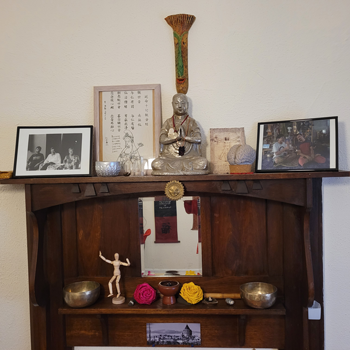
Altar within a Massage Clinic. As you may already know, part of my training was done in Thailand at Pichest Boonthumme Thai Massage School. That’s where I learn about Altar within a Massage Clinic Pichest, as already mentioned in a previous blog post, is a unique way of teaching. In fact, he doesn’t only share the massage knowledge. He included in his teaching a methodology of life. Included in this methodology there is the dedication to prayer and meditation. Even though I haven’t included the prayer yet in my experience, I did include the meditation. In order to do so, in order to build a stronger attitude toward those practices, at Melbourne massage and Treatment clinic there is a little altar the clinic. On the altar, based on the teaching of Pichest, I do expose my offer and memory to the Buddha, to Mamma and Papa’, and to the Teacher. In addition, I did decide to place objects or pictures that recall for me a special time, a memory o a person that someone, shared with me some teaching. Furthermore, just below the altar, there are the products that I sell as the Incenses. But you know what’s the funny thing about the altar present at the Home Clinic here in Blair St? Well, it was already there. I didn’t have to install it. If this post is talking to you, book your next massage session by clicking here. True fact is that, when we came for the house inspection, we right away address that room as the clinic, due to the presence of the wooden altar. A few days after we did move in, I did find out the truth about our neighbour that someone else, before us, already was running a massage studio in the same room. What a coincidence, right?! In conclusion, I am working on my way to improving my practice, and not as a massage therapist only, by taking the Myotherapy course, but also by improving my meditation practice and my prayer practice. I can’t define myself as a religious person, but even though I believe in trust and faith. Thanks again for reading my blog, Giovanni


This will close in 0 seconds


This will close in 0 seconds


This will close in 0 seconds