Tag Archives: coburg

How Often Should I Get a Massage Appointment?

Upper Trap Remedial Massage

Massage appointments, how often? How often should I come for a massage appointment? Often I got asked this question, and the answer is not as simple as. A massage, that is Remedial Massage, Thai Massage or MLD treatment, has the aim to heal a condition or alleviate the pain. Well, at least that’s the main aim of those techniques. Said so, the second, but not less important task for a massage is to induce relaxation. Therefore, if you are aiming to get some relaxation, I would suggest considering getting a massage appointment regularly. Like, every 2 weeks, every month or every 2 months. Of course, depends mostly on finance. So, a regular massage appointment, allows the body and mind to aim for something positive. It is like a reward. On the other hand, if the message is not limited to relaxation time, then, you may need it more often. That’s the case when the client comes to the appointment that is in pain (99% of the time). If this post is talking to you, book your next massage session by clicking here. The fact that you are in pain can be a sign that the body issue has been there for a while. Indeed with a massage, we can alleviate the pain, but to actually fix the issue (if it’s fixable by the way) or to make the best out of what the condition is, we need to do more than one session. In fact, one session may release the pain for a couple of days, but then, as you go back to your daily routine, the pain would come back. Therefore, a series of close massage appointments, in a short time can actually help for the best. Another important aspect of pain management is exercise. Corrective exercises are a key role in expanding the time between one session and the next one. If you actually do the exercises, you can by yourself improve your body conditions, reducing the risk of injury and pain. In conclusion, the frequency for which you should attend a massage appointment is based on your needing. For a Remedial massage or a Thai Massage, you may wanna initially see the therapist once a week for the first 3 to 4 weeks. With MLD is different. With MLD the need for seeing a therapist can be more frequent. Obviously depending on the condition that has to be treated.    

Sunburn and MLD

Sunburn on back

MLD and Sunburn. As already mentioned earlier, MLD stands for Manual Lymphatic Drainage and is a great technique to treat sunburn. Indeed MLD is a technique that works with a gentle touch and has a multitude of benefits, including the healing from sunburn. Firstly, we analyse what sunburn is about. So, a sunburn is the skin’s reaction to too much exposure to ultraviolet (UV) radiation from the sun. Here in Australia, the amount of UV radiation is higher than elsewhere in the world. As per result, in Australia, we have to be extra careful. If the sunburn reaches the 3rd degree of burn, medical attention is required immediately. During summer or even winter when we expose our skin to the sun. You can have a sign of sunburn within minutes from overexposure. The first symptoms are skin redness, burning sensation and pain to the touch. Long-term sunburn can lead to bad scar or even to skin cancer. If this post is talking to you, book your next massage session by clicking here. So, how can MLD help if I get sunburned? MLD, thanks to the light touch, firstly, will avoid the patients being in pain during the touch. Furthermore, by activating the suction effect of the Lymphatic System, MLD boosts the healing process. This is possible by removing the liquid from under the sunburned skin area. The lymphatic system would then clear up the excess liquid and would allow the skin to get oxygenated once again. Said so, when treating someone with sunburn, as therapists, we always have to look for possible skin infections and other absolute contraindications. If the skin over the sunburn area is cracked and infected, then we will have to wait for the infection to heal. In addition to this, if the sunburn is as bad as a 3rd-degree burn, we may don’t wanna touch the sunburn directly, but applying MLD in a close area can still help the lymphatic system to be activated remotely or in the affected area. In conclusion, remember always to put on sun cream before exposing yourself to sunlight. Put the cream on 30 mins before having a bath. Either in the sea or a swimming pool, in order for the cream not to be absorbed and not be washed away. Avoid the hottest hours. Check the UV exposure on the Victoria Government weather website (https://www.bom.gov.au/vic/forecasts/melbourne.shtml). Stay in the shade and drink plenty of water.

Altar within a Massage Clinic

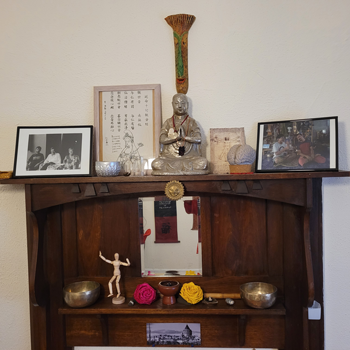
Altar with in a massage clinic

Altar within a Massage Clinic. As you may already know, part of my training was done in Thailand at Pichest Boonthumme Thai Massage School. That’s where I learn about Altar within a Massage Clinic Pichest, as already mentioned in a previous blog post, is a unique way of teaching. In fact, he doesn’t only share the massage knowledge. He included in his teaching a methodology of life. Included in this methodology there is the dedication to prayer and meditation. Even though I haven’t included the prayer yet in my experience, I did include the meditation. In order to do so, in order to build a stronger attitude toward those practices, at Melbourne massage and Treatment clinic there is a little altar the clinic. On the altar, based on the teaching of Pichest, I do expose my offer and memory to the Buddha, to Mamma and Papa’, and to the Teacher. In addition, I did decide to place objects or pictures that recall for me a special time, a memory o a person that someone, shared with me some teaching. Furthermore, just below the altar, there are the products that I sell as the Incenses. But you know what’s the funny thing about the altar present at the Home Clinic here in Blair St? Well, it was already there. I didn’t have to install it. If this post is talking to you, book your next massage session by clicking here. True fact is that, when we came for the house inspection, we right away address that room as the clinic, due to the presence of the wooden altar. A few days after we did move in, I did find out the truth about our neighbour that someone else, before us, already was running a massage studio in the same room. What a coincidence, right?! In conclusion, I am working on my way to improving my practice, and not as a massage therapist only, by taking the Myotherapy course, but also by improving my meditation practice and my prayer practice. I can’t define myself as a religious person, but even though I believe in trust and faith. Thanks again for reading my blog, Giovanni

Water after a massage

Water after a massage. Have you ever noticed that after a massage you feel thirsty and depending on the treatment you may have an urgency to go to the toilet? Well, massages are diuretics, that’s why. Indeed, independently of the type of treatment that you receive, whether is MLD, Remedial Massage, or Thai Massage, the body fluid gets pushed and pumped around the all body. As per consequence, all these substances moved around need to find their way out. So, after any session, you wanna make sure to rehydrate your body. Drink water after a massage. Why water and not orange juice? Or an energy drink? Or coffee? Water is what is recommended after a massage because it’s what can at the best re-oxygenate the muscle and re-hydrate the body. Drinking a sugary drink, or a really acid beverage as it can be coffee will just dry off the body even more. Furthermore, water is quicker to be absorbed and can help the stomach to keep its natural PH balance. If this post is talking to you, book your next massage session by clicking here. Another effect of the massage can be the deep relaxation of the body, which can affect the stomach and abdominal feeling. Indeed, adding sugar or other substances to the PH of a stomach that feels so relaxed, may not work at the best. What about the water temperature then? Cold or warm? Well, let’s take down the myth that cold water makes you feel fresher. Sorry, it doesn’t. Drinking cold water brings the body temperature down, increasing then the difference in temperature between within the body and outside the body. That will make you feel even hotter. But I do understand that hot water unless is herbal tea, doesn’t feel so nice. Even though, warm water would be ideal, as its temperature would be the same as one of our inner organs. So, temperature-wise just drinks water at room temperature if you can’t stand hot water.  

Pain and MLD

MLD on Lower Leg

MLD and Pain. As previously mentioned, MLD is a massage technique pain-free. This is one of the reasons that makes it so special. It doesn’t matter where the technique is applied, the touch has to be so light, that the patient doesn’t have to feel any pain. And believe it or not, MLD can be applied right after surgery, when you get sunburn or right after physical trauma. Indeed, what MLD does is prevent the body to feel the pain. So, in order to explain this, I may use the mosquito bite example. When a mosquito bites us, after several minutes we start to feel itchy. In fact, the first auto-reaction is to start stretching the body. What does the scratching do? Firstly, by scratching, we stimulate the mechanoreceptors of the skin. The mechanoreceptors, send a signal to the spine (to CNS) that inhibit the pain receptors, which are constantly stimulated from the mosquito bite. Indeed, the pain receptor can be stimulated once and keep reacting, whereas the touch receptors, in order to be activated need constant stimulation. Now, in MLD that’s what we do, we constantly and gently stimulate the mechanoreceptors. If this post is talking to you, and you are in need of a massage, book your next session by clicking here. In fact, we keep inhibiting the pain receptors, reducing the pain signal frequency. Secondly, and no less important, by stimulating the lymphatic system activity, we reduce the amount of nociceptors. Per nociceptor, we refer to the actual sensory neuron that transports the pain signal to the spine and brain. Furthermore, by reducing the pain, the client can start experiencing a high state of relaxation. Indeed a high state of relaxation is another efficient way to deal with pain and eventually pour mobility, due to the injury the client is dealing with. In conclusion, this is how MLD can reduce the pain in an injured area.

Cupping

Dynamic Cupping

Quietly often I still get asked what is cupping and how does cupping work? Firstly, Cupping is a type of alternative therapy based on placing cups on the skin to create suction. Indeed, the suction would pull the skin up from the muscle layer, drugging back the fascia layer seating below it. Cupping is gentle work on the body, not invasive and at the same time is an amazing technique to stimulate and facilitate the fascia. We did look into the fascia in a previous blog post. If you have missed it, you may wanna click here.   On the other hand, there are different types of beliefs and methodologies about cupping’s functionality. Some of those can be a bit more invasive, and dangerous too. Said so, I guarantee my clients that these are not practices that are available at Melbourne Massage and Treatment. For how I got trained in giving cupping, my aiming as giving cupping is: – Leave no marks – No cutting the skin – Painfree – No blood stagnation Now, by following the order of the action listed here above: Marks are a sign of blood stagnation. Accidentally can happen to leave a mark on someone’s skin, and many are factors involved in it: Skin type is one and another one is if the area that received cup was already massaged or not. As Remedial Massage therapists or Thai Massage Therapists, we are NOT trained to cut anyone’s skin. Furthermore, you have to think that when this practice is involved there is a great risk of skin infection. Why do some practitioners do so?! None of my business. I just don’t believe it is necessary, and I don’t believe it has any benefit. As per many detox diets and detox programs, the body is your best allay and best detoxer of itself. If this post is talking to you, and you are in need of a massage, book your next session by clicking here. In regards to pain, Cupping must be pain-free. Along a cupping session, you may feel a strong pull along the skin, but no sharp, ache or pinch sensation should be present at any moment. Indeed, to help the cup slide easily oil or cream oil-based get used. When happens that a mark gets left behind, doesn’t necessarily create pain or discomfort. Another cupping precaution is to avoid over-pass a cup on joints and or tendons. The cupping force could rip or damage those areas, resulting in permanent damage and pain. Lastly, no blood stagnation. Cupping’s desired result as per many massage modalities is to generate a physiological response that would reduce tissue stress. Through the gentle tissue stress, muscles relaxed and the chain of manual therapy benefits starts.      

The importance of Manual Lymphatic Drainage

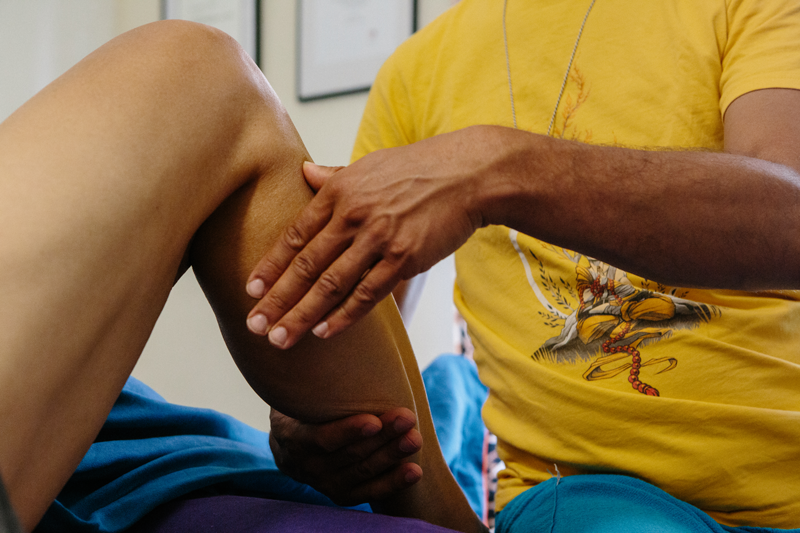
Giovanni giving MLD on patient's calf

Manual Lymphatic Drainage if used along the correct type of condition, is a safe and well utile manual therapy. In the previous two blogs (Link 1, Link 2) I described how the Lymphatic System works and its relation to MLD. What body find benefit from Manual Lymphatic Drainage? As previously mentioned, the lymphatic system is so important to keep the homoeostasis of the body. Indeed, along with the following conditions, homoeostasis is compromised: Skin Burn Chronic Inflammation (plantar fascitis, tendinitis…) Lymphodema Oedema Scar reduction and prevention Pre and post-operation body rehabilitation Improving the bell function Head-each Skin puffiness and or Acne and more… How can Manual Lymphatic Drainage help with these conditions? Firstly, what all those conditions have in common, is that they are related to how the Lymphatic System deal with them. So again, the healthier and more vital is the lymphatic system, the better the body’s homoeostasis. If we look into oedema due to a hammered hand, we need a responsive and well-functioning lymphatic system to absorb that swelling. The stronger the lymphatic system, the quicker the healing process will be. Even a scar from a post-operation could heal faster if the lymphatic system gets adequately stimulated. More nutrients and less dangerous components will float around the wound if the lymphatic system works stronger. Secondly, some of these conditions are so painful that a massage is not applicable. As we applied MLD, we would not increase the pain, thanks to the light touch. If this post is talking to you, and you need a massage, book your next session by clicking here. Why should MLD not be painful? When we apply the different strokes by dragging the skin gently around, we will stimulate the lymph vessels to collect the obligatory lymph load. Still, we will not generate pain by stimulating pain receptors. Furthermore, the repetitive mechanical stimulation would activate what in science is called the gate theory. The gate theory looks into the interneurons’ inhibitory response, which reduces the pain signal reaching the brain, consequently decreasing the pain response. MLD and coontroindications. MLD can’t be applied to Acute infection, Untreated Cancers, Untreated Thrombus, Congestive heart failure, or intoxicated persons. Minor contraindications include Hypertension/Diabetes n1, Autoimmune disease, Asthma, Hypo/Hyperthyroidism, pregnancy, and a history of tuberculosis. In conclusion, I am honoured to have the knowledge and the skill to use and apply such a technique. Even though, for now, I can’t yet treat people with Lymphodema and or clients who had lymph nodes removed or are looking for a post-cancer treatment. What I got to offer to this patient, anyway, is a reference for other practitioners. So if this is you, please get in touch with me, and I can refer you to your nearest practitioner.      

MLD

MLD

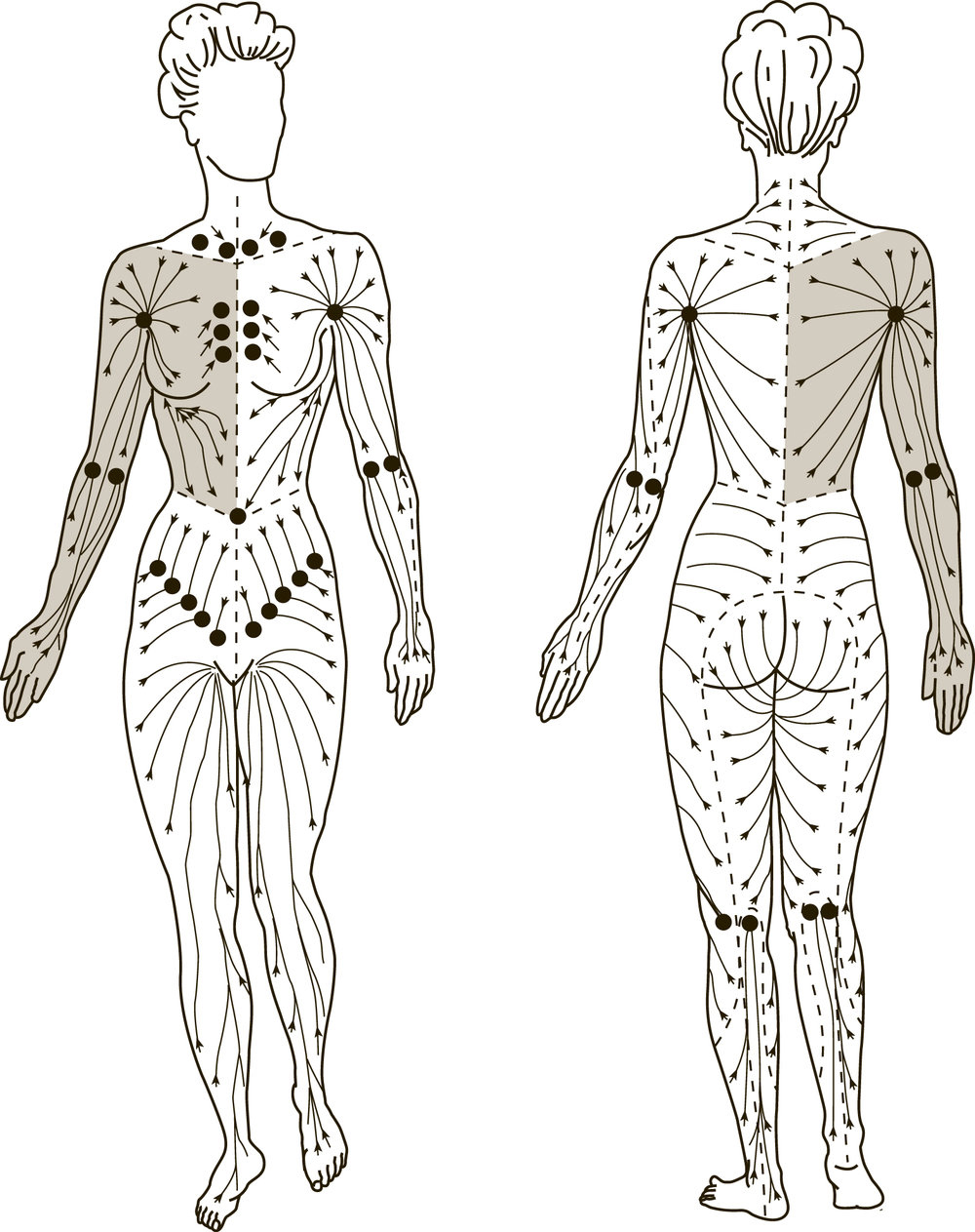
MLD stands for Manual Lymphatic Drainage. As per a deep tissue massage, MLD treatment works on the lymphatic system and not the musculoskeletal system. This technique aims to boost the capacity and ability of the lymphatic system. Manual Lymphatic Drainage history. MLD is a technique implemented by Dr Vodder and his wife, Estrid Vodder, with the help of many other scientists and researchers. Dr Vodder can be described as a visionary of the lymphatic system role. He dedicates his life to the realisation of this technique. Dr Vodder and his wife formulated a series of hypotheses on how the lymphatic system works, and how it is essential to speed up recovery from diverse conditions. All their hypothesis, along the 20th century, were then confirmed and transformed in theory thanks to the works of many other scientists. As per result, after their first few years of hypothesis formulation, in the early 20th century, they could start promoting their work and run seminars and classes about MLD all around Europe. Nowadays, is in Austria in the village of Walchsee -Tyrol -Austria resides the Dr Vodder Academy –Lymphedema Clinic Wittlinger. The Austrian clinic was founded in 1971, and since that, the MLD spread all around the world, with courses that are taught in any continent. The Lymphatic System. To understand the importance of this technique, let’s analyse the body’s anatomy and the lymphatic system’s role. Indeed, for doing so, let’s compare the lymphatic system with the blood circulatory system. Firstly, the lymphatic system is an open system of “capillaries” (lymph vessels) and “veins” (pre-collector and collectors). Secondly, It differs from the blood circulatory system as it transports lymph, not blood, and is open and not closed. Thirdly, the lymphatic system doesn’t have a pump, as is the heart for the circulatory system. In fact, the lymphatic system, pushes the lymph around through a mechanism of osmosis pressure (at the lymph vessels system) and throughout an inner system of inner valves. Furthermore, the lymphatic system has filtering stations: lymph nodes. It is here where specific white cells live. Indeed, the role of the white cells is to help fight back infections carried by viruses and bacteria. Said so, the lymphatic system’s primary role is to collect waste. This happens at two different levels. At the superficial level (80%), where the lymph vessels are (lower dermis and the superficial zone of the subcutaneous tissue) and deep level of the body (20% below the deep fascia) return this waste to the blood system will then direct all the waste to the organs that clean the body, such as liver, kidney etc. How the lymphatic system works. So, our body is covered in skin, right? Below the skin, before the fascia and muscle layers, we got lymph vessels (the equivalent of capillary for the blood system). The lymph vessel spread on a vertical level all along the body in different concentrations. As per role, the lymph vessel collects the Lymph-obligatory load, the waste and excess material the body doesn’t need. Lymph-obligatory load is made from water, protein, lipids, exogenous substances, cells etc… The collection of the lymph-obligatory load comes through a suction and osmosis approach. The lymph obligatory load travels down to the pre-collectors from the lymph vessel. Indeed, pre-collectors are slightly more significant than the lymph vessel Furthermore,  rather than spread along the undersurface of the skin, they travel deep down and pass the lymph fluid to the collectors. As per result, the collectors that interconnect the lymph nodes transport the lymph-obligatory load to the blood circulatory system. Another specification to look for is that the lymphatic system is divided into superficial and deep. But we will look at this specification in the next blog post, where we will also talk about the watershed and body quadrant. Manual Lymphatic Drainage compared to the massage technique. So, now that we have a better idea of what the lymphatic system is and how it works, we can say that massage techniques such as Myotherapy, Thai Massage, Remedial Massage, or even Relaxation Massage are not the most indicated for helping the lymphatic system. They still would improve its work, but as the lymphatic system sits right below the skin and works by light stimulation, the friction and pressure applied with these techniques would be too strong. Even though no damage occurs to the lymphatic system when significant pressure is applied to it.

Remedial Massage Strokes

Remedial Massage

Strokes that we use as Remedial Massage therapists. As previously mentioned, a remedial massage is different from a relaxation massage. Indeed, a remedial massage aims to speed up the recovery process from an injury or musculoskeletal dysfunction. Therefore, in a remedial massage, we use a bigger variety of strokes, and we can dive them into static, and dynamic. As per result, static strokes, don’t involve the client’s movement, like DIP. On the other hand, dynamic strokes require a resistance or a movement of the client’s body, like MET for example. Indeed, in the table below, we can find a list of strokes that remedial massage therapists use. MFTT – Myofascial Tension Technique Applied skin on skin with oil-based cream. The same principle is used in dynamic cuppings. It aims to break the fascia connecting the skin to the muscles, reducing cutaneous tensions and improving muscle and joint mobility. DIP – Digital Ischemic Pressure DIP is a stroke that consists in applying pressure on a Trigger Point. So, by applying this pressure, as therapists, we aim to reproduce pain within a comfortable zone (7 out of 10 at worst). As the pressure is applied the pain will decrease and the muscle will increase its mobility and length. MET – Muscular Energy Technique MET is a manual therapy that uses the gentle muscle contractions of the patient to relax and lengthen muscles and normalize joint motion. So, as therapists, we passively stretch the joint of the client to a safe level, and then we ask the client to meet our resistance to the movement. As per result, the muscle will increase their lengthening. PNF – Proprioceptive Neuromuscular Facilitation PNF techniques include passive stretching and isometric muscle contractions. Therefore, the PNF protocol involves a specific pattern of contracting, stretching, and relaxing. Cross Fiber Friction Cross fibre friction is a firm pressure applied perpendicular to the fibre direction. In conclusion, not all of these techniques can be used during one treatment. In fact, before applying a technique as therapists we have to evaluate the body tensions and the needing of the clients. If this post is talking to you, and you are in need of a massage, book your next session by clicking here.    

Remedial Massage

Cupping Session Remedial Massage

In this post, I talk about Remedial Massage and how this technique is applied in my services. What is a Remedial Massage? How does it work? Where did I train for this type of massage? As per the name, remedial massage aims to improve the quality of life of the clients, by giving a remedy to her/his physical disconfort/s. So, to start with we describe the difference between a remedial massage and a general relaxation massage. Indeed, a relaxation massage is a combination of soft and deep strokes. Therefore, those strokes are applied using oils. A relaxation massage aims to stimulate physical and mental relaxation by pushing the blood and body fluids around the body. In regards to the remedial massage, the therapist, before the massage will go through a complete assessment of injuries and or musculoskeletal conditions. As per result, the therapist creates a comprehensive treatment plan to manage or rehabilitate the injuries or pain. Indeed, a remedial massage would speed up the process of healing and recovery. In conclusion, at the end of each session, the therapist would demonstrate and provide the client with corrective exercises that can support the client’s wellbeing and recovery. About my training for remedial massage, I did study at the RMIT University, here in Melbourne. In 2020, the world stopped because of Covid-19 I took the occasion to quit my previous job and get back to studying massage. I don’t regret my choice. Indeed I will keep studying in 2022, for the advanced diploma in Myotherapy. I want to keep learning and improving my massage skills and knowledge, to offer always a better service. Said so, I will keep offering Thai Massage as a massage service too. In fact, as I already mentioned in another blog post, the technique that I work with is not so demanding on my body. In fact, it allows me to enjoy more what I do and allows the client to receive a better level of healing. True fact is that the client after a Thai Massage session, here at Melbourne Thai Treatment, told me always how they feel lighter, better, less stressed and more aware of their body feels. In the next blog post, I am going to talk about the strokes that we use in Remedial Massage and how I implement those strokes in Thai Massage.


This will close in 0 seconds


This will close in 0 seconds


This will close in 0 seconds