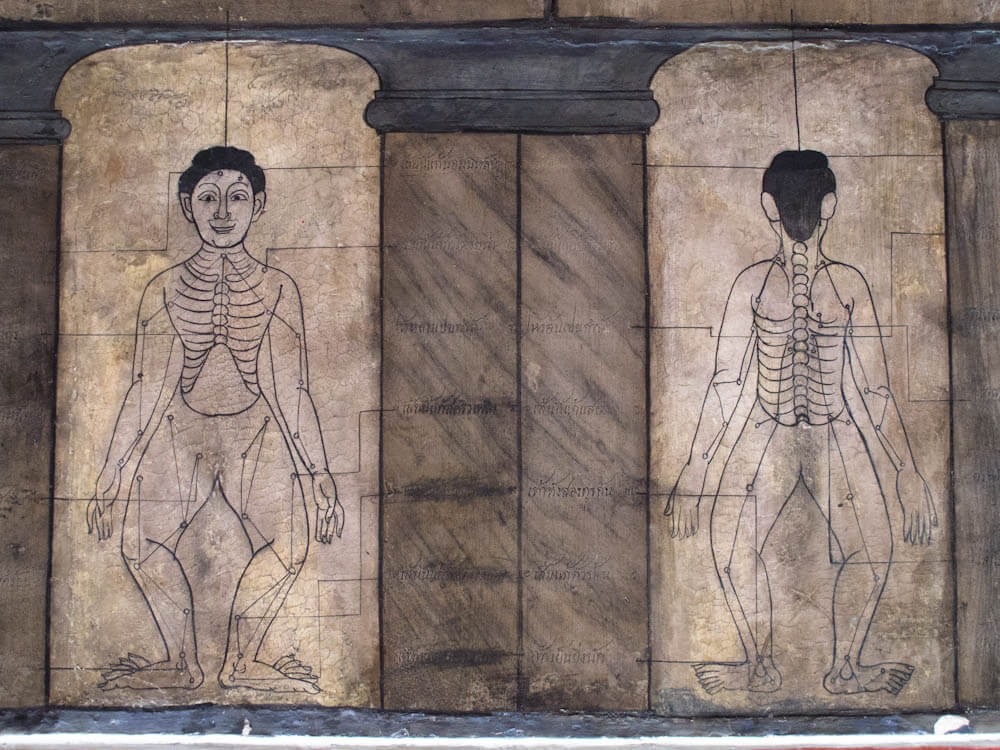
Thai Yoga, is an exercise practice that would take you to a place of relaxation and better physical and mental well-being. As you may already read on the website page about Thai Yoga, this exercise aims to improve your mobility, motility, and body awareness. Those exercises are based on the principle of Thai Massage and Myotherapy approach. I did study Thai Massage with Arjan Pichest Boonthumme, at his home school in Chiang Mai. Indeed is Pichest the pioneer of this type of exercise. Book now your next private Thai Yoga class with Giovanni. He teaches his students to practice those exercises in order to help us, students, to understand how to reduce physical tension from the body, and to be a better practitioner. Even though he doesn’t call them Thai Yoga. When I left Thailand after my 1st period of training with Pichest (early 2018), I start practising these exercises nearly daily. I was not following a specific sequence, and I was not offering yet the workshop. As I kept working as a massage therapist, and I was suggesting these exercises to my clients, to keep tensions low and enforce the job done with the Thai Massage, I then realise how all these exercises put together, could actually help others heal their bodies and improve their health. I start then offering these classes at the Dancehouse in Carlton, and occasionally I will offer free classes at the Carlton Garden too. So how it works a Thay Yoga class? Well, as per Thai Massage based, those exercises aim to work on muscle’s tensions and reproduce physiological responses that massage would usually generate. Said so, as you work on your body, and you feel in first person the stimulus and the response given to the stimulus, you would be able to improve your body awareness. How it does differ from a regular Yoga class? The difference from a regular Yoga class is that along with a Thai Yoga class, most of the exercises don’t require a specific elasticity or mobility capacity, even though, once you practice them you would realize how easier is to move a joint and how freer the body is feeling. This happens because during the class, as we stimulate the blood flow starting from the upper limb, and moving down the lower limb, the body gets warmer, and the stiffness gets cleared away. Furthermore, during the class, I would show how the usage of the breathing wave technique helps in mastering the practice. This way of breathing, not only improves the oxygenation of the body, and so the healing of it, but also helps the participant to learn how to deal with the body sensation that arises along with the workshop. Yes, I would not lie to you, some of these exercises can reproduce pain. But hey, have you ever heard of a Thai Massage pain-free? Well, Thai Yoga exercises are not so different from it. In conclusion, Thai Yoga is not recommended for those with conditions like hypertension, osteoporosis and or diabetes n. 1 or whilst pregnant.
Tag Archives: coburg
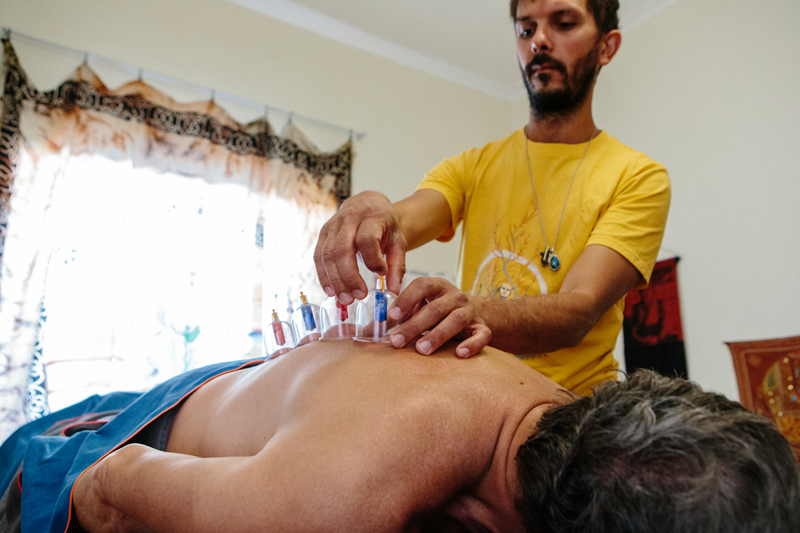
Lower Back Pain Lower back pain is a condition which can deliver lots of stress and can affect our daily habits. It can be a terrible experience to live, as it can make many tasks difficult or impossible to take. Here below you will find a series of questions and answers in regard to my experience with lower back pain, as a person and as a practitioner. Q: Did/do you ever experience lower back pain? A: Yes, I did suffer from lower back pain when I was a teenager and that was a trigger for my massage career.Said so, at the age of 16, I was not thinking yet to become a massage therapist.More experience was needed before I did decide to step into the massage career. Q: How common is lower back pain within the Australian population? A: It is estimated that in Australia between 2017 and 2018 4.0 million people did suffer from back pain, whereas 70-90% out of those 4 million did suffer from the lower back itself. Q: What are the causes of Lower back pain? A: Lower back pain can come from different causes. Here below are the most common: bulge disk muscle strain fascia tightness trigger points muscular-skeletal unbalance physical trauma stress Q: I feel pain on my Rx or Lx side on a horizontal line. What can be? A: That’s what we call a red flag. A pain that spread on a horizontal line can be given by a bulging disk. More tests must be put in place to confirm a diagnosis. As a massage therapist is not in our scope of practice to diagnose a bulging disk. Our next step would be to refer you to a GP for further investigations. Q: So, what is a bulging disk? A: A bulging disk is a condition (hernia) where the disk that seat between the vertebrae, gets a tear in it. As a consequence, the disk touches the nerve running along the spine and creates a pain sensation. There are 4 different stages of herniation of the disk. Disc protrusion Prolapsed disc Disc extrusion Sequestered disc. Q: What are other symptoms related to a bulging disk (for the lower back)? A: Other symptoms of a bulging disk (for the lower back) can be: Numbness in the glutes, legs, feet. Weakness in the leg/feet movement Pain increases when seating, like the disk, gets compressed and decreases if standing, like the disk, gets decompressed and less pressure is applied to the nerve root. Difficulties in going to urinate, it is a strong sign that there could be a bulging disk in the lower side of the lumbar area. Medical attention is urgently recommended. Q: Why a bulging disk can occur urine blockage? A: The nerve that controls the spasm of the bladder is rooted between L1 and L2. Indeed, Pressure on the main root, between these 2 vertebrae, would then transform into nerve dysfunction. This condition is called Cauda Equina Syndrome. Q: My lower back pain moves vertically. Why is that? A: A sign of lower back pain that moves vertically is more luckily related to muscular inflammation. In fact, there is a group of back muscle called Erectus Spinae, (Spinalis, Longissimus, Illiocostalis) that originates in the lower side of the lumbar area and extend vertically along the cervical area. Q: What triggers muscle inflammation? A: Many are the reason why muscles can get inflamed.Repetitive movements pour posture, the incorrect firing pattern of a muscle group, in specific the leg extension firing pattern. Q: How massage can help? A: Massage can be an effective approach to release tension along the lower back. Given the training that I did go for, I would ensure to use the knowledge learned along the Remedial Massage and Myotherapy course to identify what back pain is related to. Based on the finding and on the willingness of the clients, we can then disgust with the client what technique of massage they may prefer, Remedial Massage, Dry Needling (if applicable), Mobilisation (if applicable) or Thai Massage. Even MLD can be an effective technique, as it can be used to reduce inflammation, swelling, tension and stress. As previously mentioned, if I got suspicious of a bulging disk, I would not hesitate to refer the client to a GP for further investigation. In regards to the Thai massage technique, I will ensure to warm up the area first with some simple passives stretch and or cupping and then work on the muscle that needs some tension released if it is safe to do so, or on the muscle surrounding the area, like gluteus, hamstrings and or shoulder muscles. Q: Would you use your knee to massage my back? A: The use of the knee is not compulsory. If it is safe to do so, yes, I may use my knee to massage the back. A correct and proper evaluation of the injury must be applied before doing so. If you are in pain or even just feel tight along your lower back, don’t hesitate to book a massage appointment. Any of the techniques offered at Melbourne Thai Treatment can be really effective in reducing pain and ache and giving you back the mobility lost. Said so, for chronic conditions their massage can help till a certain point. Exercises and other treatment options have to be evaluated.
Breathing Wave In the previous post, we did talk about the benefit of breathing in by the nose and breathing out by the mouth. Well, now, I am going to talk about the Breathing Wave. The breathing wave as it sounds already is a technique of breathing that involved a wave moving along the body (upper limb). Along the breathing in, we can take in air within 5 pouches (bottom to top): above the reproductive system chest (lungs) throat below the skull above the skull So the breathing wave starts by inhaling air through the nose, directing the air in the lowest pouch first and towards the highest one last. As we take in air, lowest pouch would fully expand and by holding a hand on to it, we can feel the expansion happening. In regard to the chest, we can place the opposite hand on it, and start feeling the chest expanding too. About the above pouches, you may find it hard for the first few times to recognize a physical expansion, but as you would practice the breathing wave, more and more, you will build awareness about it. On the breath out then, we want to let go of the air out by the mouth by dropping the jaw and relaxing the abdominal muscles so as to release first the abdominal one and follow the thoracic, the neck the bottom, and the top of the skull. The idea to let go of the air is implemented by avoiding any force contraction in the abdominal muscle area. Those muscles do not need to be activated to push the air out, and the face muscles don’t need to be engaged to push or control the out airflow. Why this technique is so helpful? Now imagine the body like an accordion. Our nervous system runs along with this accordion, and it’s affected by its motions. Indeed breathing is a contraction and expansion movement of the punches above mentioned. Therefore imagine those pouches expanding and contracting and visualize how they can softly massage the nervous system itself. Furthermore, this breathing technique would allow proper oxygenation of the body. A couple of minutes of this breathing technique would allow you to calm down and feel more relaxed. In addition, this technique is useful if you want to practice body pressure on someone or something with minimum effort. That is how the Thai Massage technique I did learn from Pichest Boonthumme works, and that’s the principle behind the Thai Yoga practice. Do you feel like you need help with your neck pain? Book now your next appointment, at Coburg clinic. So, how to practice the breathing wave? A simple way to practice this breathing technique is to lie down and place one hand on the belly and one hand on the chest. As you breathe in by the nose, feel or look for the bottom hand to rise and for the top hand to stay steal. As the bottom pouches are full now keep inhaling and feel or look for the top hand to arise too. Once you are ready to breathe out open the mouth and gently release the air accumulate in the belly then release the air from the upper chest. Keep repeating. It is normal to start with the coordination is not there. But with a bit of practice, it will become easier and easier.
The importance of breathing. As a massage therapist, I realise along with my studies and work-practice, that correct breathing is not something that many of us are aware of. Indeed, breathing is important to oxygenate our organs, muscle and all body parts and also, breathing is what would boost the healing process along a massage session. In fact, when we breathe, we introduce into the body Oxygen. Oxygen is what our body uses as the first form of energy for functioning and self-healing. Furthermore along with oxygen, when we breathe, there are a lot of other substances that get pumped around the body with the blood, like vitamins, minerals, hormones etc. So how should we breathe, during a massage session? To breathe we can mainly use the noose and the mouth. By breathing by the nose we partly clean the air that we take in, things that wouldn’t happen when we breathe in by the mouth, as we would breathe whatever is in the air. If this post is talking to you, and you are in need of a massage, book your next session by clicking here. But that’s all? No. Air inhaled through the nose is both warmed and made moist at the same time, but also preserves oral hygiene. Furthermore, breathing in with the nose is a slower process and helps the mind to stay calm and grounded. Breath-in by the mouth can lead to hyperventilation, that’s a cause of stress and or a response to panic and anxiety. The mouth is part of the body that we should use to breathe out. As we breathe out we want to let go of all the air that we inhale without interruption. So, a better way of breathing would be, to breathe in through the nose and out of the mouth. But where into inhaling the air that we breathe? This is a question that we will see in the next blog post that would talk about the breathing wave exercise, an essential technique to calm down the mind, regulate blood flow and stimulate the relaxation of the nervous system.
Exercises for Upper Cross Syndrome As previously mentioned, the UCS is caused by a constant habit of poor posture, to achieve a correct posture on top of massage therapy, we would need to do exercises for Upper cross syndrome. So, there are 2 main groups of muscle that we want to target. 1st group, the tense muscles: Levator Scapulae Upper Trapezius Pectoralis Major Second group, weak muscle Deeper Neck Flexors Rhomboids Middle Trapezius. Now, let’s go through some exercises for Upper cross syndrome. Brugger exercises for Neck deep flexors. This exercise is going to focus on improving the strength of the deep flexors. Stand straight with feet apart ; Place 2 fingers, one on each sternocleidomastoid and start gently and slowly flexing the head forward. The fingers seating on the Sternocleidomastoid (SCM) would allow you to keep those muscles deactivate and so would place all the strength of flexion on the deeper muscle that we are trying to train in gaining strength. If you are not sure where the SCM is, place a hand horizontally between the neck and the upper chest, along the Clavicle line. Rotate your head gently right and left and those 2 muscles that pop up below your hand when you rotate the head are the SCM. Just be aware that the L SCM will activate when you rotate right and vice versa; 3 repetitions for 10 head flexion. Do you feel like you need help with your neck pain? Book now your next appointment at Coburg Clinic. Strengthening the Rhomboids and Middle Trapezius. For this exercise, we would need an elastic rubber band for exercises. · Stand straight, feet apart, and wrap the elastic band on your fist, thumb facing out. · As you breathe in flex the elbow at 90, breathe in and bring the rubber band in tension. As you breathe out extend the elbow out. · Release and start again. 3 repetitions of 10. All those exercises have to be done daily for 6 weeks in order to be effective to change the UCS. Self Massage for Pectoralis/Upper Trap/Levator Scapulae. Pectoralis Self Massage exercises: Lie down in a prone position with the arms along the body; Place a tennis or a spiky ball right between the Pectoralis and the floor; Keep the foot’s toes anchored on the floor; Gently push yourself forward and back by breathing in (from the nose) and out (from the mouth). If you would like more pressure, is enough to open the arm at 90 and lightly extend the arm, by lifting the hand from the floor. Upper Trap and Levator Scapulae Thai Yoga exercises: Start by lying in a supine position and the ball will be seated between the shoulder and the floor. Place the ball right next to the upper angle of the scapula. This time keep your shoulder flexed at 90 degrees, so with the hand facing the ceiling. Start gently a slow rotation movement at the shoulder, by drawing a circle with the hand. 3 series of 6 repetitions for each rotation movement. With Thai Yoga, you wanna make sure that each exercise is done slowly and gently. Those exercises often work on the delicate area of the body and can reproduce massage pain. Moving the body slowly and gently and having constant breathing in and out would allow you to live Thai Yoga at its full potential.
What is, Upper Cross Syndrome? Upper cross syndrome (UCS) is a common posture imbalance that affects many people nowadays and it is caused by repetitive poor posture habits. The body‘s muscles work in coordination with another one to keep our posture erected along the Plumb Line. The Plumb line is an imaginary line that runs from the top of the body down to the foot, passing by the: Mastoid process of the skull Middle Acromion (shoulder joint) Centre of gravity of the body (pelvis) Greater Trochanter (GT or Head of the Femur) Side of the Knee Down to the Malleolus. The head and shoulders are protracted compared to the plumb line, for someone that suffers from UCS. This happens when there is an unbalance between the anterior and posterior portions of the cervical area. So, to better understand what UCS is, let’s go through which muscles are involved in this condition, and the muscle’s role. Let’s start by drawing a diagonal line from the shoulders down to the upper chest area of the pectoralis (). The diagonal line would cross first the Upper Trap (UT) and Levator Scapulae (LS) for then cross the Pectoralis Major (PM). What do these muscles have in common? Tightness. The tight pectoralis would protract the shoulders. On the other hand, UT and LS would elevate the shoulders and scapula and accentuate the shoulder protraction. Indeed, this force applied bilaterally would place the muscle that is attached from the spine into the Scapula (or Shoulder Blade) under constant stretch, as for the muscle that keeps the neck erect, like the Deep Flexor Muscles (Longus Colli, Longus Capitus, Rectus Capitus and Longus Cervicus). Do you feel like you need help with your neck pain? Book now your next appointment, at Coburg clinic. Now let’s draw a second diagonal line, in the opposite direction of the first one . This line would start from the anterior side of the body. From the neck area and go towards the posterior inferior side of the body. Therefore, would cross first the Deeper Flexor Muscles of the neck and then the Rhomboids (RH) and Middle Trap (MT). What this muscle got in common? As mentioned before because those muscles are placed under constant stress, they get weak, and can’t hold the neck and the scapula in place. How massage therapy can help? Massage therapy is a great way to create balance in the body structure. So, along with a massage session, either Thai Massage, Remedial Massage and or Myotherapy, we would start by doing a series of postural assessments and Range of Motion (ROM). This would allow me, the therapist, to pint point out what muscle needs more attention, and if there is more presentation to add to the UCS. From there then, we may start working on releasing tension from the Pec area and the UT, using gentle strokes that involve stimulating blood flow and heat in the area. Where per areas like rhomboids we would use techniques that may recreate some pain, so to stimulate the muscle to be activated. Said so, depending on the massage therapy I am offering, the approach can be slightly different. In conclusion, there is to say, that massage therapy by itself, would not be enough, if the person, at the end of the treatment, would go back to their routine life. It would be important that the patient follows the exercises that they would give at the end of the massage session. Exercises for UCS
Often, we get told that we should ” let it go “. How easy it is to say such a thing, but how hard it is to do so. When I was studying in Thailand to be a Thai Massage therapist, our teacher, Pichest, was making so much fun of us students when we were trying to approach his massage technique. And he was right to laugh. What students there are trying to do, is copy his movement without having his fluidity in approaching the Thai Massage technique itself. So, how does he teach others to let it go? This is how I did find a way to interpret Pichest teachings. Let’s start exploring the meaning of “let it go”. Let it go stands for no holding back on something/someone. No holding on to a loved one, an object, a situation or a feeling. So how we can recognise the fact that we are holding on to something then? This, I think, is the starting point. Recognize where and when we do hold on to something. From here, we can understand how to let it go. We tend to hold on to situations and feelings that make us feel safe, happy or protected. As these situations get exposed/under threat, we tend to tense up with our bodies. The first step, in order to recognise those tensions, we have to live in a clear state of mind, by reducing the body/mind intoxication to a safe/personal level. As the connection with the body gets clearer and deeper, we can start facing how that attachment affects our being. As you feel the body’s sensation arises, you should learn how to breathe through it. Let your breath be. Often, when I do give Thai Massage or teach a Thai Yoga class, I have to remind the client of the importance of the breath. Breathe in and out from the nose and focus on the body area that requires your attention. Don’t feed the hunger or the fears that would arise, but do not feed the excitement and joy of understanding the tensions; just feed your breath. As this cycle of understanding of the body takes place, we will automatically learn how to release the emotional tension/s related to the body’s sensations. Furthermore, working from the outside, just on the body level, such as exercises and work-out, is just a shallow approach to the let-go action. The strong work on the body will actually disconnect the body/mind connection. This is because hormones produced during physical exercise will fake up the body’s feelings. In conclusion, that’s how we can dive into letting it go, by slowing down the intake of sensorial input and by focusing on the body sensation that arises from discomfort situations.