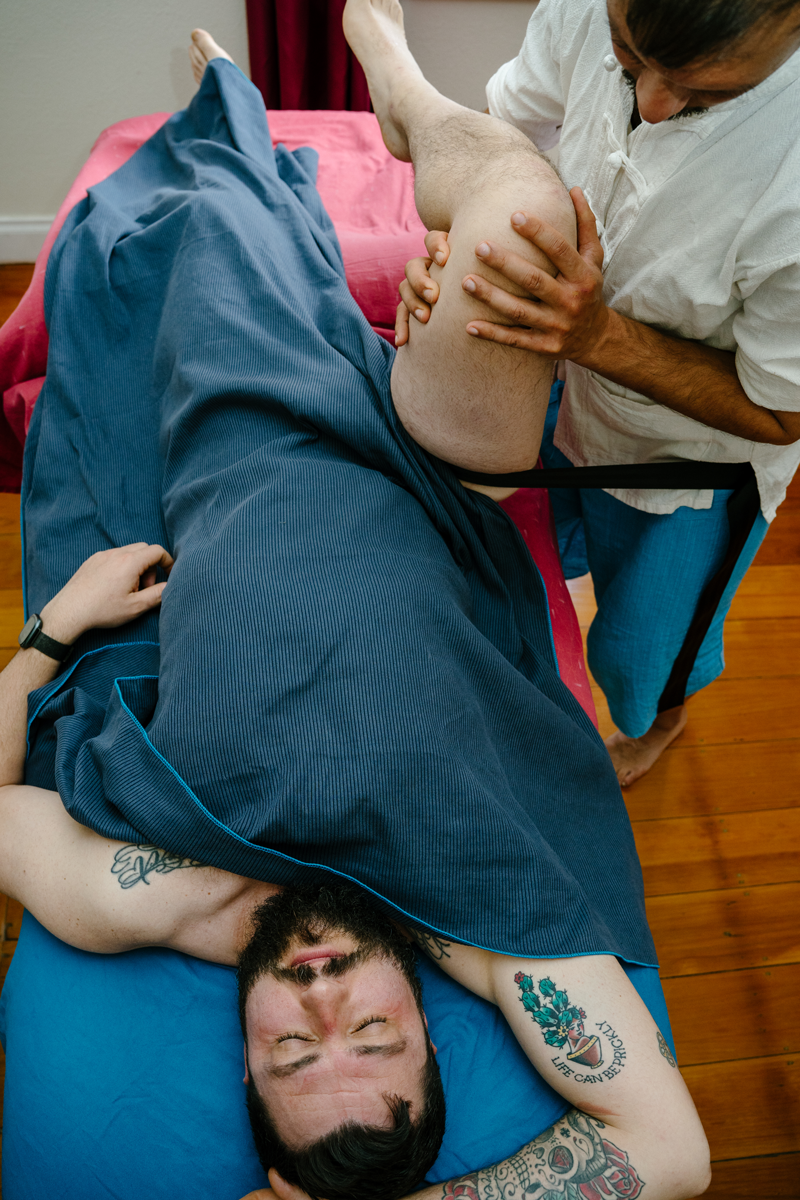
Water after a massage. Have you ever noticed that after a massage you feel thirsty and depending on the treatment you may have an urgency to go to the toilet? Well, massages are diuretics, that’s why. Indeed, independently of the type of treatment that you receive, whether is MLD, Remedial Massage, or Thai Massage, the body fluid gets pushed and pumped around the all body. As per consequence, all these substances moved around need to find their way out. So, after any session, you wanna make sure to rehydrate your body. Drink water after a massage. Why water and not orange juice? Or an energy drink? Or coffee? Water is what is recommended after a massage because it’s what can at the best re-oxygenate the muscle and re-hydrate the body. Drinking a sugary drink, or a really acid beverage as it can be coffee will just dry off the body even more. Furthermore, water is quicker to be absorbed and can help the stomach to keep its natural PH balance. If this post is talking to you, book your next massage session by clicking here. Another effect of the massage can be the deep relaxation of the body, which can affect the stomach and abdominal feeling. Indeed, adding sugar or other substances to the PH of a stomach that feels so relaxed, may not work at the best. What about the water temperature then? Cold or warm? Well, let’s take down the myth that cold water makes you feel fresher. Sorry, it doesn’t. Drinking cold water brings the body temperature down, increasing then the difference in temperature between within the body and outside the body. That will make you feel even hotter. But I do understand that hot water unless is herbal tea, doesn’t feel so nice. Even though, warm water would be ideal, as its temperature would be the same as one of our inner organs. So, temperature-wise just drinks water at room temperature if you can’t stand hot water.
Tag Archives: exercises
Massage and music at Melbourne Massage and Treatment Studio. Music is such an important part of receiving and giving a massage. As our body gets stimulated from the touch of the practitioner, music can tune in with the healing touch and create a different atmosphere. Said so, I never found it too hard to choose what music to play. Lately, I did decide to step away from platforms such as Spotify or Youtube. Why? Well, starting with YouTube, there is way too much publicity, and I don’t really use it as much that I would need an account for it. In regards to Spotify, I just can’t stand their politics. The artists get paid nothing for each time we listen to their music, and I found it really unfair. So, more recently, I discover a really nice French Radio called FIP. FIP stands for France Inter Paris. The concept behind FIP has scarcely changed since its founding: commercial-free music interrupted only by occasional announcements about forthcoming cultural events. Why did I choose FIP? If this post is talking to you, book your next massage session by clicking here. I choose Fip as it has a broad range of music styles and is commercial-free The last thing you want to hear during a massage is publicity, isn’t it? Furthermore, I use it all day long in the house, it has a really massive range of music choices. During the treatments, I mostly play Jazz music as is the one that best suits the environment. In regards to MLD, though, I don’t play music during those sessions. Why? Well, MLD is a light touch treatment that doesn’t have to follow a bit. In fact, having music, for us MLD therapists can be distractive. Along with the MLD treatment, I have to be so focused that I can’t get distracted by the music’s rhythm. That would change the rhythmic of my touch and massage speed, interrupting the healing purpose of MLD. In conclusion, I never received a complaint about the Music choice, so I guess your customers appreciate the choice and respect the idea that under pay an artist, is just not fair.
Muscle Firing pattern Muscle firing pattern is the sequence in which muscle should get activated to complete an action or movement. Whenever we move a joint, is not just 1 muscle to do that action there are multiple numbers of muscles that allow the action to happen, and other multiple numbers of muscles counterbalance that action. So, the muscles that control the action are called agonist muscles and the antagonist are the muscles that counterbalance that action. The antagonists are usually the muscles that do the opposite action to the one played. Said so we have also to introduce another term, that in the massage industry is known as synergetic muscles. Synergetic muscles work together to make allow a joint to complete an action. But let’s look into an example. Leg extension firing pattern. Leg extension is controlled by the synergetic muscle: gluteus max (GM) hamstring (HM erectors spine (Esp o) (opposite side of the leg) erectors spine (Esp s) (same side of the leg) The antagonist in the leg extensions are the Quadriceps. So, let’s focus on the agonist of this action for now. If the GM is weak or inactive, when we go for leg extension the Hm gets overpowered. As the Hm gets overpowered the ES starts firing too early to stabilize the pelvis abandoned from the weakness of the gluteus. Moving forward with this unbalance, the ES on the same side could end up to start being the first muscle that gets fired for doing the action of leg extension when it should be the last one. And this could happen because the Esp o is holding the body still to get the action done. Lower back pain or hamstring tear can be often a consequence of these unbalances. Lower back pain can happen when the firing pattern is like: 1st Erectos Spine (opposite or same side) 2nd Hamstring 3rd Gluteus Max (because if weak or inactive) Hamstring tear can happen when the firing pattern is like: 1st) Hamstring 2nd) Eroctos Spine (opposite or same side) 3rd) Gluteus Max (because if weak or inactive) But nothing is lost, and the firing pattern can be reorganised. For doing that we have to look into exercises for firing pattern reestablishment. For the leg extension, for example, the exercises would be: Lying in a prone position (face down) Tugged the toes under the feet Squeeze the gluteus one against the other With the gluteus, squeeze and extend the knee Still with the gluteus squeezed to release the knee The final step, release the gluteus. Repeat 30 times for 6 weeks every day. To don’t fall back into an incorrect firing pattern, make sure to strengthen the gluteus. Massage would help to release the trigger point in the GM. Thanks to the release of trigger points the muscle can start to be trained to get stronger. Are you struggling with pain and or body ache? Book now your next massage appointment, at Melbourne Massage and Treatment. Also, massage can help in fastening the process of firing pattern reestablishment, by reducing tension in the hamstring and or reducing pain in the lower back by flashing out the tensions that have been accumulated over time.
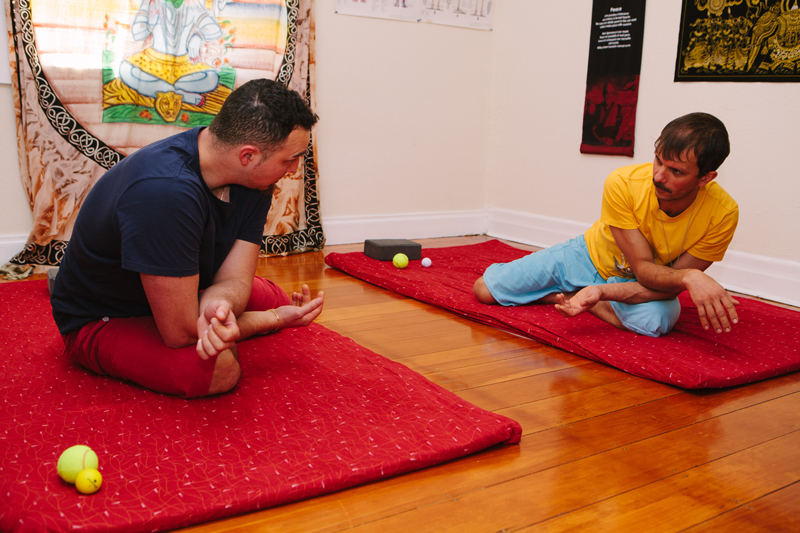
Exercises for Upper Cross Syndrome As previously mentioned, the UCS is caused by a constant habit of poor posture, to achieve a correct posture on top of massage therapy, we would need to do exercises for Upper cross syndrome. So, there are 2 main groups of muscle that we want to target. 1st group, the tense muscles: Levator Scapulae Upper Trapezius Pectoralis Major Second group, weak muscle Deeper Neck Flexors Rhomboids Middle Trapezius. Now, let’s go through some exercises for Upper cross syndrome. Brugger exercises for Neck deep flexors. This exercise is going to focus on improving the strength of the deep flexors. Stand straight with feet apart ; Place 2 fingers, one on each sternocleidomastoid and start gently and slowly flexing the head forward. The fingers seating on the Sternocleidomastoid (SCM) would allow you to keep those muscles deactivate and so would place all the strength of flexion on the deeper muscle that we are trying to train in gaining strength. If you are not sure where the SCM is, place a hand horizontally between the neck and the upper chest, along the Clavicle line. Rotate your head gently right and left and those 2 muscles that pop up below your hand when you rotate the head are the SCM. Just be aware that the L SCM will activate when you rotate right and vice versa; 3 repetitions for 10 head flexion. Do you feel like you need help with your neck pain? Book now your next appointment at Coburg Clinic. Strengthening the Rhomboids and Middle Trapezius. For this exercise, we would need an elastic rubber band for exercises. · Stand straight, feet apart, and wrap the elastic band on your fist, thumb facing out. · As you breathe in flex the elbow at 90, breathe in and bring the rubber band in tension. As you breathe out extend the elbow out. · Release and start again. 3 repetitions of 10. All those exercises have to be done daily for 6 weeks in order to be effective to change the UCS. Self Massage for Pectoralis/Upper Trap/Levator Scapulae. Pectoralis Self Massage exercises: Lie down in a prone position with the arms along the body; Place a tennis or a spiky ball right between the Pectoralis and the floor; Keep the foot’s toes anchored on the floor; Gently push yourself forward and back by breathing in (from the nose) and out (from the mouth). If you would like more pressure, is enough to open the arm at 90 and lightly extend the arm, by lifting the hand from the floor. Upper Trap and Levator Scapulae Thai Yoga exercises: Start by lying in a supine position and the ball will be seated between the shoulder and the floor. Place the ball right next to the upper angle of the scapula. This time keep your shoulder flexed at 90 degrees, so with the hand facing the ceiling. Start gently a slow rotation movement at the shoulder, by drawing a circle with the hand. 3 series of 6 repetitions for each rotation movement. With Thai Yoga, you wanna make sure that each exercise is done slowly and gently. Those exercises often work on the delicate area of the body and can reproduce massage pain. Moving the body slowly and gently and having constant breathing in and out would allow you to live Thai Yoga at its full potential.